
Blooming
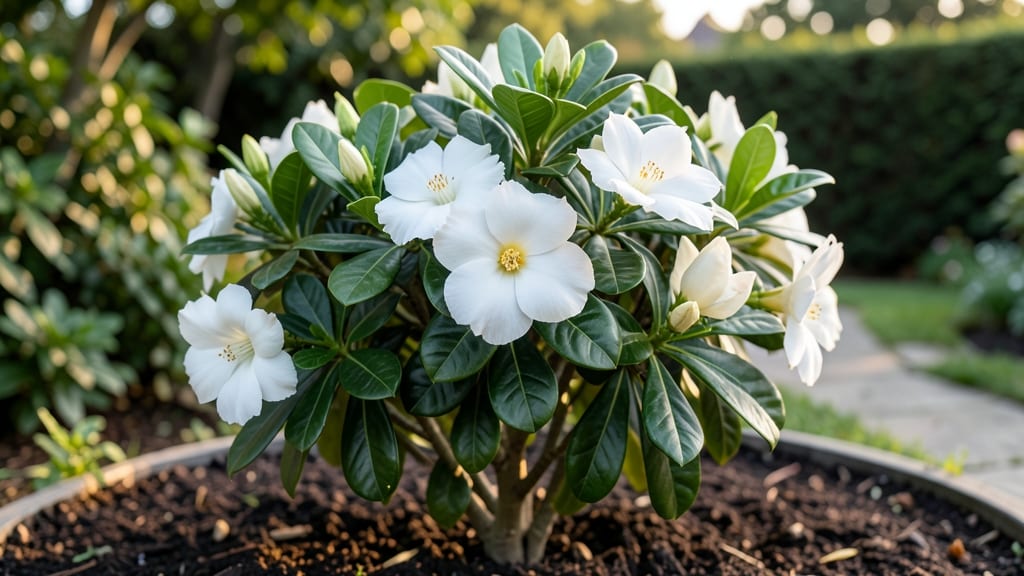
Gardenias don't bloom all summer naturally—they naturally produce flowers in late spring and early summer, with occasional blooms in fall, though some varieties can extend flowering with proper care and seasonal adjustments.
Gardenias are seasonal bloomers, primarily triggered by temperature shifts and daylight changes. 🌸 In warmer climates, they may produce occasional summer flowers, but their main blooming window remains spring to early summer.
The key to encouraging more flowers lies in mimicking their natural dormancy cycle—pruning after blooms fade and providing consistent moisture helps stimulate new growth. I've seen gardenias in USDA Zone 9 produce sporadic summer blooms when given balanced fertilizer and partial shade during heatwaves.
What many growers don't realize is that gardenias actually need a slight temperature drop to trigger new buds. This is why they often bloom heavily in spring but struggle with continuous summer flowering. The good news?
With strategic care—like regular deadheading and avoiding heavy nitrogen fertilizer—you can coax them into producing more blooms throughout the warmer months. Just remember, these plants are tropical at heart and appreciate consistent humidity and protection from harsh afternoon sun.
💡 In This Article
- Gardenia Blooming Seasons: Natural Cycles and Climate Influence
- Extending Gardenia Blooms: Pruning, Fertilizing, and Care Tips
Gardenia blooming seasons: natural cycles and climate influence
Gardenias follow a biological rhythm tied to their native tropical environments. These plants experience what botanists call "florigen" production—a hormone triggered by specific temperature ranges (typically 65-75°F) and daylight patterns.
During late spring and early summer, gardenias receive the perfect combination of 12-14 hours of daylight and moderate warmth, which signals their bodies to produce flowers. In contrast, summer's longer daylight hours (often exceeding 14.5 hours) and higher temperatures suppress this process, explaining why continuous blooming is rare.
The variety makes a significant difference here. Tropical gardenias like Gardenia jasminoides 'Radicans' naturally bloom more prolifically in warm climates (USDA Zones 8-11), while temperate varieties may require partial dormancy in cooler months.
For example, a gardenia in Zone 7 might only bloom for 4-6 weeks in spring, while one in Zone 10 could produce sporadic summer flowers if given consistent moisture.
The key difference lies in how each variety responds to seasonal temperature shifts—tropical types are more sensitive to heat stress above 85°F, which can halt blooming entirely.
Daylight length acts as a natural timer for gardenias. When days shorten in late summer, the plant perceives this as a signal to prepare for dormancy, which often results in those occasional fall blooms.
This photoperiodic response is similar to how poinsettias bloom in winter—both plants use light duration as a cue for flowering. 🌿 The challenge with summer blooming is that gardenias need a brief "cool-down" period (even just 5-7 days below 75°F) to reset their internal clock and produce new buds.
Without this break, the plant conserves energy for survival rather than reproduction.
Climate zones create dramatic differences in blooming patterns. In humid subtropical regions (like Florida or coastal California), gardenias may produce 2-3 bloom cycles per year due to consistent moisture and moderate temperatures.
Meanwhile, in hot desert climates (like Arizona), they often go dormant in summer heat unless provided with afternoon shade and frequent misting. The humidity factor is critical—gardenias require 50-70% relative humidity to thrive, and dry air (common in summer) can cause buds to drop before opening.
What's fascinating is how gardenias "cheat" their native environment. In the wild, they bloom when tropical rains create ideal conditions—cool evenings and warm days. Replicating this in gardens means providing morning sun and afternoon shade, especially in summer.
I've observed that gardenias in containers bloom more reliably than in-ground plants because their roots stay consistently moist, mimicking tropical rainfall patterns. The trade-off? Container-grown gardenias often require daily watering during summer heat to prevent bud drop.
One common misconception is that gardenias bloom continuously in tropical climates. While they may produce flowers year-round in perfect conditions (like Hawaii's consistent 78-82°F temperatures), most gardenias still experience 2-3 week rest periods between bloom cycles.
This natural rhythm explains why even tropical varieties have "off" seasons—typically during the hottest months when temperatures exceed 88°F for extended periods.