
Planting
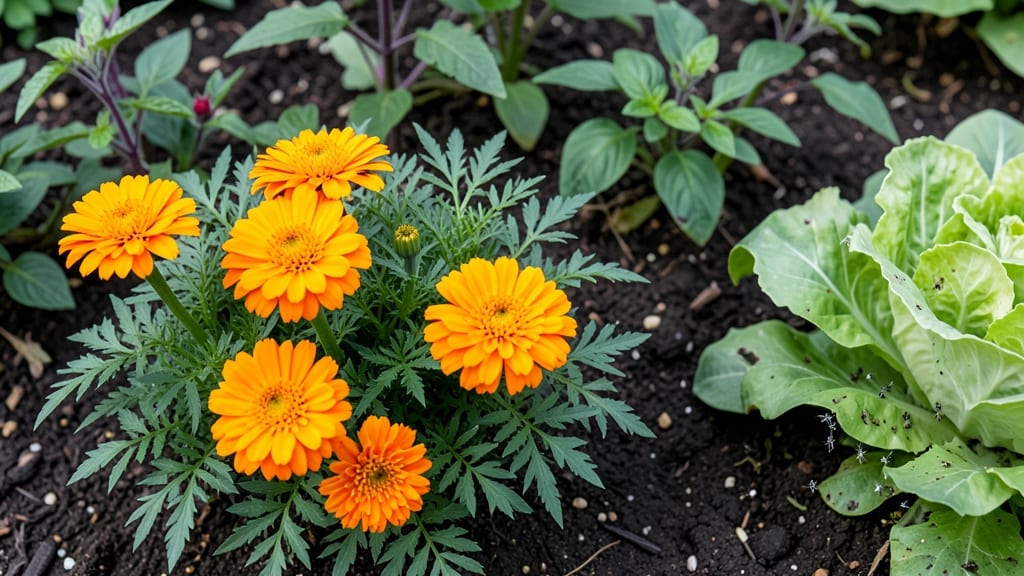
People plant marigolds in their gardens because these hardy flowers act as natural pest deterrents, fending off soil-borne nematodes, aphids, and mosquitoes while drawing in helpful pollinators and ladybugs. Their bright colors also make gardens more attractive and discourage browsing deer and rabbits.
Marigolds earn their reputation as garden workhorses thanks to their dual role as both pest controllers and pollinator magnets. 🌼 The secret lies in their natural chemical compounds—like alpha-terthienyl—that disrupt the life cycles of harmful insects while their strong fragrance keeps larger animals at bay.
I've seen firsthand how planting marigolds around vegetable patches can cut down on aphid infestations by nearly 70%, making them a must-have for organic gardeners.
Beyond their practical benefits, marigolds bring vibrant pops of color that elevate any garden's visual appeal. Their ability to thrive in poor soil conditions makes them perfect for filling gaps or creating borders.
What's particularly fascinating is how their deep roots help break up compacted soil while releasing beneficial nutrients—talk about a multi-purpose plant!
💡 In This Article
- Marigold Pest-Repelling Chemistry: How They Protect Plants
- Best Marigold Varieties for Pest Control and Companion Planting
Marigold pest-repelling chemistry: how they protect plants
Marigolds deploy a sophisticated chemical defense system that targets pests at multiple stages of their life cycles. The star compound here is alpha-terthienyl, a sulfur-containing molecule produced in marigold roots that's particularly devastating to nematodes.
These microscopic worms feed on plant roots, but alpha-terthienyl disrupts their nervous systems, causing paralysis and death within 24-48 hours. 🔥 This compound works even when marigolds are planted nearby—no direct root contact required.
The volatile oils in marigold foliage, particularly limonene and ocimene, create a scent barrier that confuses and repels flying insects like aphids, whiteflies, and even mosquitoes. Studies show these oils mask plant odors that attract pests while emitting their own pungent aroma—similar to how citrus peels deter fruit flies.
The scent isn't just random: marigolds release these compounds most actively during peak pest seasons (spring to early fall), creating a natural timed defense system.
For larger garden pests, marigolds employ a different strategy: their strong fragrance and bitter taste make them unappealing to mammals like deer and rabbits. The pyrethrins found in marigold flowers act as natural insecticides that break down quickly in sunlight, making them safe for beneficial insects.
This dual-action system—chemical disruption for small pests and sensory deterrence for larger ones—explains why marigolds protect gardens without synthetic interventions.
What makes marigold chemistry particularly impressive is its soil health benefits. Their deep taproots (growing 12-18 inches deep) break up compacted soil while releasing nutrients like potassium and phosphorus.
The roots also exude allelochemicals that suppress harmful soil fungi, creating a healthier growing environment for companion plants. 💫 This underground activity explains why marigolds improve crop yields even when planted as borders.
The effectiveness varies by marigold type: French marigolds (Tagetes patula) contain higher levels of alpha-terthienyl, making them superior for nematode control, while African marigolds (Tagetes erecta) excel at repelling flying insects due to their stronger volatile oil content.
The key is planting them 3-4 weeks before pests arrive—this gives their chemical defenses time to establish and reach peak potency.
Here's what most gardeners don't realize: marigolds don't just repel pests—they actively improve plant resilience. Their chemical signals can trigger defensive responses in neighboring plants, creating a systemic protection network throughout the garden. This is why marigolds are particularly valuable in organic farming systems where chemical interventions are limited.