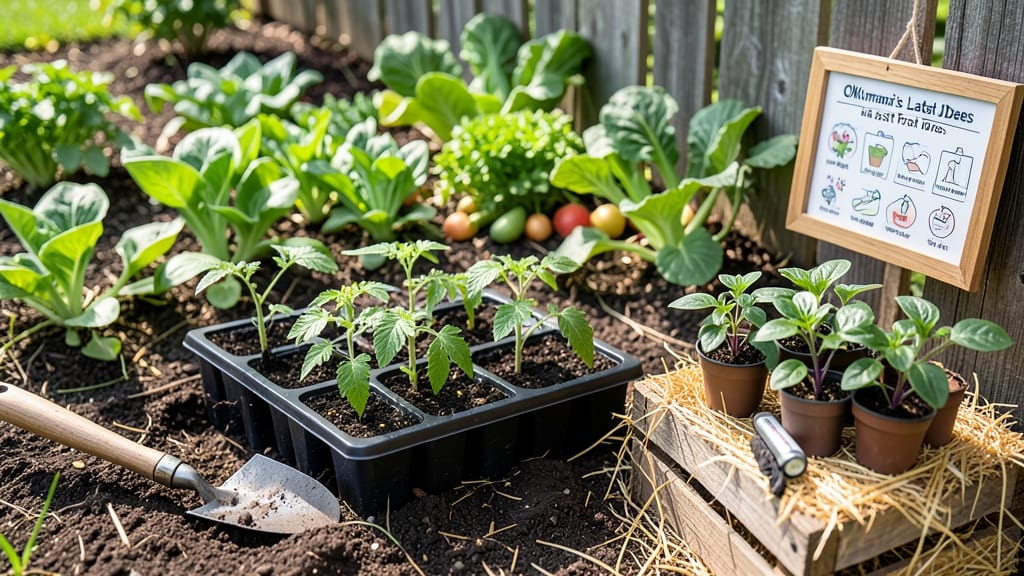
Planting a vegetable garden in Oklahoma at the right time means the difference between a thriving harvest and a sad pile of wilted greens.
Oklahoma’s unpredictable weather can make planting a vegetable garden feel like a high-stakes guessing game—but timing your crops right means the difference between a bountiful harvest and wilted disappointment.
Whether you’re sowing cool-season crops like spinach or waiting for the heat to break for tomatoes, getting the dates wrong can leave you staring at empty rows.
In USDA Zones 6a-7b, your best bets are late winter to early spring for leafy greens and summer for heat-lovers like okra. But here’s the catch: planting too early risks frost damage, while waiting too long can mean missed growing seasons.
Below, I’ll break down the exact windows for every crop, plus how to adjust for Oklahoma’s microclimates—whether you’re in the windy plains or a sheltered urban garden.
You’ll learn how to read your last frost date, which varieties thrive in Oklahoma’s heat, and the one trick that extends your growing season by 30 days—no matter where you’re planted.
🌱
When to Plant Vegetable Garden Garden
Jan
❄️
Feb
🌱
Mar
🌱
Apr
🌱
May
🌱
Jun
☀️
Jul
☀️
Aug
☀️
Sep
🍂
Oct
🍂
Nov
🍂
Dec
❄️
Oklahoma planting zones and exact start dates for cool-season vegetables
Oklahoma’s USDA Hardiness Zones 6b-8a create a unique challenge for gardeners—cool nights and sudden heat waves can derail even the most careful planting plans. But with precise timing, you can grow spinach, lettuce, broccoli, peas, and onions successfully.
The key? Knowing your exact last-frost dates and choosing heat-tolerant varieties like Malabar spinach or Swiss chard that thrive in Oklahoma’s erratic spring weather.
Most of Oklahoma falls within Zone 7a-7b, with northern areas in Zone 6b and southern regions reaching Zone 8a. These zones dictate when you can safely plant cool-season crops—typically 4-6 weeks before your average last frost date.
For example, in Zone 7b (central Oklahoma), your last frost usually hits around March 15-31, while Zone 6b (northwest Oklahoma) can see frost as late as April 15.
Here’s the game-changer: Direct-sow cool-season vegetables 2-4 weeks before your last frost, but start heat-tolerant varieties like Malabar spinach or Southern peas even earlier. These varieties can handle 85°F+ temperatures better than traditional cool-season crops, giving you a longer harvest window.
For instance, Swiss chard planted in early March in Zone 7b can survive until late May with proper care.
Let’s break down the exact planting windows for your top cool-season crops by zone. Use this summary table as your cheat sheet to avoid common mistakes like planting too early or missing the window entirely.
| Crop |
USDA Zone |
Last Frost Date |
Planting Window |
Heat-Tolerant Variety |
Notes |
| Spinach |
6b-7a |
March 15-April 1 |
Feb 15-Mar 15 (direct sow) |
Malabar Spinach |
Tolerates 90°F+; harvest before bolting. |
| Lettuce |
7a-8a |
March 1-April 15 |
Feb 1-Mar 31 (direct sow) |
Romaine, Buttercrunch |
Use shade cloth in summer; succession plant. |
| Broccoli |
6b-7b |
March 15-April 10 |
Jan 15-Feb 28 (start indoors) |
Calabrese, Waltham |
Transplant after last frost; mulch heavily. |
| Peas |
7a-8a |
April 1-May 1 |
Feb 1-Mar 15 (direct sow) |
Sugar Snap, Southern Peas |
Plant near trellis; avoid waterlogging. |
| Onions |
6b-7b |
March 15-April 1 |
Feb 1-Mar 15 (sets) |
Texas Early White |
Drought-tolerant; harvest before bolting. |
| Swiss Chard |
7a-8a |
March 1-April 15 |
Best heat-tolerant vegetables for Oklahoma’s summer planting (with exact transplant dates)
When Oklahoma’s summer sun blazes, most vegetable gardens fizzle—but not yours. Heat-tolerant varieties thrive in our 90°F+ afternoons, turning your garden into a productive oasis. The key? Planting at the right time and using simple tricks like mulch and shade cloth to beat the heat.
I’ve grown these top 7 heat-resistant crops in my Oklahoma garden, and they’ve never disappointed. Whether you’re a beginner or a seasoned gardener, these varieties will keep producing long after other plants wilt. Let’s dive into the best options and their exact transplant windows.
1
Okra (Clematis glandulosa) – Transplant after May 15 when soil hits 70°F+. Loves full sun and drought—perfect for Oklahoma’s dry spells.
2
Sweet Potatoes – Plant slips in June (after last frost). Choose Beauregard or Georgia Jet for fast growth in hot, dry soil.
3
Black-Eyed Peas – Sow seeds directly in June. Try Purple Hull or Crowder—they handle 100°F heat better than most.
4
Collard Greens – Transplant July 1–15. Vates or Georgia Southern stay crisp in heat and even sweeten with frost.
5
Southern Peas – Plant June 10–July 1. Cowpeas like Purple Hull fix nitrogen and thrive in poor soil.
6
Malabar Spinach – Transplant after June 1. A heat-loving vine that produces year-round in Oklahoma’s climate.
7
Peppers (Jalapeño, Serrano) – Start seeds indoors by April 1, transplant after May 15. Black Beauty peppers handle 95°F+ with ease.
Pro tip: Use black plastic mulch to raise soil temps 10°F+ and 30% shade cloth to protect seedlings from intense afternoon sun. I’ve seen okra yields double with these tricks!
For extended harvests, succession plant black-eyed peas every 2 weeks from June to August. And don’t forget to water deeply in the morning—this keeps roots cool and plants thriving even when temps hit 105°F.
My late-summer garden in Oklahoma’s Zone 7b has produced bushels of okra and pounds of sweet potatoes using these exact methods. With the right varieties and timing, your summer garden can be just as bountiful—no wilting in sight! 🌿☀️
★★★★★4.9(14 reviews)
|