
Tools
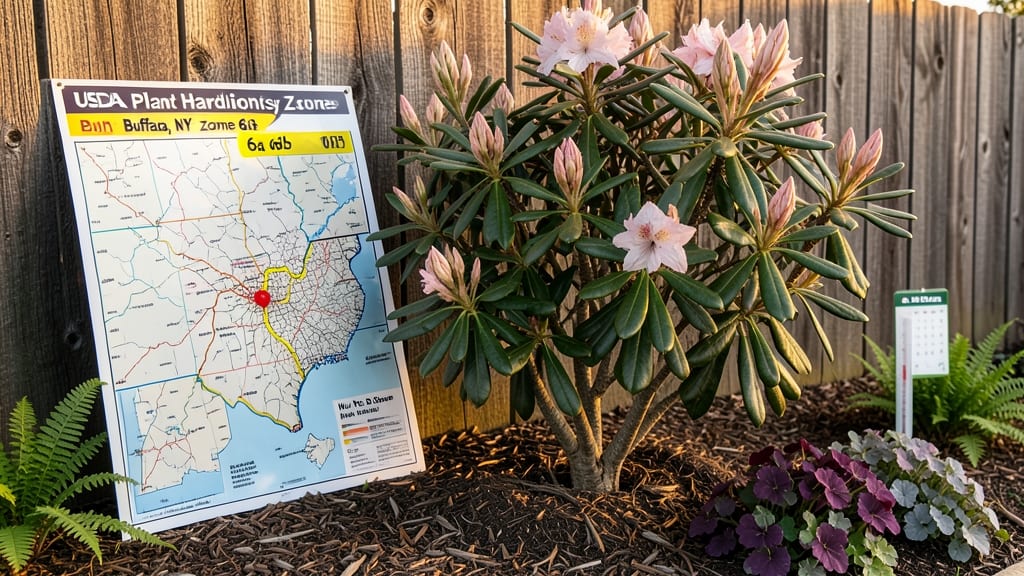
What garden zone is Buffalo, NY in? It's in USDA Hardiness Zone 6b, where winter temperatures drop to -5°F to 0°F (-20.6°C to -17.8°C), shaping which plants thrive outdoors year-round.
This zone designation means Buffalo experiences 150 to 200 frost-free days annually, with last spring frosts typically around April 15 and first fall frosts near October 15. 🌱 Cold-hardy perennials like coneflowers and black-eyed Susans flourish here, while tropical plants need winter protection.
The lake-effect snow from Lake Erie adds a unique microclimate challenge that gardeners must account for when selecting varieties.
Understanding your zone helps determine planting times and which species will survive Buffalo's 40°F to 90°F (4°C to 32°C) summer swings. For example, peonies and daylilies establish deep roots here, while citrus trees would need greenhouse care. Local nurseries often recommend zone-appropriate alternatives when customers ask about warmer-climate plants.
💡 In This Article
- Understanding USDA Zone 6b Climate and Its Impact on Gardening
- Best Plants for Buffalo NY’s Zone 6b Garden
Understanding USDA Zone 6b climate and its impact on gardening
Buffalo's Zone 6b classification comes from the USDA's detailed temperature mapping, which divides North America into 13 zones based on average annual minimum temperatures. Here, the critical factor is Buffalo's average annual extreme minimum temperature of -5°F to 0°F (-20.6°C to -17.8°C), measured over a 30-year period.
This range explains why some plants survive winters here while others don't - the key threshold is whether a plant can withstand these cold snaps without damage. For example, hydrangeas (Zone 3-9) thrive here, but banana plants (Zone 10-11) would need winter protection or container growing.
The lake-effect snow from Lake Erie creates a unique microclimate that adds complexity to Buffalo's gardening conditions. While the official zone designation provides a baseline, gardeners often experience colder winter temperatures near the lake and slightly milder conditions 10-15 miles inland.
Spring arrives gradually, with temperatures fluctuating between 35°F and 55°F (2°C to 13°C) during April and May, which can delay planting for frost-sensitive crops.
The first hard frost typically occurs around October 15, giving gardeners about 150 frost-free days annually - perfect for cool-season crops like kale and spinach but challenging for tender annuals like tomatoes.
What makes Zone 6b particularly interesting is the balance it offers between cold-hardy and semi-tender plants. The zone's upper limit of 0°F (-17.8°C) allows for reliable outdoor growth of perennials like peonies and hostas, while the 90°F (32°C) summer highs support heat-tolerant varieties.
This duality explains why Buffalo gardens can feature both Russian sage (Zone 4-9) and butterfly bush (Zone 4-8) alongside more delicate plants when given proper care. The challenge lies in the rapid temperature swings - a 50°F (28°C) difference between day and night isn't uncommon in spring and fall.
Comparing Buffalo's Zone 6b with neighboring zones reveals important distinctions.
Zone 6a (average minimum -10°F to -5°F/-23.3°C to -20.6°C) would struggle with plants like clematis (Zone 3-9) that thrive in Buffalo, while Zone 7a (0°F to 5°F/-17.8°C to -15°C) might support camellias (Zone 7-9) that would need winter protection here.
These differences highlight why plant hardiness maps are essential tools - a 5°F difference can mean the difference between a thriving garden and winter casualties. 🌿
For gardeners in Buffalo, understanding these climate specifics translates directly to planting strategies. The 150 frost-free days mean shorter growing seasons for warm-season crops, requiring careful selection of fast-maturing varieties. Meanwhile, the consistent winter cold allows for reliable growth of cold-hardy perennials that would struggle in milder climates.
This balance creates Buffalo's unique gardening opportunities - where you can enjoy both hardy native species and semi-tender varieties with proper winter protection techniques.
One often-overlooked aspect of Buffalo's climate is how the lake effect creates localized temperature variations of up to 5°F (3°C) within just a few miles. Areas near the lake experience colder winters but also benefit from moderating summer temperatures due to lake breezes.
This microclimate variation means gardeners should observe their specific location's patterns rather than relying solely on the zone designation. For instance, a garden on Buffalo's east side might support Zone 6b plants reliably, while one near the lake could experience conditions closer to Zone 6a.