
Tools
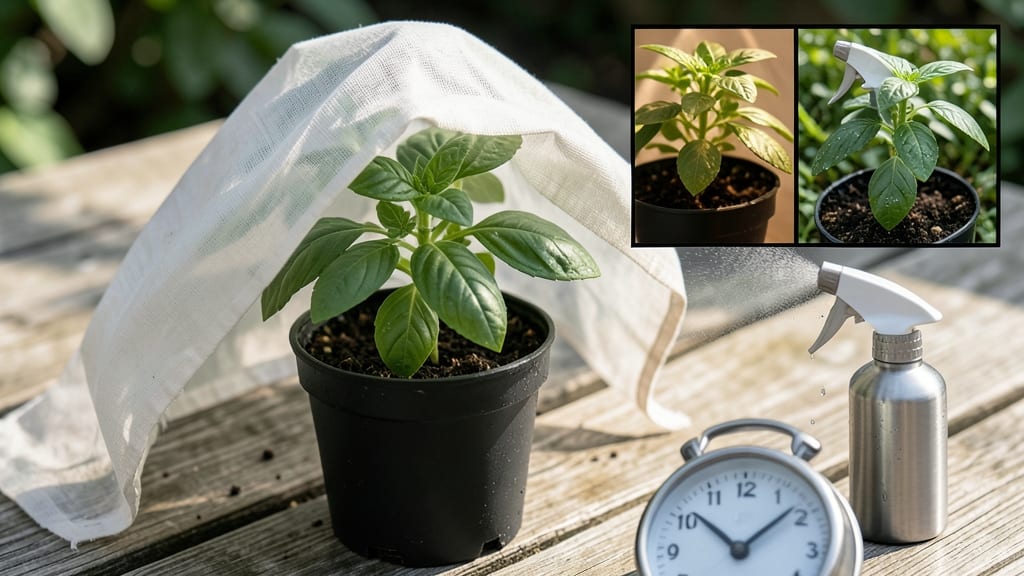
Harden off in gardening means gradually acclimating young plants to outdoor conditions—like sunlight, wind, and temperature swings—before transplanting them to prevent shock or damage. This process strengthens plants over 5-14 days for better survival rates.
Harden off refers to the careful transition period that prepares seedlings for life outside their cozy indoor or greenhouse environments. 🌱 This isn't just about moving plants—it's about teaching them to handle real-world stress like stronger sun exposure and cooler nights.
Think of it as a training camp for your plants, where they build resilience before the big game of outdoor planting. Without this step, many seedlings wilt or fail to thrive after transplanting, even if they looked healthy before.
The process typically involves moving plants outdoors for increasing durations each day while protecting them from harsh elements.
For example, you might start with just an hour of morning sun on day one, then gradually extend their outdoor time while monitoring for signs of stress like yellowing leaves or drooping stems.
This method ensures your plants develop tougher cell walls and more efficient water regulation systems, which are essential for surviving in their permanent garden spots.
💡 In This Article
- Why Gradual Hardening Strengthens Seedlings
- Best Hardening-Off Methods for Different Climates
Why gradual hardening strengthens seedlings
When seedlings grow indoors under consistent conditions, their cells develop in a predictable environment with stable moisture and temperature. The sudden shift to outdoor conditions—where temperatures fluctuate by 20-30°F between day and night, and sunlight intensity increases by 10-15 times—triggers a physiological shock.
This is because plants rely on specialized cells called stomata to regulate water loss and gas exchange. Without gradual exposure, these stomata can't adjust quickly enough, leading to excessive water evaporation and wilting.
The key to successful hardening lies in how plants produce stress hormones like abscisic acid (ABA) and ethylene. These hormones signal the plant to thicken cell walls, reduce leaf surface area, and develop deeper root systems—all adaptations that improve resilience.
For example, a tomato seedling hardened off properly will develop 20-30% thicker cell walls compared to one transplanted without acclimation, making it far better equipped to handle wind and drought. 🌱 The gradual process also allows chlorophyll production to ramp up, so plants can better utilize increased sunlight without burning.
What most gardeners don't realize is how critical the first 3-5 days of hardening are. During this period, seedlings experience their highest risk of shock because their root systems are still adapting to the new environment.
A common mistake is exposing plants to full sun too soon, which can cause leaf scorch—a condition where cells lose moisture faster than they can replenish it.
This is why starting with 2-3 hours of morning sun (when temperatures are cooler) is ideal, then gradually increasing exposure over 7-10 days to full sunlight.
Another critical factor is nighttime temperatures. Many gardeners focus only on daytime hardening but forget that cooler nighttime temps (especially below 50°F) can also stress plants. This is why regions with significant temperature swings—like the Midwest or Pacific Northwest—require more careful monitoring.
For instance, a pepper plant might handle 85°F days in Southern California but wilt if nighttime temps drop to 55°F without proper acclimation.
Consider the difference between a seedling grown under a grow light (which emits 400-700 nanometers of light) and one exposed to natural sunlight (which spans 300-1,100 nanometers). The broader spectrum of natural light contains UV radiation that triggers protective compounds like flavonoids in plant leaves.
Without gradual exposure, these protective mechanisms aren't activated, leaving seedlings vulnerable to sunburn. This is why some gardeners use 50% shade cloth during the first few days of hardening—it mimics the natural light spectrum while reducing intensity.
The payoff comes when you transplant. A properly hardened seedling will show signs of improved vigor: darker green leaves, stronger stems, and roots that have grown 1.5-2 times longer than those of unhardened plants.
This isn't just anecdotal—studies show that hardening increases transplant survival rates by 30-50% in many vegetable crops. The investment of 10-14 days pays off in healthier, more productive plants that establish faster in the garden. 🌿