
Plants
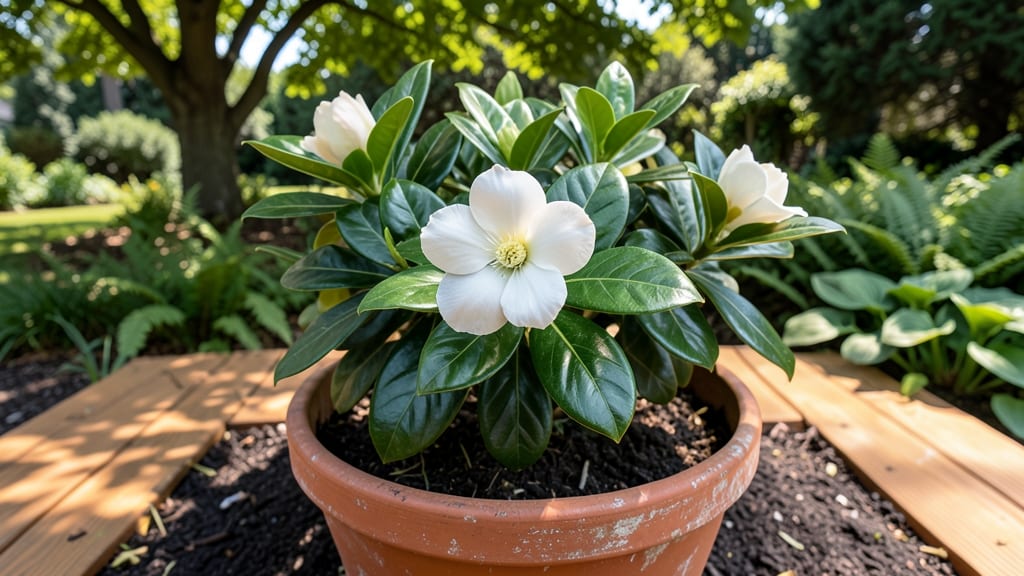
Gardenias smell like a rich, creamy floral blend of vanilla, jasmine, and honey, with a subtle sweetness and a hint of green citrus notes that deepen as the flowers mature. Their fragrance is often described as luxurious and intoxicating, lingering in the air long after handling.
Gardenias pack a sensory punch that feels like a warm hug for your senses. 🌸 The vanilla notes create that cozy, creamy base, while the jasmine adds a velvety depth that makes it irresistible.
What's fascinating is how the scent evolves—young buds smell more citrusy, but as they open fully, that honeyed sweetness takes center stage. I've noticed gardenias release their fragrance strongest in the evening, which is why they're often called the "queen of night-blooming flowers."
This intoxicating aroma isn't just random—it's nature's way of attracting pollinators like moths and beetles. The scent molecules actually become more concentrated in cooler temperatures, which is why gardenias often smell stronger after sunset when the air cools slightly.
For me, the best way to experience it is to gently crush a petal between your fingers—you'll get that immediate, intense whiff that makes you want to bottle it.
💡 In This Article
- The Science Behind Gardenia’s Signature Scent
- How to Enhance Gardenia Fragrance in Your Garden
The science behind gardenia’s signature scent
Gardenias produce their signature aroma through a complex mix of volatile organic compounds (VOCs) released from their flowers. The dominant players are linalool (which creates that floral, slightly spicy note) and benzyl acetate (responsible for the jasmine-like sweetness).
These compounds are produced in specialized cells called osmophores, located on the petals' surface, where they're released in higher concentrations during the evening hours when temperatures drop below 75°F. This is why gardenias are often called "evening-scented" flowers—their fragrance peaks when the air cools and humidity rises.
The vanilla notes come from trace amounts of vanillin and related compounds that develop as the flowers mature. Interestingly, young buds contain more limonene (the compound in citrus peels), which gives that initial green citrus hint that fades as the flower opens fully. The honeyed sweetness?
That's thanks to phenylethyl alcohol, a compound also found in roses but more pronounced in gardenias. What makes this scent so unique is how these compounds interact—linalool enhances the perception of sweetness, while benzyl acetate deepens the floral complexity, creating that luxurious, creamy profile.
Temperature plays a crucial role in scent intensity. Gardenias release 30-50% more fragrance molecules when the air temperature is between 68-72°F—this is why they often smell strongest during spring evenings or in shaded garden spots.
Humidity also matters: at 60% humidity or higher, the scent molecules disperse more slowly, creating that lingering cloud of fragrance. This is why gardenias planted near water features or in humid climates often smell even more intoxicating.
The scent's evolution from citrusy to honeyed is actually a chemical process called "scent maturation," where the plant shifts production from limonene to vanillin compounds as the flower ages.
What most people don't realize is that gardenias produce their strongest scent when they're about 70% open. Fully bloomed flowers actually release slightly less fragrance because their osmophores become less active as they age.
This is why gardenia bushes often smell most amazing in the first 2-3 days of blooming, before the flowers reach full maturity.
The scent molecules also bind differently to human olfactory receptors based on their concentration—at lower levels, you perceive the citrus notes first, while higher concentrations trigger the sweet, creamy floral perception that makes gardenias so universally loved.
Here's a fascinating comparison: While jasmine primarily contains linalool and indole (which gives it that slightly animalic note), gardenias have a more balanced chemical profile with 10-15% more benzyl acetate than jasmine.
This extra benzyl acetate is what gives gardenias that extra layer of sweetness that makes them smell almost edible.
The vanilla compounds in gardenias are also more stable than those in vanilla beans, which is why gardenia-scented products often use real gardenia extracts rather than synthetic vanilla blends to capture that authentic creamy depth.
For the best sensory experience, try this: Place a single gardenia bloom in a small glass of water in a cool, shaded spot during the day. As evening approaches, you'll notice the fragrance intensify—this is the plant's natural timing mechanism at work.
The scent molecules will actually become more concentrated in the enclosed space, giving you a more intense whiff of that luxurious floral-honey blend that makes gardenias so unforgettable.