
Tools
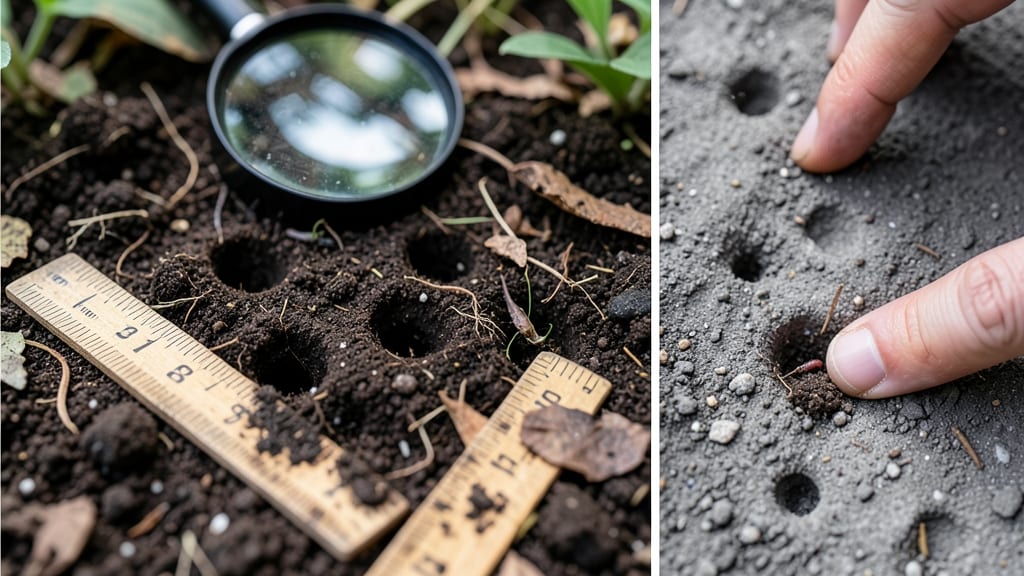
Small holes in garden soil usually come from earthworms or fungal networks, which boost aeration and nutrient flow—but they can also mean pests or drainage problems if they're excessive or appear with other damage. Check the holes' size and surrounding soil to determine the cause.
These tiny tunnels aren't just random—they're a sign of your soil's hidden ecosystem at work. 🌱 Earthworms, for example, create vertical burrows that improve water infiltration, while fungal networks form intricate webs that break down organic matter.
However, if you notice irregular patterns or holes paired with wilting plants, it might indicate harmful pests like grubs or mole crickets, which require different solutions. I always recommend testing soil moisture and structure first to confirm the source before taking action.
For instance, earthworm castings (the small mounds near holes) actually enrich soil fertility, while ant tunnels can create pathways for air and water—both are positive signs.
But if the holes are paired with chewed plant roots or excessive surface debris, you may need to address pest control or soil compaction issues instead.
💡 In This Article
- Common Creatures That Make Small Soil Holes
- When Small Holes Signal Soil Problems
Common creatures that make small soil holes
Earthworms are the most common culprits behind those tiny soil tunnels. Their burrows, typically 1/8 to 1/4 inch wide, run vertically and improve soil aeration by creating pathways for air and water.
These worms ingest organic matter and excrete nutrient-rich castings, which can boost soil fertility by up to 20% in just one season. 🔥 The holes you see are actually their temporary homes—they spend most of their time 1-2 feet underground, where they thrive in moist, slightly acidic soil.
Ants also create intricate tunnel systems, often with 1/16 to 1/8 inch openings that resemble tiny craters. Unlike earthworms, ants build horizontal networks that connect plant roots to their colonies, facilitating nutrient exchange.
You might spot these near plants or along garden edges, especially in sandy or loamy soils where they can easily dig. Fungal mycelium, the thread-like structures of mushrooms and molds, forms even finer holes—sometimes just 1/32 inch wide—as they decompose organic material and create symbiotic relationships with plant roots.
Some holes come from beneficial insects like springtails, which measure just 1-2 millimeters long and create tiny chambers for moisture retention. Their presence indicates healthy soil with good moisture retention. However, larger holes (over 1/4 inch) might belong to mole crickets or grubs, which can signal pest problems.
The key difference? Beneficial creatures leave clean, smooth tunnels, while pests often create irregular, jagged holes filled with frass (insect waste) or chewed plant debris. ✨
Soil texture plays a huge role in what creatures thrive there. Clay soils, for example, hold moisture longer and attract earthworms, while sandy soils favor ants and springtails. If your garden has well-draining loam (a mix of sand, silt, and clay), you'll likely see a diverse ecosystem of hole-makers.
The healthiest soils have a balance of these tiny engineers—each playing a unique role in breaking down organic matter, improving drainage, and making nutrients available to plants.
You can encourage these beneficial creatures by adding compost or leaf litter to your garden beds, which provides both food and shelter. Avoid over-tilling, as it disrupts their habitats. Instead, use a broadfork to aerate soil gently while preserving these natural tunnels.
The more diverse your soil's tiny residents, the more resilient your garden becomes against pests and drought. 🌱
Here's a quick visual guide to identify the most common hole-makers:
- Earthworms: Vertical holes 1/8-1/4 inch wide, often with castings nearby
- Ants: Horizontal tunnels with 1/16-1/8 inch openings, often in clusters
- Springtails: Tiny holes (1/32 inch) with no visible openings
- Fungal networks: Fine, web-like patterns in decaying organic matter