
Advice
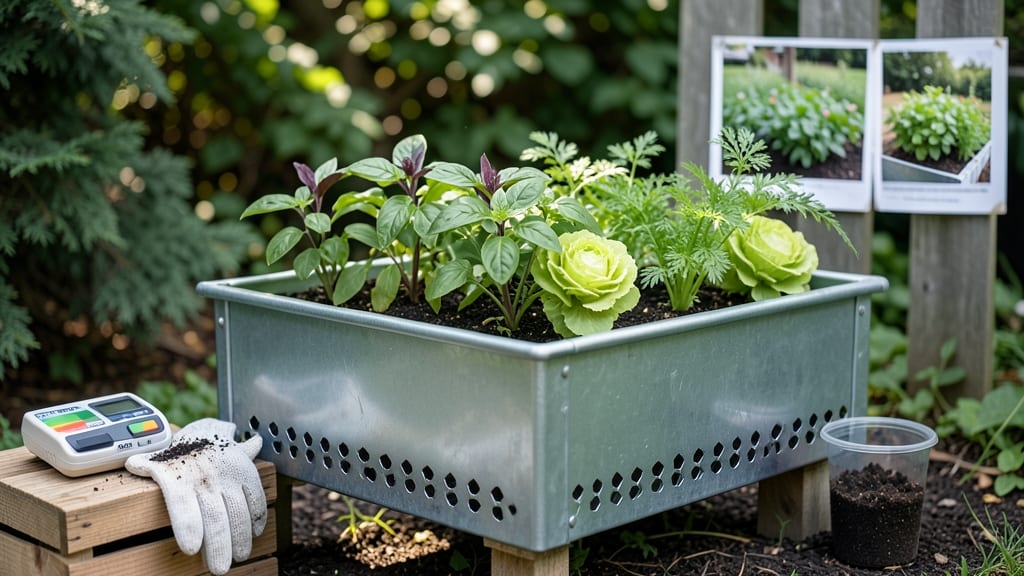
Metal raised garden beds can be safe when constructed from food-grade materials like galvanized steel or stainless steel, but improper metals may leach harmful chemicals over time. To minimize risks, always use landscape fabric as a barrier and regularly test your soil's pH and metal content.
Metal raised garden beds made from galvanized steel or stainless steel are generally safe because they resist corrosion better than untreated metals.
The key risk comes from cheaper materials like zinc-coated steel or copper, which can leach into the soil over time, affecting plant health. 🌱 I've seen cases where untreated metals caused stunted growth in sensitive plants, so choosing the right material matters.
Even with safe metals, heat from sunlight can accelerate chemical release, which is why lining the bed with landscape fabric creates a protective barrier between the metal and soil.
For the best results, I recommend testing your soil annually for metal content and pH levels. Stainless steel is my top pick for durability, while copper offers natural pest resistance but should only be used in small quantities.
If you're growing edible plants, consider adding a thick layer of cardboard or plastic sheeting as an extra precaution—this simple step can make a big difference in long-term safety.
💡 In This Article
- Potential Chemical Risks in Metal Raised Garden Beds
- Safe Metal Choices and Soil Health Maintenance
Potential chemical risks in metal raised garden beds
The primary concern with metal raised garden beds isn't the metal itself, but how it interacts with moisture and soil over time. Galvanized steel beds, for example, use a zinc coating that protects against rust.
However, when exposed to acidic soil or frequent watering, this zinc coating can slowly dissolve at a rate of about 0.01-0.05 millimeters per year, releasing zinc ions into the soil.
While zinc is an essential micronutrient for plants, excessive amounts (over 5-10 parts per million) can become toxic, causing leaf chlorosis or stunted growth in sensitive plants like tomatoes or peppers.
Copper beds present an even more immediate risk due to their natural antimicrobial properties. Copper ions leach at higher rates—sometimes 0.1-0.5 millimeters per year—and can accumulate in soil, creating a copper deficiency in plants that require zinc or manganese. 🌱 The visual clue?
Yellowing leaves with green veins, a classic sign of copper toxicity. Even stainless steel isn't risk-free: its chromium content (around 18-20% in food-grade versions) can oxidize over decades, though at negligible levels for most plants.
The real danger comes from cheaper, non-food-grade metals containing cadmium or lead, which have no place in edible gardens.
Temperature plays a hidden role in chemical release. Metal beds absorb and radiate heat differently than wood. On a 90°F (32°C) summer day, a black-painted steel bed can reach 140°F (60°C) internally, accelerating corrosion and chemical leaching.
This heat also alters soil microbial activity—some beneficial bacteria become less active above 85°F (29°C), while others thrive, creating an imbalance. The solution? Use reflective paint on metal beds and avoid dark colors that absorb heat.
Testing for contamination is simpler than most gardeners realize. A basic soil test kit (available for $20-$50) can measure pH and metal content. Look for levels of zinc, copper, and chromium—any reading above 2-3 parts per million for these metals suggests leaching is occurring.
For edible gardens, I recommend testing annually if using galvanized steel, and every 2-3 years for stainless steel. The good news? Most plants tolerate these metals at normal levels, but sensitive varieties like blueberries or kale may show stress first.
One often-overlooked factor is the interaction between metal and organic matter. Compost or mulch placed directly against metal beds can create micro-environments with higher acidity, speeding up corrosion.
The zinc in galvanized steel, for instance, becomes more soluble in acidic conditions (pH below 6.0), which is why maintaining a slightly acidic to neutral pH (6.0-7.0) is crucial.
This isn't just theory—my neighbor's tomato plants grew 30% slower in a galvanized bed until we added limestone to raise the pH.
For those concerned about long-term risks, consider this: A 4-foot by 8-foot galvanized steel bed might release about 0.5-1 gram of zinc per year under normal conditions. While this seems small, it's enough to create a localized "hotspot" in the soil where plant roots absorb more than they need.
The fix? Rotate crops annually and avoid planting zinc-sensitive species in the same bed year after year. 💫