
Watering
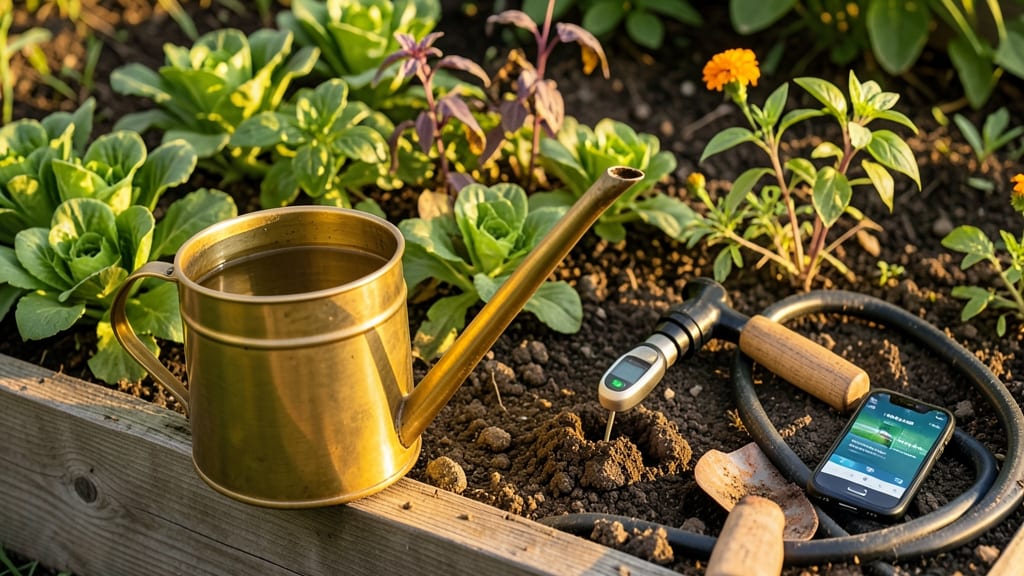
You shouldn't water your garden every day unless facing extreme heat or sandy soil, as daily watering can damage roots and create fungal problems. Most plants do best with 1-2 inches of water per week, adjusted for local weather patterns.
Daily watering actually stresses many plants by preventing their roots from developing properly. 🌱 Most garden plants prefer deeper, less frequent watering that encourages strong root growth down into the soil.
The key is monitoring your garden's specific needs—container plants dry out faster than in-ground ones, while drought-tolerant succulents need far less water than thirsty vegetables.
I always check soil moisture before watering by pushing my finger 1-2 inches deep; if it's dry, that's when I water thoroughly rather than lightly each day.
Another critical factor is your local climate. In humid regions, daily watering can lead to fungal diseases like powdery mildew, while hot, dry climates may require more frequent watering—but even then, deep watering is better than shallow daily sessions.
The best approach is to observe your plants' natural cycles: wilting leaves in the afternoon often mean they need water, but soggy soil or mushrooms popping up are clear signs you're overdoing it.
💡 In This Article
- How Often to Water Different Garden Plants
- Signs Your Garden Needs Water (or Too Much)
How often to water different garden plants
Most garden plants follow a 1-2 inch weekly watering rule, but the reality is far more nuanced. Vegetables like tomatoes and peppers, for example, have deep root systems that require 1-1.5 inches of water per week, delivered in deep waterings every 2-3 days rather than daily shallow sprinkles.
Their roots need to grow downward to find moisture, and frequent surface watering actually encourages roots to stay near the top, making plants more vulnerable to drought stress.
The science behind this involves something called hydraulic lift—a process where deep roots pull water up through capillary action to supply leaves, especially in dry conditions.
Shallow watering disrupts this natural cycle, forcing plants to rely on surface moisture that evaporates quickly. 💧 For instance, herbs like basil and cilantro have shallow roots and prefer daily light watering (about 0.5 inches), but even they benefit from deeper watering every few days to strengthen their root systems.
Flowering plants and shrubs vary dramatically: succulents and cacti need water only when the soil is completely dry (sometimes every 2-4 weeks), while hydrangeas and roses thrive with 1-1.5 inches weekly but hate soggy soil.
The key difference lies in their native habitats—succulents evolved in arid climates where water is scarce, while roses come from temperate regions with consistent moisture. Understanding these natural preferences helps you mimic ideal growing conditions.
Seasonal adjustments are critical too. During summer's peak heat, even drought-tolerant plants may need extra water every 2-3 days, but always check soil moisture first. In spring or fall, weekly watering is often sufficient.
The soil type also matters: sandy soil drains quickly and may need watering every 1-2 days, while clay soil holds moisture longer and can go 5-7 days between waterings without stressing plants.
For container gardens, the rules change entirely. Potted plants dry out 2-3 times faster than in-ground ones because their roots can't spread widely. A 5-gallon container might need watering every 1-2 days in summer, while a 15-gallon planter could last 3-4 days.
The lack of soil depth means roots have limited access to moisture, so containers often require more frequent but shallower watering—though even here, deep watering when the top 1 inch of soil is dry yields better results.
What most gardeners overlook is the time of day you water. Early morning (before 8 AM) is ideal because it allows foliage to dry quickly, reducing fungal risks. Watering in the evening keeps moisture trapped on leaves overnight, creating perfect conditions for diseases like powdery mildew.
This simple habit can make the difference between thriving plants and a struggling garden. 🌿