
Tools
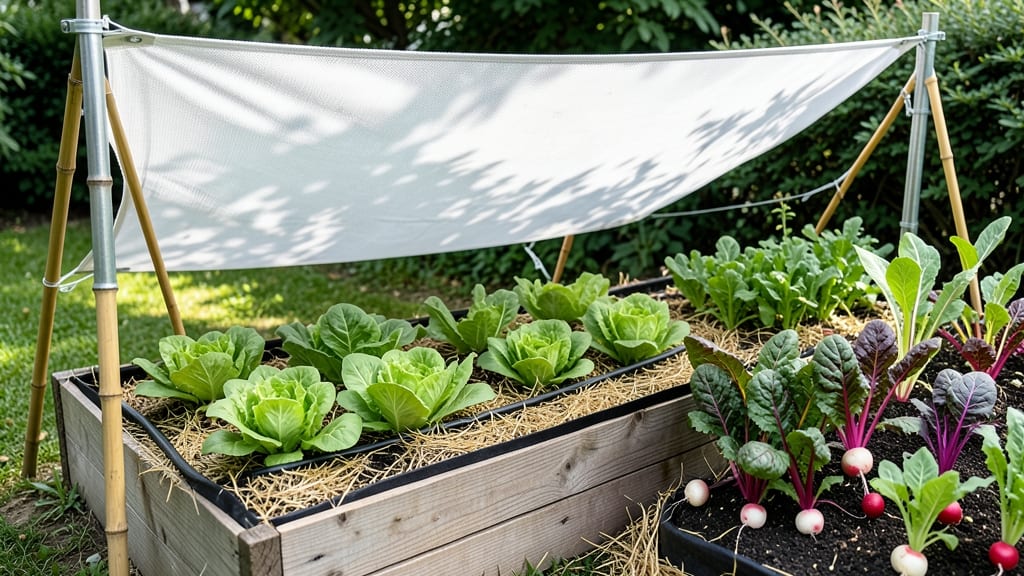
Shade cloth for garden beds protects plants from excessive sunlight, heat stress, and UV damage while allowing airflow for healthy development. Select a percentage (20%-90%) based on your plants' sensitivity and local climate conditions.
This lightweight fabric acts like a sun filter, reducing light intensity without blocking airflow—critical for delicate plants like lettuce or basil that wilt in full sun. 🌿 The percentage rating (e.g., 30% shade) tells you how much sunlight gets through, with higher numbers offering more protection but potentially slowing growth.
I always recommend starting with 30-50% for most vegetables and adjusting based on leaf burn or plant stress signs.
Beyond percentages, material matters too: woven cloths last longer but may trap more heat, while knitted options breathe better. For hot climates, look for UV-resistant coatings—these can extend the fabric's life by 2-3 seasons.
Pro tip: Secure edges tightly to prevent wind damage, which can tear the cloth and expose plants to sudden sun exposure.
💡 In This Article
- How Shade Cloth Percentages Affect Plant Growth and Protection
- Selecting the Best Shade Cloth Type for Your Garden Needs
How shade cloth percentages affect plant growth and protection
Shade cloth percentages directly control how much sunlight reaches your plants, creating a precise balance between protection and growth. A 30% shade cloth blocks about 30% of sunlight while allowing 70% to pass through—ideal for heat-sensitive crops like lettuce or basil that need partial sun.
This reduction lowers leaf temperatures by 10-15°F compared to full sun, preventing wilting and sunburn. The remaining light still supports photosynthesis, so plants grow steadily rather than struggling under stress.
Higher percentages like 50% or 70% offer stronger protection but require monitoring. For example, a 50% cloth reduces light by half, creating cooler conditions perfect for young seedlings or tropical plants like peppers that bolt in hot weather.
However, too much shade (above 70%) can slow growth entirely, as photosynthesis needs at least 30% of full sunlight for most vegetables. 🌱 Think of it like sunglasses for plants—just enough coverage to feel comfortable, not so much they can't see.
The science behind this involves photomorphogenesis, where plants adjust their growth based on light intensity. Too much sun triggers heat stress, causing leaf scorch (visible as brown edges) and reduced nutrient uptake. Shade cloth mitigates this by filtering UV rays, which are the most damaging.
Studies show that even a 30% reduction in UV exposure can double the lifespan of leafy greens in hot climates. For instance, in Arizona summers (where temps hit 110°F), a 40% cloth keeps soil temperatures 20°F cooler than exposed beds.
Seasonal adjustments are key. In spring or fall, you might use 20-30% shade to harden off seedlings, while summer demands 50-70% for delicate herbs. The cloth’s weave also matters—knitted fabrics (like Agribon) allow better airflow than woven ones, reducing humidity-related diseases.
For example, basil thrives under 30% shade in summer but may need 50% in desert climates where afternoon sun is brutal.
Visual cues help gauge effectiveness. Look for vibrant green leaves (not pale or yellow) and check undersides for sun damage. If you see white or brown patches, the percentage is too low.
Conversely, leggy growth with sparse leaves signals over-shading. 💡 Pro tip: Use a light meter to measure photosynthetically active radiation (PAR) under your cloth—ideal levels are 1,000-1,500 µmol/m²/s for most veggies.
For extreme climates, combine percentages with timing. In the Southwest, use 50% cloth only during peak sun (10 AM–4 PM), while coastal areas with mild summers might use 30% year-round.
The goal is to mimic the plant’s natural shade tolerance—think of how lettuce grows under taller crops in a forest rather than in full desert sun.