
Advice
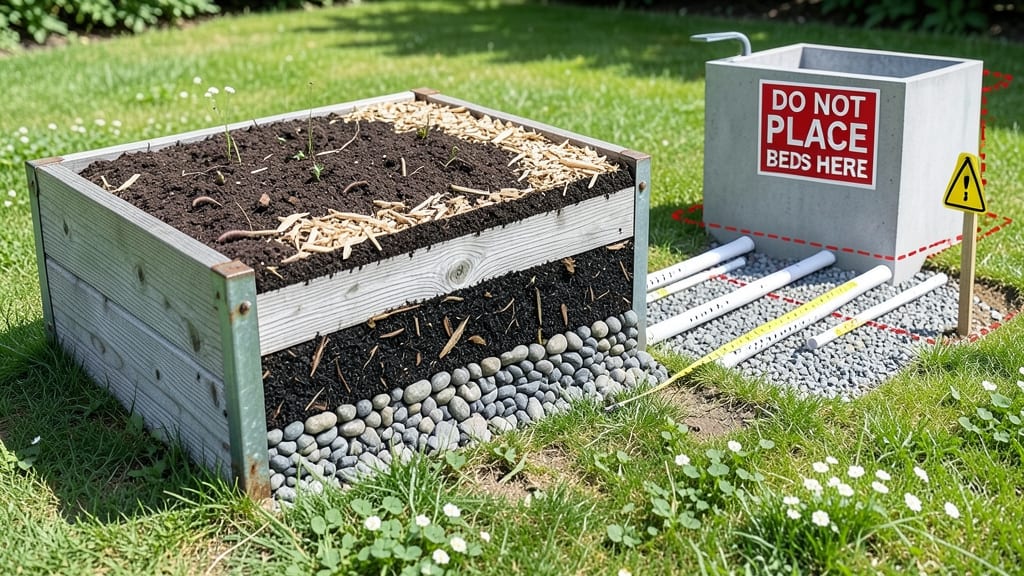
You can put raised garden beds over a septic field only if they're at least 10 feet from the drain field and use proper drainage systems to prevent root damage or contamination. Avoid excessive watering to protect your septic system's function.
This 10-foot minimum distance prevents roots from clogging drain pipes, while proper drainage systems—like gravel layers or French drains—ensure excess moisture doesn't overload the septic tank. 🔥 Many homeowners mistakenly assume raised beds reduce risk, but poor drainage design can actually worsen problems by increasing soil saturation.
I recommend consulting your local health department for specific regulations, as some areas require 15-20 feet for certain bed designs.
For safe installation, use permeable liners and avoid heavy watering plants like lettuce or cucumbers. Instead, opt for drought-tolerant vegetables that won't stress your septic system. The key is balancing aesthetics with functionality—beautiful gardens shouldn't compromise your home's wastewater treatment.
💡 In This Article
- Septic System Safety Zones for Raised Garden Beds
- Drainage Solutions for Septic-Friendly Raised Beds
Septic system safety zones for raised garden beds
The 10-foot safety zone around septic drain fields isn't arbitrary—it's based on how soil absorbs wastewater and how roots behave. Septic systems rely on soil microbes to break down effluent in the drain field, but roots from nearby plants can disrupt this process by competing for oxygen and nutrients.
Large roots like those from fruit trees or deep-rooted vegetables can actually puncture drain pipes, while even smaller roots create a dense network that reduces soil permeability by up to 40%.
Here's what happens when roots invade: they block the porous soil layer where effluent disperses, forcing wastewater to pool on the surface or back up into your home.
The EPA recommends this distance because most septic systems use 4-inch diameter pipes spaced 18-24 inches apart—roots can travel horizontally up to 3 feet from their source. 🌱 Even raised beds reduce this risk but don't eliminate it entirely if drainage isn't properly managed.
Local health departments often enforce stricter rules (sometimes 15-20 feet) for clay-heavy soils that naturally slow drainage.
Soil composition plays a huge role in how much distance you actually need. Sandy soils drain quickly but offer little filtration, while loamy soils provide better microbial activity but require more space to prevent saturation.
The percolation test (perc test) used during septic installation measures how fast water drains—soils that drain in 1-60 minutes are ideal, while those taking longer than 60 minutes may require larger safety zones or engineered solutions like gravel beds.
What most people overlook is how watering habits affect this balance. A single raised bed can add 2-3 gallons of water daily through irrigation, which may seem harmless but can saturate the soil beneath when combined with rainfall.
This excess moisture creates anaerobic conditions that kill the beneficial bacteria in your drain field, reducing its efficiency by 25-30%. The solution? Use drip irrigation with timers and plant moisture-loving crops only in designated areas far from the septic system.
Consider this real-world example: A homeowner in Minnesota installed raised beds just 5 feet from their drain field using proper drainage. After two summers of heavy watering, they noticed slow drains and foul odors—roots had infiltrated the pipes, and the soil was waterlogged.
The fix required $8,000 in repairs and a complete redesign. This case illustrates why distance + drainage are equally critical components of septic-safe gardening.
For maximum safety, combine the 10-foot rule with these additional precautions: use gravel-filled trenches under beds to intercept excess water, and avoid planting anything requiring more than 1 inch of water weekly.
Even with these measures, always check with your local health department—they may have soil-specific regulations that override general guidelines. 💡