
Watering
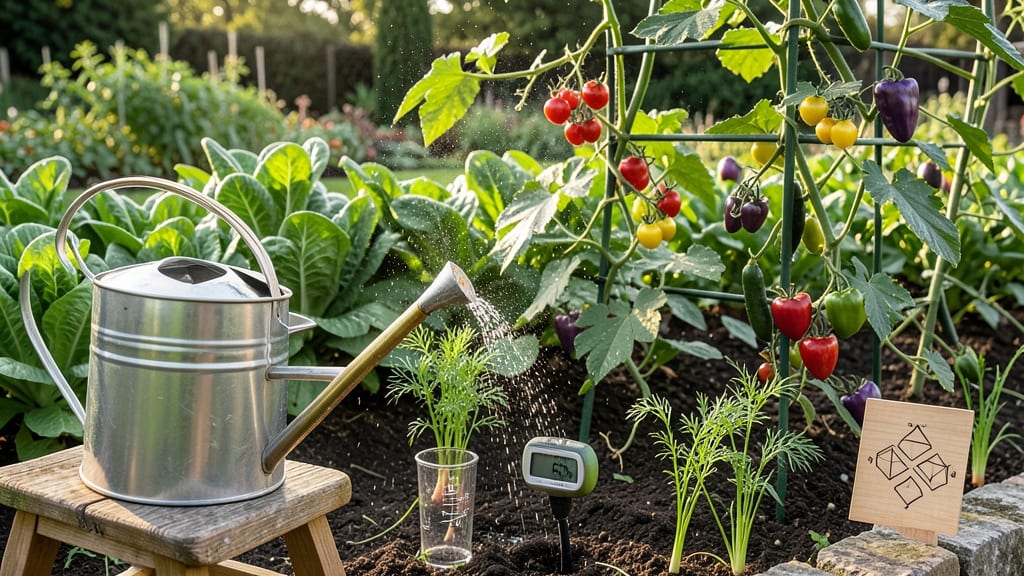
Your vegetable garden 🥬 needs 1 to 2 inches of water per week, but guessing won't cut it—overwatering or underwatering can ruin your harvest before it even starts.
Most gardeners pour water based on a schedule, not their soil or plants' needs. That’s why your tomatoes might bolt early or your carrots split, even when you think you’re watering "just right."
In this guide, I’ll break down how much water each type of vegetable actually needs—from drought-tolerant herbs to moisture-loving leafy greens—and how to adjust for your Zone 6 climate and soil type.
You’ll learn the deep-watering trick that saves time, how to spot overwatering (yes, it’s possible!), and when to cut back as temperatures drop. Let’s make sure your garden stays hydrated the right way.
Deep-watering rules for vegetable gardens: how much and when
Most gardeners make the mistake of watering their vegetable gardens based on guesswork or schedules, but the truth is, your plants need consistent moisture at the right depth.
The 1-2 inch soil moisture method is the gold standard—it ensures water reaches plant roots where it matters most, not just the surface. This approach prevents shallow root systems and reduces water waste from evaporation.
For example, a tomato plant with roots only 12 inches deep needs water that penetrates that far, not just a light sprinkle that barely wets the top layer.
Timing your watering is just as critical as how much you give. Watering in the early morning (before 10 AM) is ideal because it allows foliage to dry quickly, reducing fungal diseases like powdery mildew. Evening watering can leave plants damp overnight, creating a breeding ground for pathogens.
I’ve seen pepper plants in my garden thrive with morning watering but struggle with blight when watered at night—it’s a game-changer once you adjust your routine.
Now, let’s talk about the 1-2 inch rule. This means your soil should be moist to a depth of 1-2 inches after each watering session. To test this, stick your finger about 2 inches into the soil—if it feels dry, it’s time to water.
This method works for most vegetables, but leafy greens like lettuce may need more frequent shallow watering, while root crops like carrots benefit from deeper, less frequent watering to encourage root growth. The key is adapting based on your plants’ needs.
Here’s a quick reference to help you visualize the watering needs by plant type and season. Use this as your guide to avoid over- or under-watering:
| Plant Type | Water Depth | Frequency (Spring/Summer) | Best Time | Notes |
|---|---|---|---|---|
| Leafy Greens (Lettuce, Spinach) | 1 inch | Every 2-3 days | Morning | Keep soil evenly moist; avoid soggy soil. |
| Root Crops (Carrots, Potatoes) | 2 inches | Every 3-5 days | Morning | Deep watering encourages root growth. |
| Fruiting Plants (Tomatoes, Peppers) | 1.5-2 inches | Every 3-4 days | Morning | Consistent moisture prevents blossom-end rot. |
| Herbs (Basil, Cilantro) | 1 inch | Every 2-3 days | Morning | Drought-tolerant once established. |
| Corn, Beans | 1.5 inches | Every 4-5 days | Morning | Increase during flowering/fruiting. |
As your vegetables mature, their water needs change. Seedlings, for example, require gentle, frequent watering to keep the soil moist but not waterlogged. Once they’re established, you can gradually increase the depth and spacing of watering sessions.
For instance, my zucchini plants needed daily watering when they were young but now thrive with deep watering every 4-5 days. Pay attention to the plant’s growth stage—this is your cue to adjust.
Mulching is a game-changer for deep-watering success. A 2-3 inch layer of organic mulch like straw or wood chips helps retain soil moisture, reduces evaporation, and keeps roots cool. I’ve noticed that my cucumber vines stay hydrated longer with mulch, and I water less frequently.
Plus, mulch suppresses weeds, which compete with your vegetables for water. It’s a win-win for efficiency and plant health.
One common mistake is assuming that all vegetables need the same amount of water. In reality, leafy greens like spinach wilt quickly if they dry out, while drought-tolerant herbs like rosemary can handle less frequent watering. Always tailor your approach to the specific plants in your garden.
For example, I water my kale more often than my green beans because kale has a higher moisture requirement. Observing your plants’ responses will help you fine-tune your watering schedule.
Finally, don’t forget to factor in your local climate and soil type. Sandy soil drains quickly and may need more frequent watering, while clay soil holds moisture longer and requires less.
In hot, dry climates, you might need to water daily, whereas cooler, humid regions can go longer between sessions. I live in a Zone 6 climate, and I’ve learned to water deeply in summer but reduce frequency as temperatures drop in fall.
Adjusting for your environment makes all the difference.
By mastering the 1-2 inch soil moisture method and watering in the morning, you
Water requirements by vegetable type: a plant-by-plant guide
Not all vegetables thirst the same way—some leafy greens like lettuce and spinach need consistent moisture to stay crisp, while root vegetables like carrots and potatoes prefer moderate watering to avoid splitting.
Understanding these differences is key to avoiding wilting or rot in your garden. Let’s break it down by plant type so you can water with confidence.
Herbs like basil and cilantro often fall into the drought-tolerant category, while tomatoes and peppers demand steady hydration to produce fruit. Even within categories, varieties differ—Swiss chard thrives with 1 inch of water weekly, while radishes prefer soil that stays evenly moist.
Knowing these nuances prevents wasted water and keeps your harvest healthy.
For leafy greens, aim for 1-1.5 inches of water per week, delivered in the morning to prevent fungal diseases like powdery mildew. Spinach and kale wilt quickly when underwatered, but their leaves also bolt (go to seed) if stressed by heat or drought.
Mulching with straw helps retain moisture and keeps soil cool.
Root vegetables like carrots and beets need consistent but not soggy soil. Overwatering causes forked roots or rotting, while underwatering leads to woody, bitter produce. Water these crops deeply 2-3 times per week rather than lightly daily. Potatoes, in particular, need well-draining soil to avoid hollow hearts.
Fruiting plants such as tomatoes and peppers are the heaviest drinkers in the garden. They require 1.5-2 inches of water weekly, especially during fruit set and ripening. Drip irrigation is ideal to keep leaves dry and prevent blossom-end rot. Cucumbers and squash also need steady hydration to avoid bitter fruit or cracking.
Finally, herbs like rosemary and thyme are drought-resistant and thrive on neglect, while basil and parsley prefer moist but not waterlogged soil. Always check the top inch of soil—if it’s dry, water slowly until moisture reaches 6 inches deep.
Adjust your watering as the season changes; summer heat increases evaporation, while fall rains may reduce your need to irrigate.