
Watering
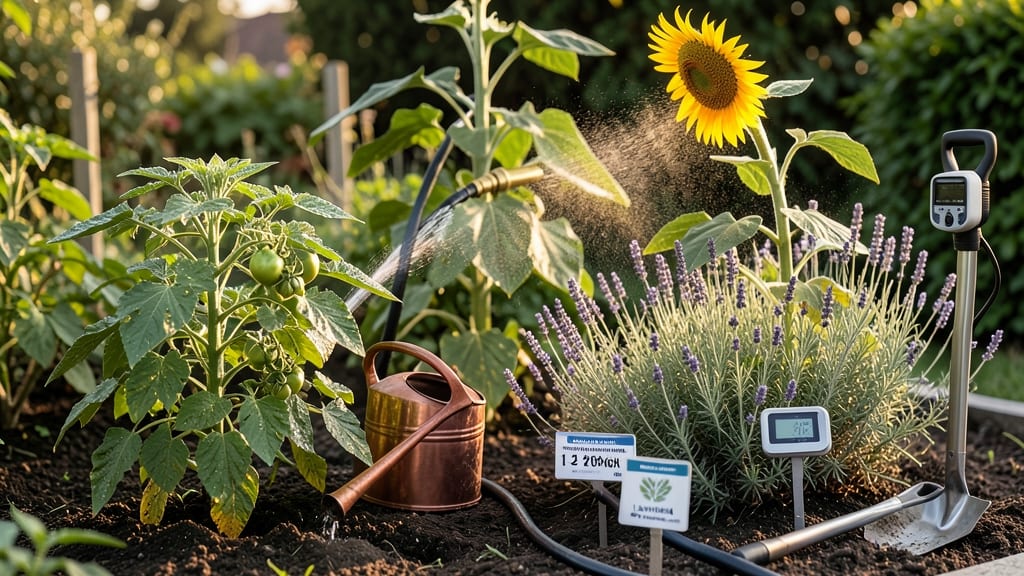
A garden needs about 1 inch of water per week—including rainfall—to thrive, but guessing can mean wasted effort or wilting plants. 🌱
Most gardeners overwater or underwater without realizing it, and the difference between a lush harvest and a struggling patch is often just a few extra minutes with a hose or a deeper soak. The key isn’t just how often you water, but how much your soil and plants actually need.
Climate, soil type, and even the plants you grow change the equation. Sandy soil drains fast, while clay holds moisture for days—so a one-size-fits-all approach won’t cut it. Below, I break down how to calculate the perfect amount for your garden, including seasonal tweaks for drought or heavy rain.
You’ll learn how to check soil moisture, spot signs of over- or under-watering, and adjust your schedule for perfect hydration—no more guesswork, just healthy roots and happy plants.
Soil-type water requirements: how much to give different gardens
Your garden’s soil type is the #1 factor in determining how much water it truly needs. Clay soil holds moisture like a sponge, while sandy soil drains faster than a sieve. Even loamy soil—the gardener’s gold—has specific hydration needs.
Ignoring these differences leads to wasted water, root rot, or stunted plants. Let’s break down the science behind soil-water relationships so you can water with precision, not guesswork.
The inch-per-week rule is your best friend: most gardens need about 1 inch of water weekly (rain + irrigation). But this changes dramatically based on soil type. For example, sandy soil may need watering every 2-3 days in summer, while clay soil might only require watering every 7-10 days.
Seasonal adjustments are key—drought conditions or heavy rainfall can shift these numbers by 30-50%.
To calculate your garden’s exact needs, start by testing your soil’s moisture level. Stick your finger 2 inches deep—if it feels dry, it’s time to water. For sandy soil, water until moisture reaches 6 inches deep, while clay soil only needs saturation to 3 inches.
Use a rain gauge or tuna can to measure rainfall, then subtract that from your weekly inch goal.
Seasonal shifts demand flexibility. In summer droughts, increase watering by 20-30% and water early in the morning to reduce evaporation. During spring rains, cut back by 50% to avoid over-saturating roots.
A mulch layer (2-3 inches of straw or wood chips) can cut water needs by 30% by locking in moisture and blocking weeds.
Overwatering is just as harmful as underwatering. Yellowing leaves or mushy stems signal too much water, while crispy edges or wilted foliage mean your plants are thirsty. Adjust your schedule based on these visual cues—your plants will thank you with healthier growth and better yields. 🌱
Pro tip: Group plants with similar water needs together. Herbs like basil and vegetables like lettuce thrive in loamy soil with frequent watering, while succulents and lavender prefer sandy, drought-tolerant conditions. Design your garden’s layout around these needs to simplify maintenance.
Don’t rely on a one-size-fits-all watering can. Invest in a soil moisture meter ($15-$25) for real-time data or use the bottle test: Fill a plastic bottle with water, submerge it near roots, and let it seep slowly.
This mimics deep watering without runoff. For large gardens, consider a drip irrigation system—it delivers consistent, targeted moisture and saves up to 40% water compared to hose watering.
Remember, water quality matters. If your tap water is high in chlorine or salts, let it sit in a barrel for 24 hours before watering. Rainwater collected in barrels is ideal for most plants and free of chemicals.
Just ensure barrels are covered to prevent mosquito breeding. Pair this with compost-rich soil, and your garden will flourish with minimal stress.
Start today by testing your soil type and adjusting your watering routine. Within 2-3 weeks, you’ll notice stronger stems, vibrant foliage, and fewer pests—all signs of perfect hydration.
Your garden’s health depends on this balance, so treat watering like a precision science, not a shot in the dark. ☀️💧
Plant-specific watering guide: what your garden needs by species
Not all plants thirst the same way—some love frequent sips while others prefer deep, infrequent drinks. Understanding plant-specific watering needs saves time, prevents root rot, and boosts harvests.
Herbs like basil need consistent moisture, while succulents store water like tiny sponges. Let’s break down the watering rules by plant type to keep your garden thriving.
Mulch is your secret weapon for water retention. A 2-3 inch layer of straw or wood chips reduces evaporation by up to 30%, meaning fewer watering sessions.
For vegetables like tomatoes, mulch also keeps fruit off damp soil, preventing disease. But avoid piling mulch against stems—keep it 2 inches away to avoid rot.
Deep watering—soaking the soil until it’s moist 6 inches down—encourages strong root growth. Most vegetables and flowers prefer this method over light daily sprinkles.
Use a soil moisture meter or the "knuckle test": push your finger into the soil; if it feels dry at 1 inch, it’s time to water.
| Plant Type | Water Needs | Frequency | Mulch Tip |
|---|---|---|---|
| Vegetables (Tomatoes, Peppers) | 1-2 inches/week | Deep water 2-3x/week | Straw mulch retains moisture |
| Herbs (Basil, Cilantro) | 1 inch/week | Daily in pots, weekly in ground | Gravel mulch prevents soggy soil |
| Flowers (Marigolds, Roses) | 1-1.5 inches/week | Deep water 2x/week | Wood chips reduce weeds |
| Succulents/Cacti | 0.5 inch/month | Every 3-4 weeks | Pea gravel prevents rot |
Succulents and cacti are the low-maintenance champions of the garden. They thrive on neglect, storing water in their leaves and stems. Water them only when the soil is completely dry, usually every 3-4 weeks. Overwatering is their #1 killer—yellowing leaves or mushy stems mean you’ve drowned them.
For container gardens, water more frequently since pots dry out faster. Check soil moisture daily in summer—if the top inch feels dry, it’s time. Group containers together to create a microclimate that retains humidity. Drip irrigation systems are perfect for pots, delivering water directly to roots without waste.
Adjust your watering schedule with the seasons. In summer heat, water early in the morning to reduce evaporation and fungal risks. In winter, cut back to every 2-3 weeks unless you’re growing cold-hardy greens like kale.
Always water at the base of plants, not overhead, to keep leaves dry and healthy.