
Light Requirements
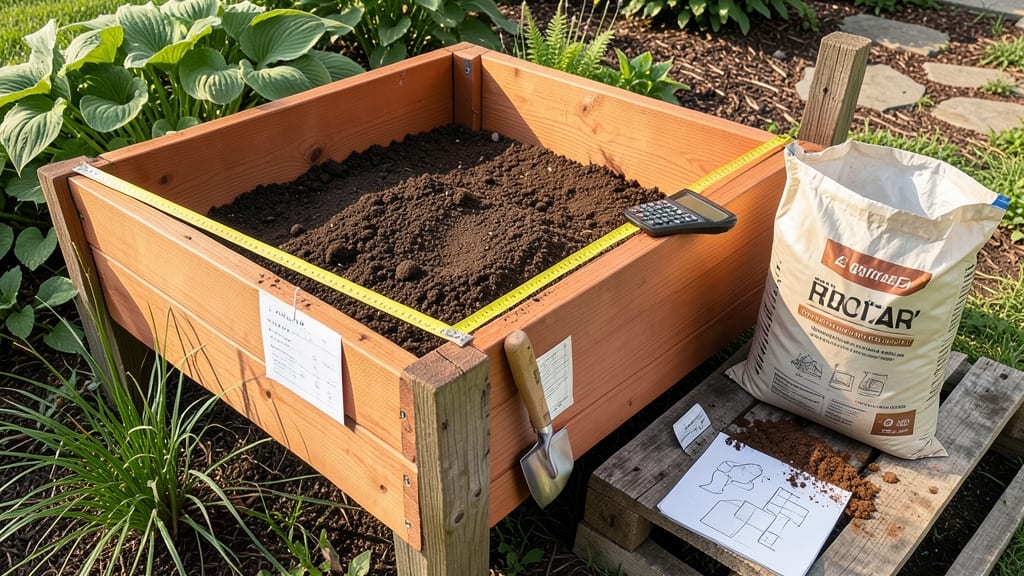
To determine how much dirt you need for your raised garden, multiply the bed's length × width × depth (in feet), then add 10% extra for settling. A standard 4×8-foot bed with 12-inch sides requires about 32 cubic feet of soil mix, while deeper beds (18 inches) need roughly 48 cubic feet. Use well-draining, nutrient-rich soil blends for best results.
Figuring out soil volume can feel tricky at first, but breaking it down makes it simple. 🌱 For example, an 8×4-foot bed with 18-inch depth needs 48 cubic feet—just multiply 8 × 4 × 1.5 (18 inches = 1.5 feet) and round up.
Depth matters because deeper beds allow roots to grow stronger, especially for vegetables like tomatoes or carrots. I always recommend adding extra soil to account for settling, which can reduce volume by up to 10% over time.
Once you've calculated your needs, focus on soil quality. A mix of 60% topsoil, 30% compost, and 10% perlite works wonders for drainage and nutrients. Buying in bulk saves money, and pre-mixed bags often include the right NPK (nitrogen, phosphorus, potassium) balance for healthy plants.
Pro tip: Test your soil before planting to adjust nutrients as needed.
💡 In This Article
- Calculating Soil Volume for Raised Garden Beds
- Best Soil Mixes for Raised Garden Beds
Calculating soil volume for raised garden beds
The core calculation for raised garden soil volume uses simple cubic feet math: multiply length × width × height (in feet). For example, a 4×8-foot bed with 12-inch sides needs 32 cubic feet—just multiply 4 × 8 × 0.75 (12 inches = 1 foot).
This formula works because soil volume is three-dimensional, and converting all measurements to feet standardizes the calculation. 🌱
Depth matters more than you might think. Shallow beds (6 inches) limit root growth, especially for deep-rooted plants like tomatoes or carrots, while 12-18-inch depths provide optimal space for roots to expand and access nutrients.
An 8×8-foot bed at 18 inches deep requires 96 cubic feet—nearly triple the volume of the same bed at just 6 inches. The extra depth also improves drainage and reduces competition between plants.
Soil settling is the silent volume thief. Organic matter like compost compresses over time, reducing total volume by 5-15%—that's why experts recommend adding 10% extra to your calculations. For a 4×8-foot bed at 12 inches, this means buying 35 cubic feet instead of 32.
The settling process happens gradually as moisture and microbial activity break down soil particles, so don't skip this step—your plants will thank you with stronger growth.
Real-world examples help put this into perspective. A 4×4-foot bed at 12 inches needs 16 cubic feet, while the same bed at 18 inches jumps to 24 cubic feet. For larger gardens, consider breaking calculations into sections—like dividing an 8×16-foot bed into two 8×8-foot sections—to make hauling soil more manageable.
Always measure your bed's interior dimensions (not the frame) for accuracy.
Pro tip: Use a soil calculator tool to automate this process. Many online calculators let you input dimensions and instantly get cubic feet results, including the extra 10% for settling.
These tools also help visualize how different depths affect your soil needs—great for planning before you buy. For DIYers, a simple spreadsheet with these formulas works just as well.
Remember that soil weight matters too. A cubic foot of standard garden soil weighs about 40-50 pounds, so a 32-cubic-foot bed could weigh over 1,200 pounds—heavy enough to require help moving!
This is why many gardeners opt for pre-mixed bags (typically 1-2 cubic feet each) or arrange delivery to avoid back-breaking labor. 💪