
Fertilization
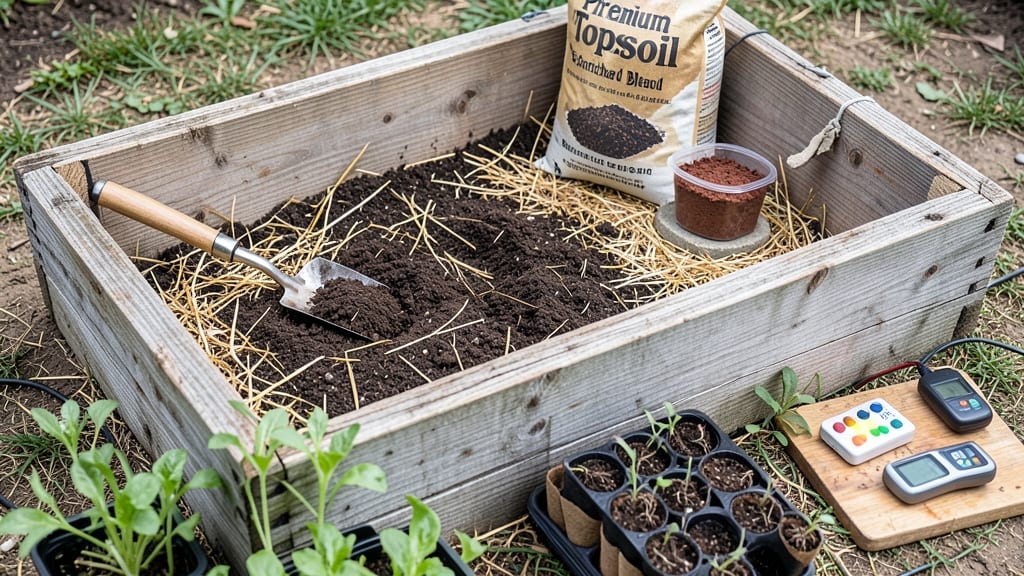
You can use garden soil in raised beds, but it should never be your only ingredient since it tends to compact, drain poorly, and harbor hidden weeds or pests. For best results, blend it with equal parts compost and organic materials like coconut coir or straw.
Garden soil's natural heaviness creates dense layers that restrict root growth, while its lack of organic matter leads to rapid nutrient depletion. 🌱 The key is balancing it with loose, airy components like compost (30-40%) and perlite (10-20%) to mimic ideal raised bed conditions.
Many gardeners swear by the "lasagna method"—layering soil with straw, leaves, and manure—before adding their topsoil mix for even better structure.
This approach not only prevents compaction but also creates a self-fertilizing ecosystem where beneficial microbes thrive. For vegetable gardens, I've found that adding a handful of worm castings to the mix gives an extra nutrient boost without overwhelming the plants.
The right blend turns your raised bed into a productive growing space that outperforms in-ground planting.
💡 In This Article
- Why Garden Soil Fails in Raised Bed Planting
- Best Soil Blends for Raised Garden Beds
Why garden soil fails in raised bed planting
Garden soil's natural density creates a major problem in raised beds: compaction. When you walk or work on topsoil, its fine particles press together, reducing pore space by up to 40%.
This suffocates roots by limiting oxygen flow, which is critical since roots need 10-20% air space to function properly. In contrast, ideal raised bed soil should have 30-50% pore space for optimal aeration and drainage.
The texture matters too—garden soil typically contains 20-40% clay particles, which hold moisture but create waterlogged conditions when saturated. This slow drainage leads to root rot, especially for vegetables like tomatoes that thrive in well-draining soil.
The clay also binds nutrients tightly, making them less available to plants. For comparison, a proper raised bed mix should drain water within 30-60 minutes after watering, while garden soil alone might take hours.
Weeds and pathogens are another hidden danger. Garden soil often contains dormant weed seeds that can germinate in your raised bed, competing with your crops for nutrients.
Studies show that 1 gram of garden soil can hold thousands of weed seeds, many of which may be resistant to common herbicides. The soil may also carry fungal spores or bacterial infections that can devastate young seedlings before they even emerge.
Nutrient deficiencies are the final nail in the coffin. While garden soil provides some minerals, it lacks the consistent organic matter that raised beds need. Organic materials like compost break down slowly, releasing nutrients over time, whereas garden soil's nutrients wash away quickly during watering.
This is why plants in pure garden soil often show signs of deficiency like yellowing leaves (chlorosis) within weeks.
What actually works is adding 50-60% organic matter like compost or coconut coir to garden soil. This creates a fluffy structure that holds moisture without compacting.
For example, my go-to mix is 40% garden soil, 30% compost, 20% perlite, and 10% vermiculite—this combo gives roots the air and water balance they crave. 🌱
The science behind this is simple: organic matter acts like a sponge, holding 3-4 times its weight in water while still allowing excess to drain. This prevents both drought stress and waterlogging, two common killers in raised beds.
The result? Plants grow 20-30% faster with stronger root systems compared to pure garden soil.