
Planting
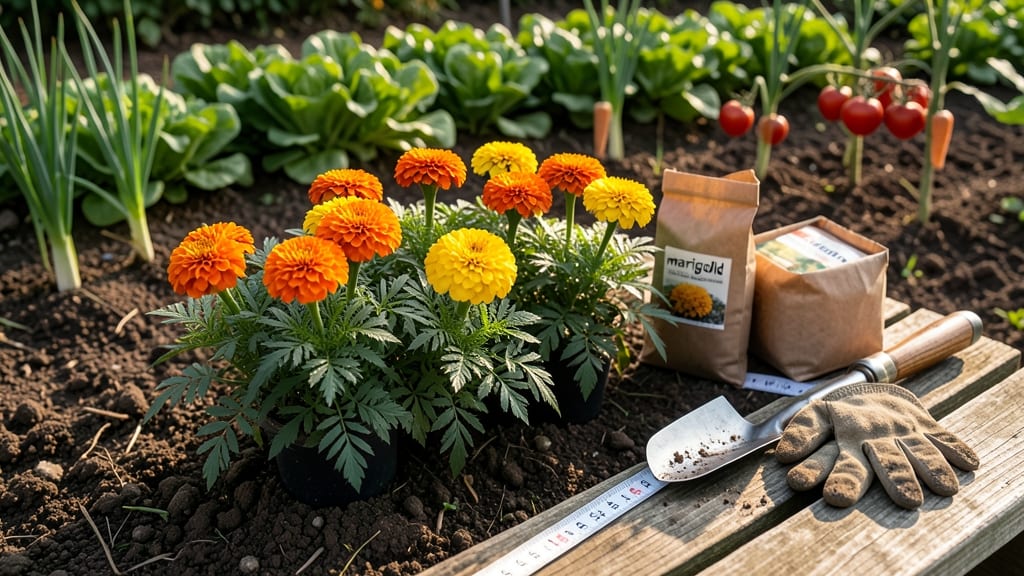
To determine how many marigolds to plant in a vegetable garden, aim for 6–10 plants per 100 square feet, spaced 12–18 inches apart in rows 18–24 inches apart. This spacing ensures strong pest deterrence and pollination support without overcrowding.
Marigolds thrive when given enough room to spread their natural pest-repelling compounds effectively. 🌼 The 12–18 inch spacing between plants allows their roots to release beneficial chemicals that deter nematodes and aphids, while the 18–24 inch row spacing ensures good airflow and sunlight penetration.
I've found that planting 6–10 marigolds per 100 square feet creates a dense enough barrier for pest control without competing too aggressively with your vegetables for nutrients.
For a small 10x10 foot plot, this translates to about 6–10 plants total, while larger gardens can scale up proportionally. The key is maintaining this balance—too few plants leave gaps where pests can sneak through, while overcrowding weakens individual marigolds and reduces their effectiveness.
I recommend placing them in border rows around your vegetable beds or interspersed every 2–3 feet within rows for maximum coverage.
💡 In This Article
- Marigold Spacing Science: Balancing Pest Control and Plant Health
- Marigold Planting Layouts for Maximum Garden Efficiency
Marigold spacing science: balancing pest control and plant health
Marigolds release natural compounds called α-terthienyl and limonene from their roots, which repel nematodes and other soil pests. These chemicals work best when marigold roots have enough space to spread—typically 12–18 inches apart.
At this spacing, the chemical concentration remains strong enough to create a protective zone around your vegetables, while still allowing sunlight to reach the leaves for photosynthesis. 🌱 Overcrowding beyond 10 plants per 100 square feet forces marigolds to compete for nutrients, weakening their pest-repelling abilities and reducing flower production.
The 18–24 inch row spacing serves a dual purpose: it prevents fungal diseases by improving airflow, and it allows you to interplant vegetables like tomatoes or cucumbers between marigold rows.
For example, in a 4-foot-wide raised bed, you could place marigolds every 18 inches along the edges and center, leaving 2-foot gaps for vegetable plants. This creates a natural pest barrier while maximizing garden space.
The science shows that marigolds planted closer than 12 inches suffer from increased leaf diseases due to poor ventilation.
Sunlight exposure is another critical factor. Marigolds need 6–8 hours of direct sun daily to thrive, and proper spacing ensures each plant gets adequate light without shading neighbors.
In my experience, French marigolds (like 'Bonanza') need slightly more space (18 inches apart) because of their bushier growth, while African marigolds (like 'Crackerjack') can handle 12-inch spacing due to their more compact form. The right spacing also prevents powdery mildew, which thrives in humid, crowded conditions.
What most gardeners don't realize is that marigold spacing affects pollination too. Bees and other beneficial insects are more likely to visit well-spaced plants with abundant flowers.
A 100-square-foot plot with 8 marigolds (spaced 15 inches apart) will attract significantly more pollinators than 20 plants crowded into the same space. The key is creating a balance where marigolds support both pest control and ecosystem health without overpowering your vegetable crops.
For container gardens, the same principles apply but scaled down. A 5-gallon pot can comfortably hold 1–2 marigold plants spaced 12 inches apart, while larger containers (like 15-gallon troughs) can accommodate 3–4 plants in a row.
The container's depth matters too—marigolds need at least 12 inches of soil to develop strong root systems that produce those beneficial compounds. 🌿
Seasonal adjustments are also important. In cooler climates, marigolds planted in late spring may need slightly tighter spacing (12 inches) to compensate for slower growth, while summer plantings can handle 18-inch spacing.
The goal is always to maintain that sweet spot where marigolds are close enough to deter pests but far enough apart to stay healthy and effective.