
Companion Plants
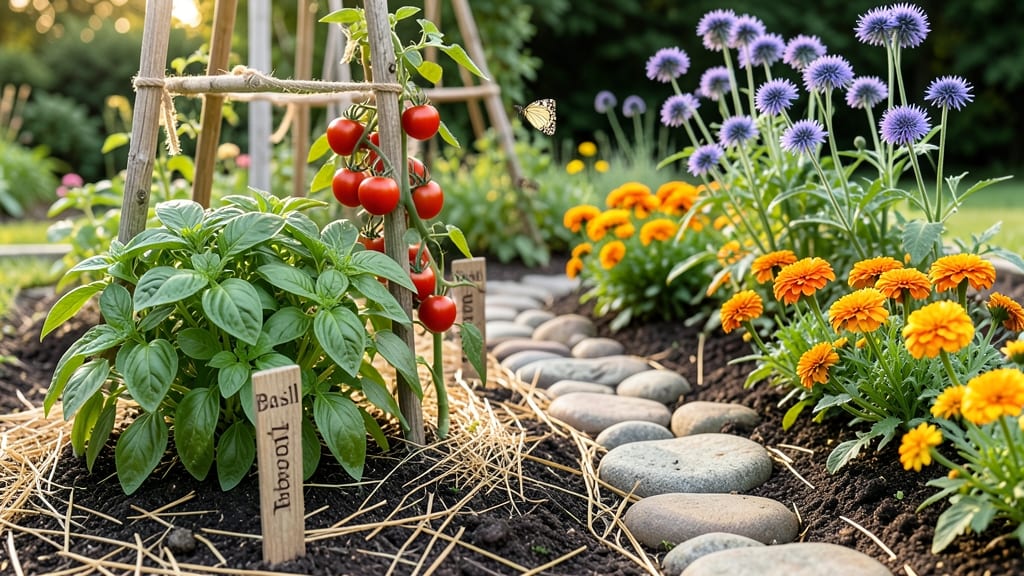
A companion garden layout transforms your plot into a thriving ecosystem where plants support each other’s growth while naturally fending off pests—no chemicals required.
Struggling to maximize your garden space while keeping pests at bay? A well-planned companion garden layout can double your harvest while slashing pest problems—without needing extra land or expensive chemicals.
This isn’t just about tossing herbs near tomatoes. The right pairings—like marigolds with peppers or basil with lettuce—create a pest-repellent shield while optimizing every inch of your bed.
Below, I’ll walk you through science-backed pairings, space-saving designs for small yards, and common mistakes that wreck even the best plans.
Science-backed plant pairings that repel pests naturally
Did you know that some plants act like nature's pest control? Companion planting leverages botanical relationships to disrupt pest life cycles naturally. For example, basil repels thrips and whiteflies while enhancing tomato flavor—all while saving space in your garden.
These pairings work because certain plants release allelochemicals that confuse pests or attract beneficial insects like ladybugs and bees.
The key lies in understanding how plants communicate chemically. Marigolds, for instance, emit a compound that deters nematodes, making them perfect partners for peppers and cucumbers. Meanwhile, carrots and onions release sulfur compounds that repel carrot flies, creating a protective barrier.
These relationships aren’t just theoretical—they’re backed by decades of agricultural research and organic farming practices.
For small gardens, space efficiency is critical. Vertical pairings like pole beans climbing trellises with cucumbers or squash maximize square footage while providing shade for heat-sensitive crops. Even herbs like dill and parsley can be tucked into corners, repelling aphids from nearby rosemary or thyme.
The goal? A high-density, low-maintenance garden that thrives without synthetic interventions.
| Plant Pairing | Pest Repelled | Spacing (inches) | Sunlight Needs |
|---|---|---|---|
| Basil + Tomatoes | Whiteflies, Thrips | 12-18 | Full Sun (6+ hrs) |
| Marigolds + Peppers | Nematodes, Aphids | 12-16 | Full Sun to Partial Shade |
| Carrots + Onions | Carrot Flies | 6-8 | Full Sun |
| Pole Beans + Cucumbers | Cucumber Beetles | 18-24 | Full Sun |
| Lettuce + Strawberries | Slugs, Rabbits | 10-12 | Partial Shade |
Let’s break down how these pairings work on a botanical level. Basil, for example, contains eugenol, a compound that masks the scent of tomatoes—confusing pests like whiteflies. Meanwhile, marigolds release alpha-terthienyl, a natural nematicide that disrupts nematode feeding.
Even garlic and chives emit sulfur compounds that repel aphids and Japanese beetles, making them ideal for roses or fruit trees.
One of my favorite space-saving tricks? Interplanting fast-growing crops like radishes with slower ones like cauliflower. Radishes mature in 30 days, giving you time to harvest them before pulling them to make room for the cauliflower.
This succession planting technique keeps your garden productive year-round while minimizing pest entry points. Plus, radishes deter cabbage moths, protecting your brassicas.
For container gardens, focus on complementary growth habits. Pair dwarf tomatoes with bush basil in a 5-gallon pot, or grow peppers alongside nasturtiums to repel squash bugs.
The key is to match water needs and sunlight requirements. For instance, peppers and basil both thrive in full sun and well-draining soil, making them perfect potmates.
Don’t overlook the power of
10 Space-saving companion garden layouts for small yards
Small spaces don't mean small harvests! With the right companion garden layout, you can maximize every square inch while keeping pests away. I've designed 10 easy-to-implement setups that work in containers, raised beds, and even tight in-ground plots.
These pairings use vertical growing and layered plantings to create efficient, high-yield gardens that look beautiful too.
Whether you're working with a sunny balcony or a shady corner, these layouts combine plants that support each other's growth. For example, pole beans climb trellises while radishes grow below, saving space and time.
The key is choosing plants with complementary needs - some that repel pests, others that improve soil, and a few that simply grow well together.
- 1
- 2
- 3
- 4
- 5
For raised beds, try planting peppers along the back with bush beans in front. The peppers get full sun while the beans fix nitrogen in the soil. Add dill at the edges to attract beneficial wasps that prey on tomato hornworms.
This layout works perfectly in a 4x8-foot bed, giving you three different crops in one space.
If you're working with containers, prioritize plants with similar water needs. A 12-inch pot can hold cherry tomatoes with basil and marigolds - the basil improves tomato flavor while repelling whiteflies, and marigolds deter nematodes.
For shade-loving containers, try lettuce, spinach, and chives together. The chives will keep slugs away while adding flavor to your salads.
Remember to rotate your crops yearly to prevent soil depletion and disease buildup. Even in small spaces, crop rotation is essential. For example, after growing heavy feeders like tomatoes, plant nitrogen-fixing beans or peas the following year. This keeps your soil healthy and your companion garden thriving season after season.
Start small with one or two of these layouts, then expand as you see what works best in your space. The key is to observe how your plants interact - you might discover even better pairings than the ones I've suggested!
With these space-saving designs, you'll be harvesting more in less space than ever before.