
Light Requirements
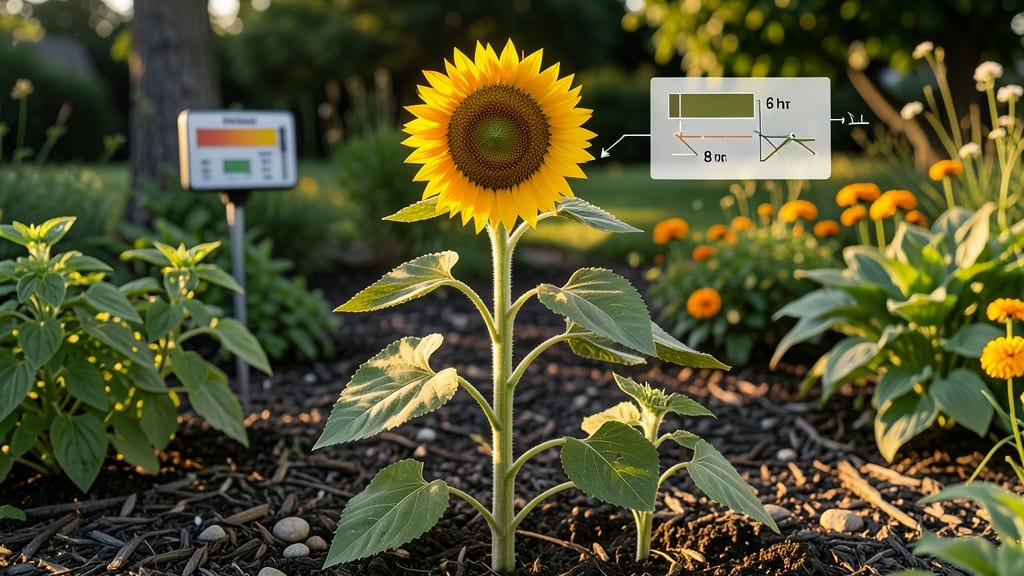
To determine how many hours of sun a garden needs, aim for 4 to 8 hours of direct sunlight daily—full-sun plants like tomatoes or lavender require 6-8 hours, partial-sun varieties such as hostas thrive with 3-6 hours, and shade-tolerant plants like ferns need less than 4 hours. Local climate and soil conditions also play a key role in sunlight requirements.
A garden's sunlight needs vary dramatically based on plant type and regional climate. 🌞 For instance, coastal gardens often receive gentler, diffused light compared to desert areas where intense midday sun demands shade protection.
Many gardeners overlook how leaf structure affects light absorption—broadleaf plants like impatiens absorb light differently than needleleaf varieties, which can thrive in partial shade. Understanding these nuances helps you design a balanced garden that maximizes growth without overcrowding plants competing for sunlight.
Beyond plant categories, sunlight exposure changes throughout the day. Morning sun is typically less intense than afternoon rays, which can scorch delicate foliage. I always recommend mapping your yard's sunlight patterns before planting—this helps place heat-sensitive plants in morning-light zones and water-loving varieties where afternoon shade naturally occurs.
Using reflective mulch or light-colored rocks can also redirect sunlight to areas that need it most.
💡 In This Article
- Sunlight Requirements by Plant Category: Full Sun vs Partial Sun vs Shade
- Adjusting Garden Layout for Optimal Sunlight Exposure
Sunlight requirements by plant category: full sun vs partial sun vs shade
Sunlight intensity isn't just about hours—it's about the quality of light your plants receive. Full-sun plants like sunflowers or rosemary need 6-8 hours of direct, unfiltered sunlight daily, where light intensity can reach up to 1,000 foot-candles (a measure of light brightness) during peak hours.
These plants have evolved with broad, flat leaves that maximize light absorption through a process called photosynthesis, which converts sunlight into energy at a rate of about 0.1-0.5 grams of glucose per square meter per hour under ideal conditions. 🌻
Partial-sun plants, such as hydrangeas or astilbes, thrive with 3-6 hours of sunlight but can tolerate 2-4 hours of shade, especially in hot climates where afternoon sun can be too intense.
Their leaves often have a waxy coating that reflects excess light, reducing water loss—a critical adaptation in regions like the southeastern U.S., where humidity levels can exceed 80% during summer afternoons.
For example, hostas, which fall into this category, grow best with morning sun and afternoon shade, as their leaves can scorch when exposed to 3,000+ foot-candles of midday light.
Shade-loving plants like ferns or astilbe prefer less than 4 hours of direct sunlight, often thriving under 100-500 foot-candles of filtered light. These plants typically have thinner leaves with larger surface areas to capture diffused light efficiently.
In woodland gardens, for instance, the canopy above can filter up to 90% of sunlight, creating a dappled-light environment ideal for these species. The trade-off? Their growth rates are slower compared to sun-lovers, as photosynthesis occurs at a reduced rate—often 30-50% less efficient than in full-sun conditions.
Leaf structure plays a surprising role in sunlight absorption. Broadleaf plants, like impatiens, have leaves that can absorb light across a wider spectrum, including ultraviolet (UV) rays, which help produce protective pigments.
In contrast, needleleaf plants, such as junipers, have leaves that minimize water loss in dry climates while still capturing enough light for photosynthesis. This is why junipers often thrive in partial shade—their needles can efficiently use low-light conditions, whereas broadleaf plants may struggle. 🌿
Climate also alters sunlight requirements. In coastal regions, like the Pacific Northwest, sunlight is often diffused by marine layers, reducing intensity even during sunny days. Here, a plant labeled "full sun" might only need 4-5 hours of direct light due to the softer quality of sunlight.
Conversely, in desert climates, such as Arizona, the same plant would need 6-8 hours to compensate for the higher UV index, which can exceed 12-15 on clear days—equivalent to the UV exposure you'd get at high altitudes.
Soil type interacts with sunlight needs in unexpected ways. Sandy soils, common in coastal gardens, drain quickly and may require plants to grow faster to establish roots, increasing their sunlight demands. Clay soils, found in many inland areas, retain moisture longer, allowing shade-tolerant plants to thrive with less light.
For example, a shade-loving plant like a bleeding heart may need only 2-3 hours of sunlight in clay soil but could require 3-4 hours in sandy soil to maintain healthy growth.