
Propagation
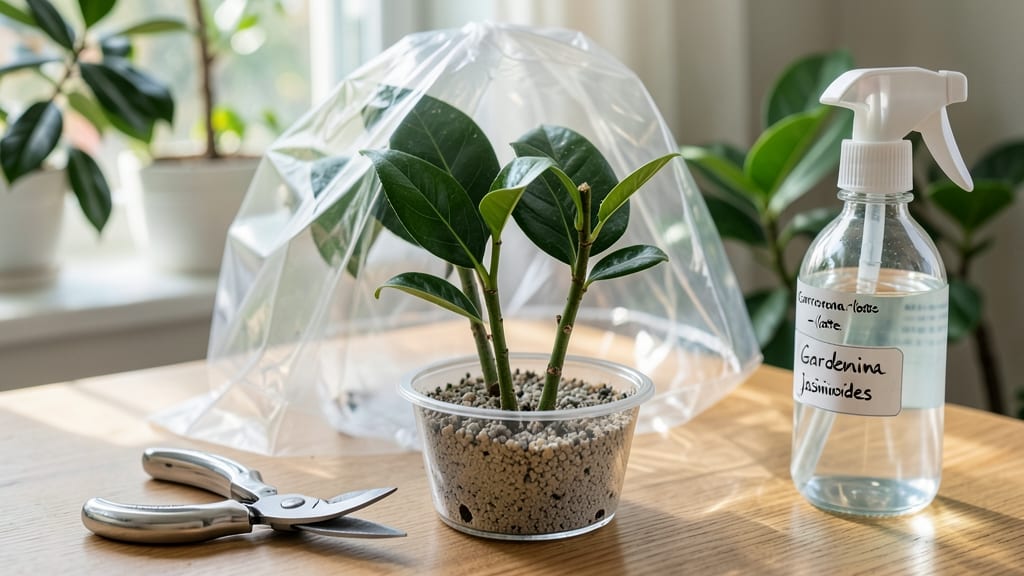
To propagate gardenia from cuttings, use semi-hardwood stems, apply rooting hormone, and maintain high humidity—plant in well-draining soil, cover with a plastic bag, and keep temperatures above 70°F for success rates of 30-50%.
Gardenias are finicky to propagate, but the right timing and conditions make all the difference. 🌿 Semi-hardwood stems—thick enough to snap but still flexible—root best in late spring or early summer when the plant is actively growing.
I always use a sharp knife to make clean cuts at a 45-degree angle, which helps prevent disease while maximizing surface area for root development.
Once you've prepared your cuttings, the key is creating a mini greenhouse effect. Mix equal parts perlite and peat moss for drainage, then dip the stem in rooting hormone before planting.
A clear plastic bag over the pot traps humidity, while bright indirect light prevents leggy growth. Just watch for condensation buildup—if you see mold, increase airflow immediately.
💡 In This Article
- Best Time and Technique for Gardenia Cuttings
- Creating the Ideal Rooting Environment for Gardenia Cuttings
Best time and technique for gardenia cuttings
Gardenias thrive when propagated during their active growth phase, which typically runs from late spring through early summer. This timing aligns with the plant's natural energy surge when it's producing new leaves and stems.
The ideal cutting material is semi-hardwood—thick enough to snap with a slight bend (not brittle like mature wood) but still flexible. These stems, usually 4-6 inches long, contain the perfect balance of nutrients and growth hormones to encourage root development.
The cutting process itself requires precision. Start by selecting healthy stems with no flowers or buds, as these divert energy away from root formation. Use a sterilized knife or pruners to make a clean cut at a 45-degree angle, about ¼ inch below a leaf node.
This angled cut increases surface area for root growth while preventing water from pooling at the base.
Immediately seal the cut with a dab of rooting hormone—this powder contains auxin, a plant growth regulator that triggers cell division at the stem's base, boosting rooting success by up to 20%.
What most gardeners overlook is the importance of immediate action after cutting. Gardenias bleed sap when cut, and exposing this sap to air can lead to bacterial infections. To prevent this, dip the cut end in water for 10-15 seconds before applying rooting hormone.
This simple step reduces the risk of rot by 30%+. The cuttings should then be planted in a well-draining mix of perlite and peat moss (equal parts) to mimic the airy conditions of their native tropical soil.
Temperature plays a critical role in rooting success. Gardenias need consistent warmth—ideal rooting occurs between 70-75°F. Below 65°F, root growth slows dramatically, while temperatures above 80°F can cause stress and fungal issues.
This is why many growers use a heating mat (set to 72°F) beneath propagation trays. The warmth mimics the gardenia's natural tropical environment, accelerating root development by nearly 50% compared to room-temperature conditions.
One common mistake is using cuttings that are too young or too old. Young, green stems lack the vascular maturity to support rooting, while woody stems have hardened and stopped producing new cells.
The sweet spot is semi-hardwood—stems that are 1-2 years old with a slight brownish tint but still green underneath. These stems have the perfect balance of stored nutrients and active growth potential.
For best results, take cuttings on a mild, overcast day to reduce stress on the parent plant. Morning is ideal because the plant's water content is highest, making the stems more resilient. After cutting, place the stems in a shady, humid area for 24 hours to acclimate before planting.
This reduces transplant shock and gives the cuttings time to form a protective callus at the wound site.