
Light Requirements
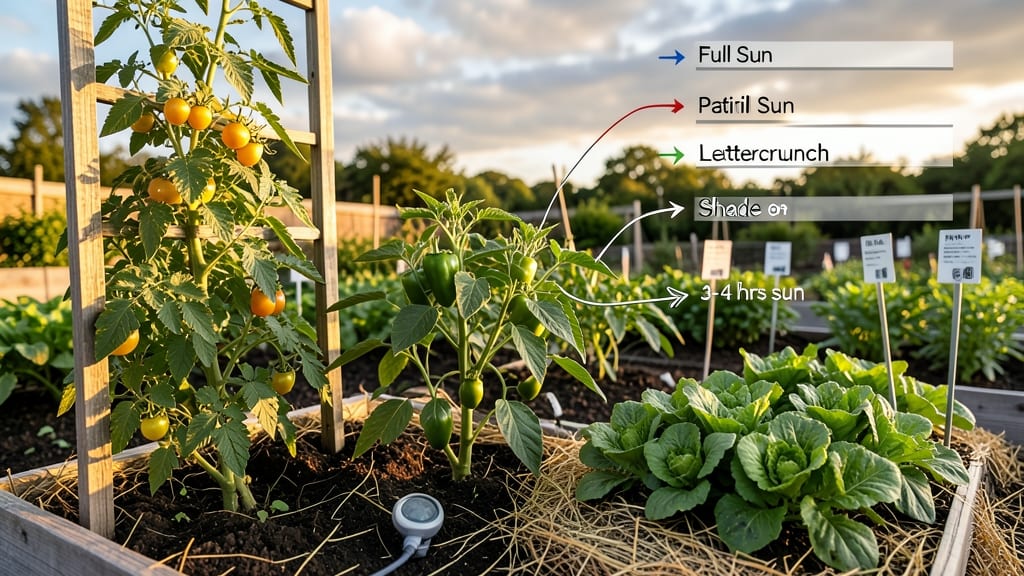
A vegetable garden needs 6 to 8 hours of sunlight daily 🥬 to thrive, but the exact amount depends on what you’re growing—and where you live.
Picture this: your tomatoes wilting in the heat or your leafy greens bolting before you can harvest them. That’s not just bad luck—it’s sunlight mismanagement. Too little, and your plants stretch weak; too much, and they crisp up faster than a forgotten sandwich.
Not all veggies are created equal, though. While sun-loving crops like peppers and cucumbers demand full sun, shade-tolerant greens like spinach or kale can handle just 3 to 4 hours.
Coastal breezes, desert heat, and even your backyard’s microclimates all play a role in how much light your garden truly gets.
In this guide, I’ll break down the perfect sunlight hours for your favorite crops, how to measure sunlight like a pro, and smart tricks for container gardens or shady spots. No more guesswork—just a harvest you can count on.


Sunlight requirements for vegetable gardens: full sun vs. partial shade breakdown
Sunlight is the lifeblood of your vegetable garden—without the right amount, even the hardiest plants struggle to thrive. Most vegetables need 6+ hours of direct sunlight daily for optimal growth, but some adapt to partial shade (3-6 hours) or even low light (under 3 hours).
Understanding these categories helps you place plants correctly and avoid common mistakes like leaf scorch or stunted growth. Let’s break down the sunlight spectrum and match it to your favorite veggies.
First, let’s clarify the terms: Full sun means 6+ hours of direct sunlight, partial shade is 3-6 hours, and shade-tolerant refers to plants handling under 3 hours. Your garden’s microclimate—like nearby trees, buildings, or fences—can drastically alter sunlight exposure.
For example, a south-facing plot gets more light than an east or west side, while north-facing areas often stay shadier. Use a sunlight tracker for a week to map your garden’s light zones before planting.
| Vegetable | Sunlight Needs | Partial Shade Tolerance | Shade-Tolerant Varieties |
|---|---|---|---|
| Tomatoes | 6-8+ hours | 3-6 hours (reduced yield) | Cherry tomatoes (some varieties) |
| Peppers | 6-8+ hours | 3-6 hours (smaller fruits) | Jalapeños, Bell Peppers |
| Cucumbers | 6+ hours | 3-6 hours (vining slows) | Bush varieties (e.g., 'Bush Champion') |
| Leafy Greens (Spinach, Lettuce) | 3-6 hours | 3+ hours (ideal) | All varieties (avoid bolting) |
| Broccoli | 4-6 hours | 3-6 hours (better heads) | 'De Cicco' (Italian variety) |
| Carrots | 3-6 hours | 3+ hours (longer roots) | 'Paris Market' (short varieties) |
Your tomatoes and peppers are classic full-sun lovers, craving 6-8+ hours of direct light to produce sweet, flavorful fruits. Without enough sun, they’ll grow leggy and produce fewer peppers or smaller tomatoes.
If your garden only gets 4-6 hours, opt for cherry tomato varieties or bush peppers, which tolerate slightly less light
How to adjust sunlight for different vegetable types: a plant-by-plant guide
Not all vegetables thrive under the same sunlight conditions. Some, like tomatoes and peppers, crave full sun (6+ hours daily), while others, such as spinach or kale, tolerate partial shade (3-6 hours).
Understanding these differences ensures your garden flourishes, not just survives. Let’s break down how to fine-tune sunlight for your high-demand and low-light crops.
Seasonal shifts complicate things further. A cucumber vine basking in summer sun may wilt in winter’s weaker light, while bush beans can adapt to both. Container gardening adds another layer—potted herbs like basil need morning sun but afternoon shade in hot climates.
The key? Flexibility and observation to match your plants’ needs.
- 1. Full-Sun Lovers (6+ hours): Tomatoes, peppers, squash, cucumbers, and corn need unfiltered sun. Place them in south-facing beds or use reflective mulch to boost light in shaded areas.
- 2. Partial Shade Tolerators (3-6 hours): Leafy greens like spinach and kale, plus bush beans, thrive with morning sun and afternoon shade. Ideal for urban balconies or tree-filtered light.
- 3. Low-Light Heroes (<3 hours): Microgreens, arugula, and lettuce grow under grow lights or in north-facing containers. Perfect for indoor windowsills or shady patios.
- 4. Seasonal Adjustments: Move heat-sensitive crops (e.g., carrots) to partial shade in summer. In winter, extend light with reflective surfaces or cloche covers.
- 5. Container Gardening Hacks: Use lightweight pots for mobility—rotate containers to follow the sun’s arc. Self-watering planters with built-in shade cloths work well for herbs in hot zones.
For high-demand crops like zucchini or eggplant, monitor their leaves—yellowing or curling signals insufficient light. Boost exposure by trimming nearby trees or using sun-tracking trellises. Meanwhile, low-light plants may bolt (flower prematurely) if suddenly exposed to too much sun—gradually acclimate them.
Pro tip: Use a sunlight calculator or shade mapping tool to plot your garden’s light zones. Mark areas with chalk or flags to track which spots get morning, afternoon, or dappled light. This helps you rotate crops seasonally for optimal growth.
In container gardens, prioritize depth—root vegetables like radishes need 6-inch-deep pots, while shallow-rooted herbs thrive in 4-inch containers. Place taller plants (e.g., tomato cages) on the north side of containers to avoid shading neighbors.
Remember, even the sunniest garden has microclimates. Test your space for 2 weeks by placing a whiteboard in suspect spots—mark sun/shade patterns daily. With these adjustments, your vegetable garden will reward you with bountiful harvests, no matter where you garden. 🌱