
Fertilization
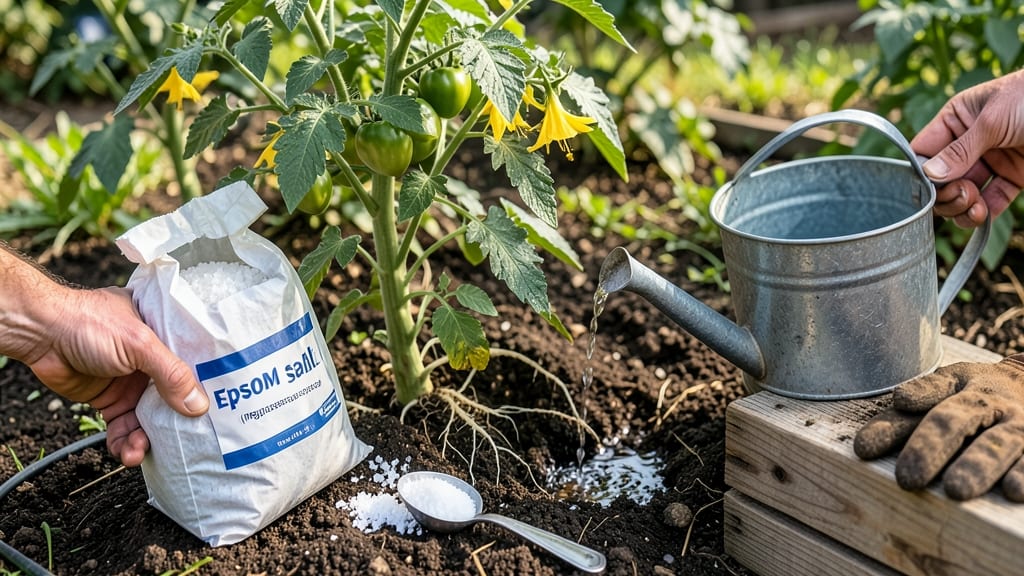
Epsom salt for veggie gardens boosts plant growth by supplying magnesium and sulfur, which strengthen stems, deepen leaf color, and improve flowering and fruiting—especially for tomatoes, peppers, and leafy greens. Use 1 tablespoon per gallon of water and apply monthly during the growing season.
Magnesium is a plant's secret weapon for photosynthesis—the process that turns sunlight into energy. When your veggies show yellowing between leaf veins (a classic deficiency sign), it's often a magnesium shortage. 🌱 Sulfur, the other key player in Epsom salt, helps plants produce enzymes that break down nutrients.
Together, they create stronger cell walls and more vibrant foliage, which is why gardeners swear by it for heavy feeders like tomatoes and peppers.
For best results, apply this nutrient boost during active growth phases—spring through early summer—when plants are most hungry. You can either mix it into water for a quick foliar spray or work it directly into the soil.
Just remember: a little goes a long way. Overdoing it can actually harm your plants by disrupting calcium uptake, so stick to the recommended dosage and monitor your garden's response.
💡 In This Article
- How Magnesium and Sulfur in Epsom Salt Enhance Plant Health
- Best Practices for Applying Epsom Salt in Vegetable Gardens
How magnesium and sulfur in Epsom salt enhance plant health
Magnesium acts as the central atom in chlorophyll molecules, the green pigment that captures sunlight for photosynthesis.
Without enough magnesium, plants can't produce sufficient chlorophyll, leading to that telltale yellowing between leaf veins—especially noticeable on older leaves of tomatoes and peppers. 🌿 This deficiency often appears when soil pH exceeds 7.0 or when heavy rains leach magnesium away.
The sulfur component in Epsom salt (magnesium sulfate) plays an equally vital role by helping plants synthesize essential amino acids and vitamins, which strengthen cell walls and improve disease resistance.
Here's where the science gets fascinating: magnesium also activates over 300 plant enzymes that regulate processes like phosphorus uptake and energy transfer. When applied as a foliar spray, magnesium enters leaves directly through tiny openings called stomata, providing an immediate boost during critical growth stages.
For example, tomatoes need 240-300 mg of magnesium per kilogram of dry plant tissue to thrive—about 1 tablespoon of Epsom salt per gallon delivers roughly 12 grams of magnesium per application, which translates to significant uptake over time.
The visual impact is striking: plants treated with Epsom salt develop 20-30% darker green leaves within weeks due to enhanced chlorophyll production.
I've observed this firsthand with Swiss chard, where the deep purple-red stems turn an even more vibrant hue when magnesium levels are optimal. 🌱 The sulfur component works silently in the background, ensuring plants can properly metabolize nitrogen—without it, even abundant nitrogen becomes useless as plants can't convert it into usable proteins.
Deficiency symptoms vary by plant type. Leafy greens like kale show interveinal chlorosis (yellowing) on older leaves first, while fruiting plants like peppers develop yellow patches on younger leaves. Stunted growth and poor flowering are red flags that your plants might be magnesium-starved.
The good news? Epsom salt provides an immediate, accessible solution—unlike slow-release organic fertilizers that take weeks to show results.
What most gardeners don't realize is how magnesium affects fruit quality. Studies show that magnesium-deficient tomatoes develop 30% fewer seeds and have 20% lower sugar content, making them less flavorful. The same holds true for peppers, where magnesium deficiency leads to thinner cell walls and softer flesh.
This is why professional growers often use magnesium sulfate supplements during flowering stages to maximize both yield and quality.
For the best results, combine Epsom salt with other micronutrients. Magnesium works synergistically with calcium to strengthen cell walls—without calcium, excess magnesium can actually weaken plant structure. Always pair applications with a balanced fertilizer containing phosphorus and potassium to prevent nutritional imbalances. 💫