
Watering
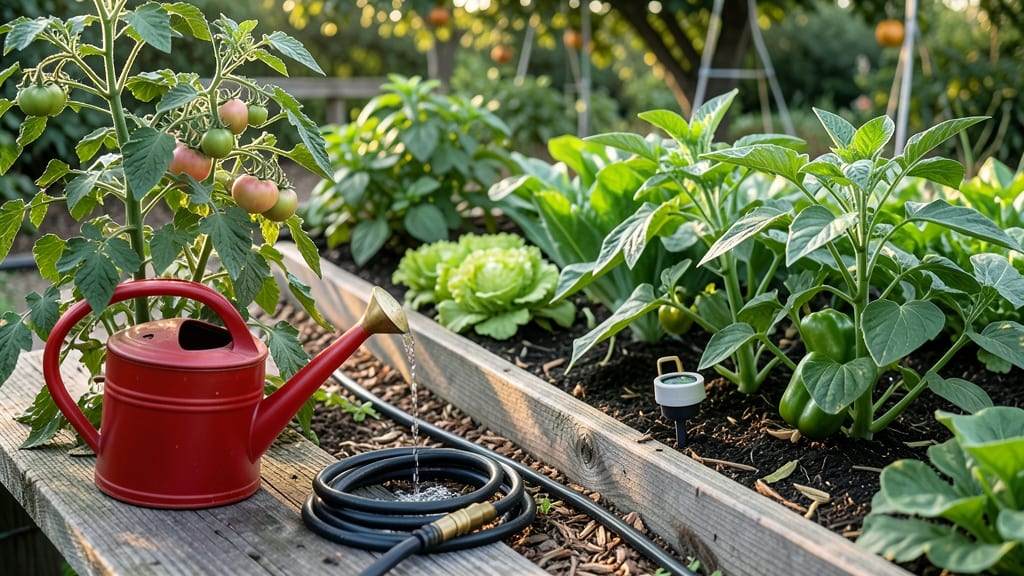
You should water your veggie garden 🥬 based on plant type, weather, and soil—not on a rigid schedule, because one size never fits all.
Overwatering or underwatering your veggie garden can mean the difference between a thriving harvest and wilted disappointment—so how do you find the perfect balance?
Most gardeners guess, but the truth is, tomatoes and leafy greens need different approaches, and summer heat demands more frequent watering than spring showers.
Below, I break down the exact watering frequency by plant, season, and soil type—plus how to spot when you’re doing it wrong and how to fix it fast.
Watering frequency by plant type: a seasonal schedule for vegetable gardens
Finding the right watering schedule for your veggie garden depends on more than just sticking to a calendar—it’s about understanding each plant’s unique needs. Tomatoes and peppers demand deep, consistent moisture, while leafy greens like lettuce prefer frequent, shallow drinks.
Root crops such as carrots and beets need steady hydration but hate soggy soil. Seasonal shifts also play a huge role: summer heat means daily watering, while cooler fall days let you stretch intervals to every 4-5 days.
To avoid guesswork, I’ve broken down watering needs by plant type and growth stage, plus seasonal adjustments. Whether you’re a beginner or a seasoned gardener, these guidelines will help you keep your veggies thriving without wasting water.
The key? Morning watering (before 10 AM) to reduce evaporation and fungal risks, plus checking soil moisture with your finger—1 inch deep is the golden rule for most vegetables.
Here’s a quick reference table to get you started, covering the most common veggies in your garden:
For young seedlings, I recommend a light misting every
5 Key factors that change your watering routine (beyond plant type)
While knowing your tomatoes need more water than your carrots is a good start, your watering schedule should also adapt to soil type, climate conditions, and even how you're growing your plants.
These hidden factors can double—or halve—the frequency you water without realizing it. Let's break down the 5 game-changers that determine whether your veggies thrive or struggle.
First, consider your soil type. Sandy soil drains like a sieve, meaning you might need to water daily in summer, while clay soil holds moisture for days, requiring watering every 4-5 days.
I’ve seen lettuce bolt in sandy soil from thirst, but drown in clay if overwatered. Testing your soil’s drainage with a simple jar test can save you from guesswork.
Next, your local climate plays a massive role. In humid regions like the Southeast, overhead watering can create fungal issues, so drip irrigation becomes a lifesaver. Meanwhile, in arid climates like the Southwest, you’ll need to water early in the morning to prevent rapid evaporation.
I once lost an entire pepper plant batch because I ignored the heat—always check the forecast!
Here’s where it gets tricky: container vs. in-ground planting. Potted herbs or tomatoes dry out faster than in-ground plants because their roots have less access to moisture. I’ve found that container gardens often need watering every 1-2 days in summer, while in-ground beds might stretch to 3-5 days.
Always check the top inch of soil—if it’s dry, it’s time to water.
Don’t underestimate the power of mulch. A 2-3 inch layer of straw or wood chips can retain 30% more moisture in the soil, cutting your watering needs by half.
I’ve seen zucchini plants thrive with mulch, producing twice as many fruits because the soil stayed consistently moist. Plus, mulch suppresses weeds, so it’s a two-for-one win!
Finally, your irrigation method can make or break your watering routine. Drip irrigation delivers water directly to the roots, reducing waste and fungal risks, while overhead sprinklers can lead to leaf diseases if used at night.
I switched my pepper garden to drip irrigation last year, and the difference was night and day—no more soggy leaves or wasted water.
Adjusting your watering routine based on these factors isn’t just about trial and error. It’s about observing your plants, testing your soil, and adapting to your environment.
Start with one factor at a time—like mulching or switching to drip irrigation—and watch how your veggies respond. Your harvest will thank you! 🌱