
Blooming
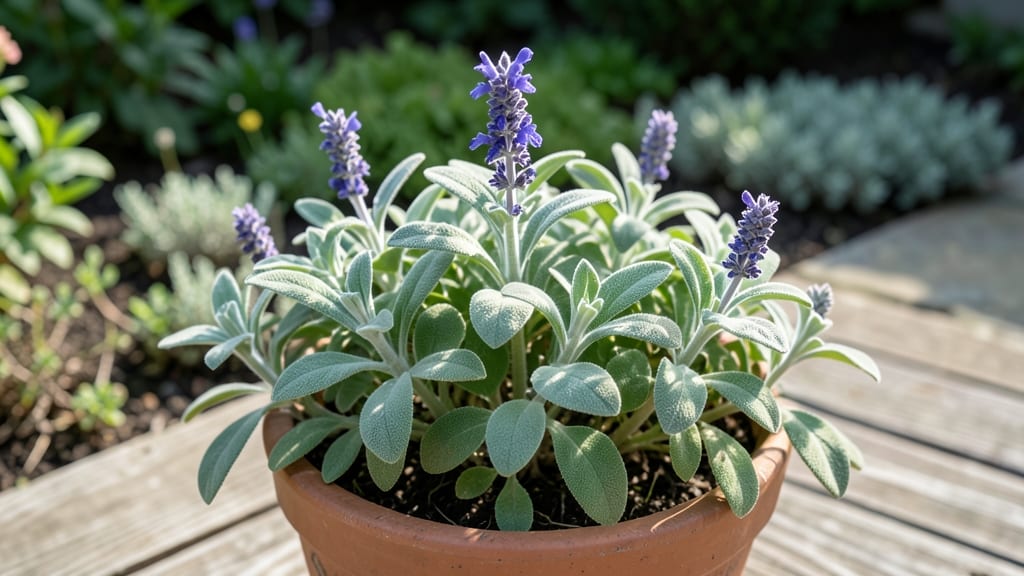
Garden sage does bloom under ideal conditions, producing small purple, pink, or white flowers in late spring or summer, though it’s primarily grown for its aromatic foliage. Pruning and sunlight exposure encourage flowering in mature plants.
Sage plants typically focus their energy on leaf growth, but they'll reward you with delicate blossoms when given the right conditions. 🌸 These flowers aren't just pretty—they attract pollinators and can even develop into seed pods if left unpruned.
I've noticed that older, well-established plants (3+ years) are far more likely to flower than younger ones, and they tend to bloom more prolifically after a good pruning in early spring.
What's interesting is how light triggers this process. Sage needs at least 6-8 hours of direct sunlight daily to initiate flowering, but too much intense heat can actually stress the plant and reduce bloom production.
The timing of blooms also varies by climate—cooler regions might see flowers in early summer, while warmer areas could get them as late as early fall.
💡 In This Article
- Why Sage Plants Produce Flowers (And When to Expect Them)
- Encouraging Sage Flowers: Pruning and Care Tips
Why sage plants produce flowers (and when to expect them)
Sage flowers emerge as part of the plant's natural reproductive cycle, triggered by specific environmental cues. The most critical factor is daylight length—sage responds to increasing daylight hours in spring by shifting energy from leaf production to flower development.
This photoperiodic response explains why blooms typically appear between late spring and early summer, when days reach 14-16 hours of daylight. The flowers themselves are small (about 0.5 inches wide) and grow in dense spikes, with colors ranging from lavender to pale pink, depending on the cultivar.
Plant maturity plays a crucial role too. Young sage plants (under 2 years old) prioritize root and foliage growth, often skipping flowering entirely. It's not until they reach 3-4 years that they develop the energy reserves needed for blooming.
The science behind this is fascinating: older plants have established stronger root systems that can support both leaf production and floral development simultaneously. 🌱 What's more, the plant's internal clock—controlled by hormones like florigen—only activates flowering when it detects consistent environmental stability, including proper sunlight and temperature ranges between 60-80°F.
There's also a fascinating difference between culinary and ornamental sage varieties. Common culinary sage (Salvia officinalis) produces more modest flower displays, often with purple or pink blooms, while ornamental varieties like 'Berggarten' or 'Purpurascens' showcase dramatic deep purple or white flowers> that can last for weeks.
The ornamental types have been selectively bred to prioritize floral production, sometimes at the expense of leaf quality. This means if you're growing sage primarily for cooking, you might need to prune flowers promptly to maintain robust leaf growth.
Seasonal timing varies by climate zone. In USDA zones 5-7, blooms typically appear in May-June, while in warmer zones 8-10, they may extend into July-August.
What's interesting is how temperature fluctuations affect bloom quality: sudden heatwaves above 90°F can cause buds to drop, while cool evenings (55-65°F) help maintain flower longevity.
The flowers themselves have a delicate, slightly sweet fragrance that's more pronounced in the morning hours, adding another sensory layer to your garden experience.
One botanical quirk worth noting is how sage flowers develop from the leaf axils—those small angles where stems and leaves meet. This growth pattern means flowers often appear along the stems rather than at the tips, creating a cascading effect that's particularly striking in ornamental varieties.
The flowers are also attractive to pollinators like bees and butterflies, making your sage plant an unexpected garden ecosystem contributor. 🐝 What most gardeners don't realize is that allowing a few flowers to develop can actually improve next year's blooming, as the seed production process stimulates hormonal changes that prime the plant for future flowering cycles.
For those growing multiple sage varieties, you'll notice flowering patterns can differ significantly.
For instance, golden sage (Salvia officinalis 'Aurea') tends to produce smaller, more abundant flowers than the classic gray-green varieties, while pineapple sage (Salvia elegans) develops bright red tubular flowers that are highly attractive to hummingbirds.
This diversity shows how selective breeding and natural variation create such a wide range of flowering behaviors within the same genus. The key takeaway is that while all sage plants share similar basic requirements for flowering, their individual characteristics create a beautiful spectrum of garden possibilities.