
Container Gardens
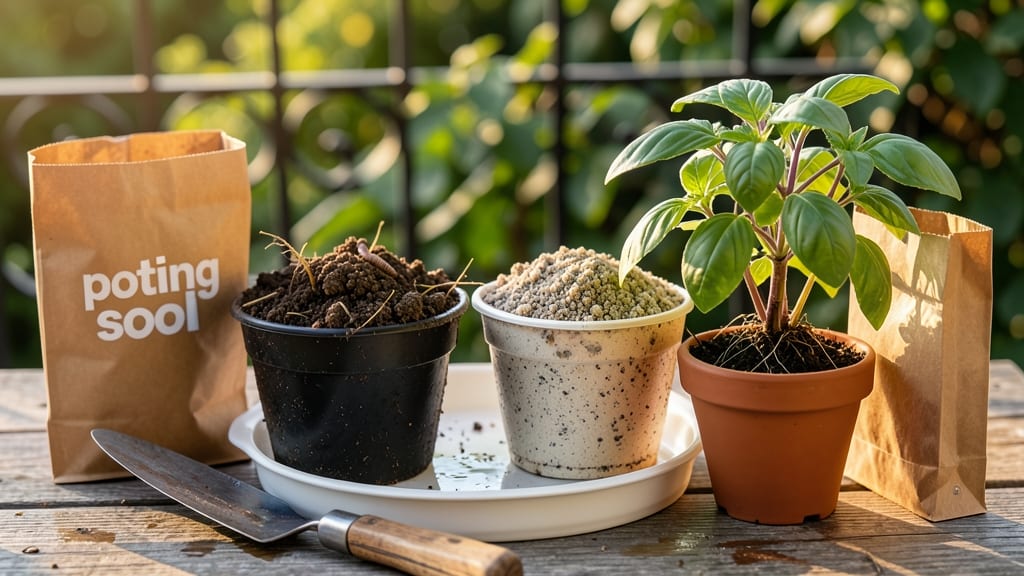
You shouldn't use garden soil in containers because it compacts easily, drains poorly, and may contain pests or diseases. Instead, opt for lightweight potting mix with perlite or vermiculite for better aeration and drainage.
Garden soil is designed for in-ground planting where roots can spread freely, but containers create a confined environment where soil behavior changes dramatically. Compacted soil in pots restricts root growth and suffocates roots by limiting oxygen flow, while poor drainage leads to waterlogged conditions that promote rot. Potting mixes solve these issues by incorporating organic matter like coconut coir and inorganic additives like perlite, which improve both drainage and aeration. 🌱
Another key difference is nutrient balance—garden soil often contains uneven nutrients and weed seeds, while potting mixes are formulated to provide consistent nutrition tailored to container plants. For example, herbs like basil thrive in well-draining mixes, while vegetables need mixes with added compost for sustained growth.
💡 In This Article
- Why Garden Soil Fails in Container Gardening
- Best Potting Mix Blends for Container Plants
Why garden soil fails in container gardening
Garden soil is engineered for open-ground planting where roots can spread horizontally and vertically without restriction. In containers, however, the confined space causes soil particles to press tightly together when watered, creating a phenomenon called soil compaction.
This happens because the weight of the soil and plant compresses the particles, reducing pore space by up to 40%—a critical issue since roots need those air pockets to breathe. 🌱
The drainage problem worsens in containers because water has nowhere to escape efficiently. Garden soil's natural clay and silt content can hold moisture like a sponge, but without proper aeration, excess water lingers around roots, leading to anaerobic conditions (oxygen deprivation) that cause rot within 24-48 hours.
Compare this to potting mixes, which include 20-30% perlite or vermiculite—mineral additives that create air pockets while allowing water to drain freely.
Nutrient imbalances also plague garden soil in containers. Outdoor soil often contains uneven distributions of organic matter, weed seeds, and pathogens that thrive in the confined space.
For example, a single tablespoon of garden soil can harbor thousands of weed seeds that will germinate in your pot, competing with your intended plants. Potting mixes, however, are sterilized and formulated with consistent ratios of compost, peat moss, and additives to support healthy root development.
Root health suffers most from these conditions. In compacted soil, roots grow girdled and stunted, unable to absorb water and nutrients efficiently. Studies show plants in garden soil containers can experience 30-50% reduced growth compared to those in proper potting mixes.
The lack of oxygen also triggers the release of ethylene gas—a plant stress hormone—that accelerates aging and disease susceptibility. 🔥
Consider the texture: garden soil feels dense and heavy when moist, while ideal potting mix has a light, almost fluffy consistency that crumbles easily. This structural difference directly impacts how plants perform.
For instance, herbs like thyme or rosemary, which need excellent drainage, will quickly develop root rot in garden soil but thrive in mixes with 50% perlite by volume.
Even the microbial ecosystem shifts. Garden soil's native microbes may not adapt well to container conditions, while potting mixes often include beneficial fungi like mycorrhizae, which help roots absorb nutrients more efficiently.
This microbial balance is another reason why container plants often outperform their in-ground counterparts when using proper mixes. ✨