
Container Gardens
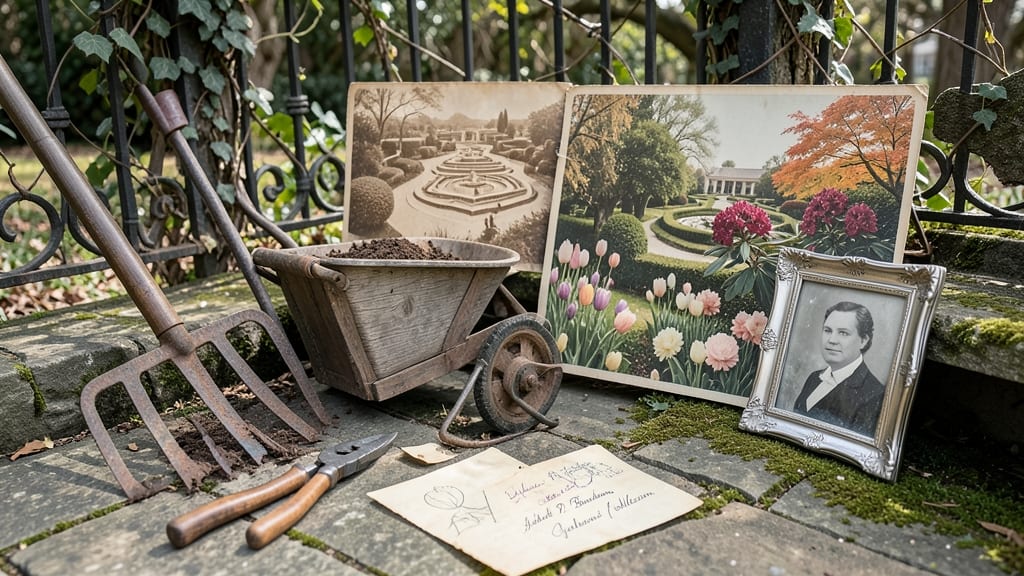
Butchart Gardens history reveals how a 1904 limestone quarry became Canada's first public garden through Jennie Butchart's visionary blend of Victorian-era design and innovative horticulture, pioneering conservation methods still celebrated today.
The gardens' origins trace back to a limestone quarry owned by cement magnate James Butchart, where his wife Jennie—inspired by European botanical gardens—began planting flowers in 1904. 🌸 What started as a private retreat for the family soon opened to the public, becoming Victoria's first major tourist attraction.
Jennie's use of rare plants and terraced designs created a harmonious fusion of nature and artistry that set new standards for public gardens worldwide.
Beyond its beauty, Butchart Gardens became a pioneer in ecological preservation, implementing early conservation techniques like controlled water flow and native plant restoration. Today, it remains a living testament to Jennie's legacy, attracting over a million visitors annually while continuing to advance sustainable landscaping practices.
💡 In This Article
- From Quarry to Masterpiece: How Butchart Gardens Transformed Victoria’s Landscape
- Legacy and Impact: Butchart Gardens’ Role in Global Horticulture and Conservation
From quarry to masterpiece: how butchart gardens transformed Victoria’s landscape
The story of Butchart Gardens begins with a 120-foot-deep limestone quarry carved into the Saanich Peninsula by James Butchart in the 1870s. The quarry's rugged walls and natural waterfalls created a dramatic backdrop that Jennie Butchart recognized as a blank canvas for her horticultural ambitions. 🌿 Unlike traditional gardens of the era, which often relied on flat, manicured lawns, Jennie embraced the quarry's verticality, designing terraces that cascaded down the cliffsides—an innovation that would become the gardens' signature style.
Jennie's design process combined Victorian-era botanical knowledge with practical solutions for the challenging site. She imported rare plants from around the world, including 1,000 roses from Europe and exotic species like camellias and rhododendrons, while also incorporating native British Columbia flora to ensure ecological harmony.
The gardens' famous Sunken Garden, completed in 1909, featured a 100-foot-long reflecting pool surrounded by vibrant flowers—a feat of engineering that required precise grading and water management in the steep terrain.
What makes the transformation truly remarkable is how Jennie integrated the quarry's industrial past with her natural vision. The original quarry walls were repurposed as dramatic backdrops for floral displays, while the natural springs that once powered the quarry's machinery were redirected to feed the gardens' fountains and waterfalls.
This fusion of human-made and natural elements created a landscape that felt both wild and meticulously crafted—a concept that would later influence modern garden design worldwide.
The physical labor behind this transformation was immense, involving hundreds of immigrant workers, many from China and Japan, who were hired to build terraces, install irrigation systems, and landscape the steep slopes.
Jennie's team also developed innovative soil stabilization techniques using crushed limestone and organic matter to prevent erosion on the fragile cliffsides. These methods not only preserved the gardens' structural integrity but also demonstrated how industrial byproducts could be repurposed for ecological benefit—a principle still applied in contemporary sustainable landscaping.
One of the most fascinating technical achievements was the gardens' early irrigation system, which relied on a network of wooden flumes and clay pipes to distribute water efficiently across the terraces.
Jennie's team even created a natural filtration system using layers of gravel and sand to purify water from the quarry's springs before it reached the plants. This engineering prowess ensured the gardens could thrive despite Victoria's rainy climate, with some areas receiving up to 150 inches of rainfall annually.
Today, visitors can still see the original quarry walls and waterfalls that inspired Jennie's vision, now softened by 30 acres of lush gardens featuring over 1,000 varieties of plants.
The contrast between the raw limestone and delicate flowers creates a visual dialogue between industry and nature—a testament to how human creativity can transform even the most challenging landscapes into works of art. 🌸