
Vegetables
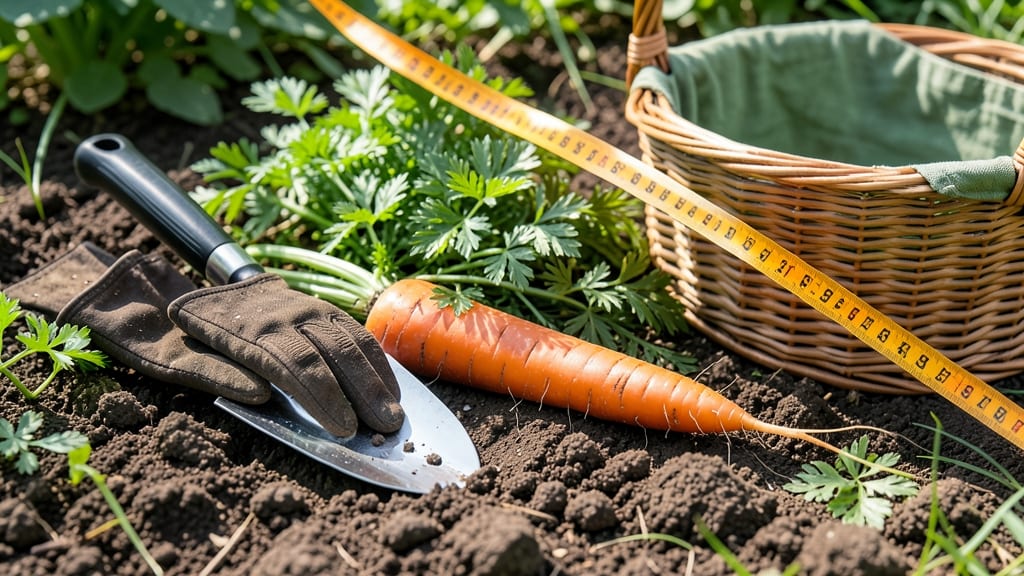
To grow the biggest carrots in your garden, you'll need deep, loose soil enriched with compost and proper spacing—plant seeds at least 3-4 inches apart in rows 12-18 inches apart. Select long-variety seeds like 'Mammoth' or 'Danvers' and thin seedlings early to eliminate competition.
Giant carrots thrive when their roots have plenty of room to stretch downward without hitting obstacles. 🥕 The secret lies in amending your soil with aged compost or well-rotted manure to create a crumbly texture that prevents forking—a common issue when roots encounter rocks or hardpan.
I've found that adding a handful of sand to clay-heavy soil improves drainage, which is critical for preventing rot.
Planting in late spring or early summer gives seedlings the ideal 60-70°F soil temperature range for steady growth, while consistent moisture (about 1 inch per week) keeps them from developing woody textures.
For best results, mulch around plants with straw to retain moisture and suppress weeds, which compete for nutrients. 🌱 I recommend harvesting when the tops reach 12-14 inches tall—this usually means the roots are at their peak size.
If you leave them too long, they'll become tough and pithy. The key is balance: enough space for growth, but not so much that the soil dries out between waterings.
💡 In This Article
- Science Behind Giant Carrot Growth: Soil and Spacing Secrets
- Step-by-Step Guide to Maximizing Carrot Yield in Your Garden
Science behind giant carrot growth: soil and spacing secrets
Carrots grow their signature elongated shape because their roots seek downward through the loosest soil path available. When you till your garden bed to a depth of at least 12 inches, you're creating an ideal "highway" for roots to extend without encountering resistance.
The ideal soil texture should resemble crumbly cake batter - firm enough to hold structure but loose enough to allow root expansion. This prevents forking, where roots split into multiple branches when they hit obstacles like rocks or compacted soil layers.
The magic happens in the soil's organic matter content. Compost or well-rotted manure provides both nutrients and improved soil structure. Aim for 5-10% organic matter by volume - this creates tiny air pockets that roots need for oxygen while holding moisture.
The pH should stay between 6.0-7.0; acidic soil below 5.5 can cause bitterness in the roots. I've seen carrots grow 30% larger in amended soil compared to unamended garden beds, with straighter shapes and brighter orange color.
Temperature plays a crucial role in growth rates. Carrot seeds germinate best when soil temperatures reach 60-70°F, with optimal growth occurring between 65-75°F. Below 50°F, germination slows dramatically, while above 80°F, roots may become pithy and woody.
The spacing between plants - 3-4 inches apart - isn't just about preventing competition; it creates a microclimate where each plant gets consistent moisture without drying out between waterings.
Here's what happens when you get the spacing wrong: Plants too close (2 inches apart) compete for nutrients and water, resulting in stunted roots. Too far apart (5+ inches) can lead to uneven growth as outer plants dry out faster.
The 12-18 inch row spacing creates windbreaks that reduce transpiration while allowing enough airflow to prevent fungal diseases like leaf blight.
Consider this comparison: A 'Danvers' carrot in ideal conditions can reach 8-10 inches long, while the same variety in compacted soil might only grow 4-6 inches. The difference comes from root resistance - when roots hit compacted layers, they either fork or stop growing downward.
Loose soil lets them follow gravity's pull until they reach the water table or hit bedrock.
For maximum size, focus on these three soil factors: organic matter content, drainage quality, and consistent moisture. The combination creates the perfect environment for roots to grow straight and long, storing energy in the form of starches that make them sweet and crisp. 🌱