
Picking
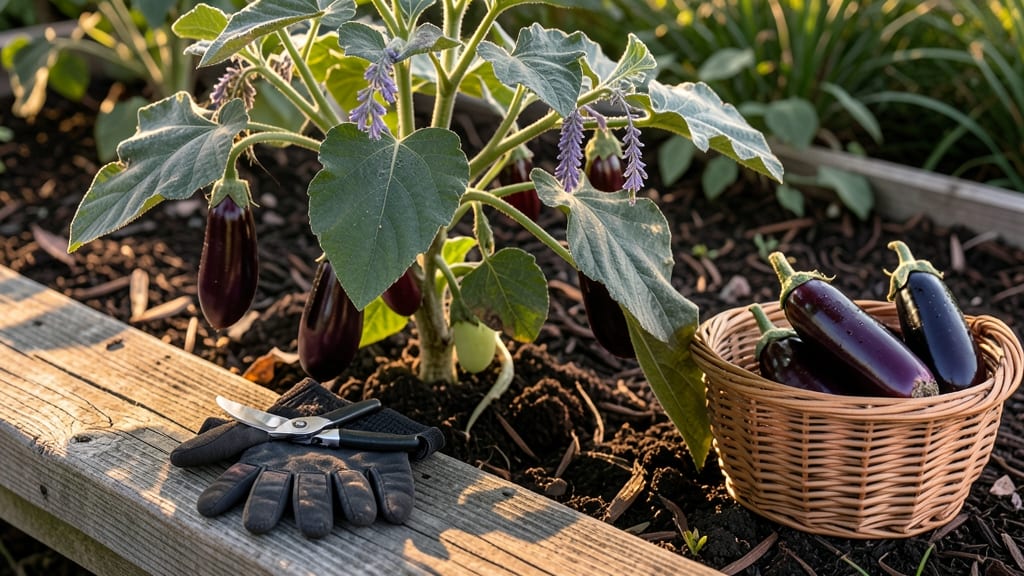
Picking eggplant from your garden at the right time ensures tender, flavorful fruit instead of bitter, seedy disappointment—so timing is everything.
Harvesting too early means tough, underdeveloped flesh, while waiting too long turns them woody and unappetizing. The trick? Glossy skin, a gentle yield when pressed, and a deep, even color—all clues that your 🍆 is ready to go.
In USDA Zone 6a, most varieties mature between 75 and 120 days after transplanting, but heat and sunlight speed things up. That’s why checking for these visual cues matters more than counting days.
Below, I’ll walk you through the exact tests to use—plus how to salvage near-ripe fruit and avoid common mistakes that ruin your harvest.
Signs your eggplant is ready to harvest: skin, size, and stem checks
Knowing exactly when to pick eggplant from your garden saves you from bitter, seedy disappointment. The key lies in three simple checks: skin gloss, fruit firmness, and stem separation. These visual and tactile cues tell you whether your eggplant is at peak ripeness—or still too early.
Most gardeners wait 75-120 days after transplanting before checking for readiness. But timing varies by variety—some compact eggplants mature faster than large, globe types. Always compare your fruit to the expected size for your specific plant variety.
| Check | Ready Signs | Not Ready Signs |
|---|---|---|
| Skin | Glossy, deep color, firm but slightly yielding | Dull, pale, or hard when pressed |
| Size | Full variety-specific dimensions (e.g., 6-8" long) | Smaller than expected for variety |
| Stem | Yellowing base, snaps easily when bent | Green stem end, resists breaking |
| Seed Cavity | Small, filled with soft seeds | Large, hollow, or filled with liquid |
A glossy skin is your first clue—ripe eggplants develop a smooth, almost waxy surface. Run your thumb over the skin: if it feels firm but yields slightly under gentle pressure, it’s ready. Overripe eggplants become soft and spongy, while underripe ones stay hard like a baseball.
The stem check is the most reliable test. Gently twist the eggplant at its stem—if it separates cleanly with a slight crack, it’s perfect. A green stem end means it’s still maturing, while a brown, shriveled stem signals overripeness.
Always harvest in the morning when skin is coolest for best texture.
Color changes are subtle but critical. Purple varieties deepen to a rich, even hue, while white or green eggplants develop a uniform, vibrant tone. Avoid fruits with uneven coloring—they’re often stressed or diseased. Check the blossom end (where the stem attaches)—it should turn yellowish when ripe.
Size matters, but don’t rely on it alone. A 6-inch eggplant might be perfect for some varieties, while others need 8+ inches. Compare to the plant’s description—if your fruit matches the expected dimensions and passes the other checks, it’s harvest-ready. Smaller fruits can still ripen, but they may lack flavor.
Climate plays a hidden role. In hot summers, eggplants ripen faster—check them weekly. In cooler weather, they take longer. If your garden’s first frost looms (around October 15 in Zone 6a), harvest any mature fruit before temperatures drop, even if others aren’t ready yet.
Pro tip: Harvest regularly to encourage more production. When you pick one ripe eggplant, the plant often responds by growing another. This works best with determinate varieties, which produce fruit in clusters. Indeterminate types (like 'Black Beauty') keep growing until frost.
One common mistake? Waiting for eggplants to turn completely purple. Many varieties are fully ripe before reaching peak color. For example, 'Rosa Bianca' stays white but becomes sweet and tender at the right size. Always prioritize size, firmness, and stem checks over color alone.
If you’re unsure, harvest a test fruit—eggplants continue ripening slightly after picking. Store them in a cool, dark place (like a pantry) for 2-3 days to improve flavor. But for best results, pick when they’re perfectly ripe and use within a week.
How to test eggplant ripeness without guessing: the gentle yield method
Determining the perfect moment to harvest eggplant isn’t just about color—it’s about texture and yield. Unlike some fruits, eggplants don’t ripen further after picking, so timing is everything. My go-to method? The gentle squeeze test, which reveals whether your eggplant is firm, soft, or past its prime.
This tactile approach helps avoid the bitter, seedy disappointment of overripe fruit or the blandness of underripe ones.
Start by selecting an eggplant that’s reached its expected size for the variety—typically 6-8 inches long for standard types. Next, focus on the skin’s response to pressure, which is where the gentle yield method shines.
Unlike hard, unripe fruit, a perfectly ripe eggplant will give just slightly when pressed with your thumb, like a ripe avocado. This subtle softness indicates peak flavor and tenderness.
⚠️ WARNING: Overripe vs. Underripe Traps ⚠️
Pro tip: Check the stem end too—a ripe eggplant will show a yellowish hue where it meets the vine, while unripe ones stay green. Combine these cues with the squeeze test for foolproof results.
For white or green varieties, the gentle yield method still applies, but watch for color deepening instead of purple gloss. A ripe white eggplant will feel firm yet slightly yielding, with a creamy interior when cut.
Green types often mature faster, so test them every 2-3 days during peak harvest season to catch them at their sweetest.
Harvest in the morning after dew dries to preserve moisture and flavor. Use a sharp knife or pruners to cut the stem, leaving a 1-inch tail to extend shelf life. This method works for container-grown eggplants too—just handle gently to avoid bruising the delicate skin.
Remember, consistency is key. Eggplants ripen unevenly, so check your plants every 2-3 days during harvest season. The gentle yield method isn’t just a test—it’s your ticket to homegrown eggplants that shine in every dish, from grilled slices to creamy baba ganoush.