
Pests
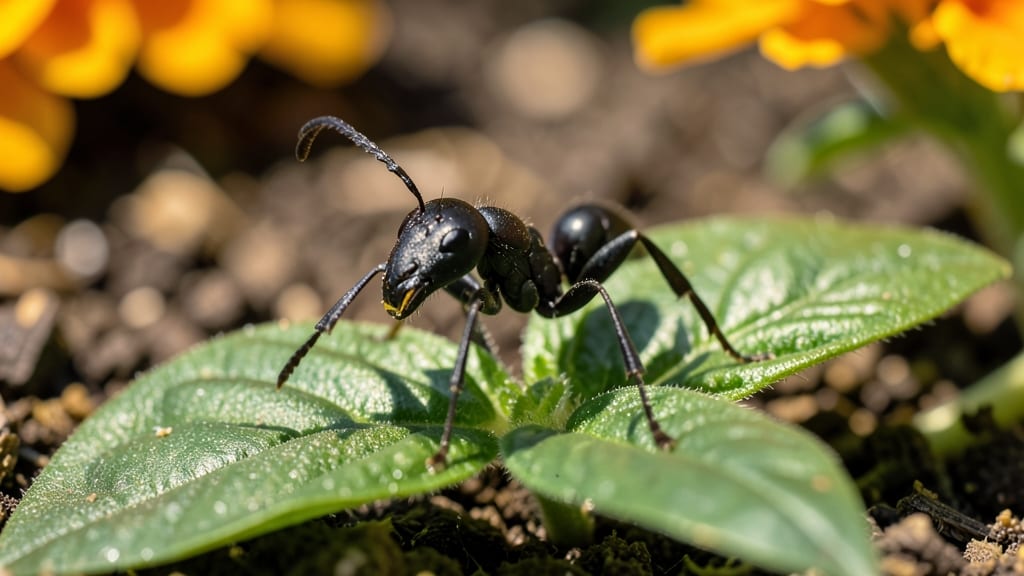
Ants in raised garden beds usually follow sweet residues or moisture sources, though they seldom damage plants. Look for tiny debris piles or soil-edge trails, then apply diatomaceous earth or vinegar-based sprays for fast, chemical-free control.
These tiny invaders are often drawn to sugar-rich mulch or damp soil conditions in raised beds, where their trails can become visible within hours. 🔥 Unlike larger pests, ants primarily disrupt aesthetics rather than plant health, but their presence signals potential moisture issues or food sources nearby.
I've found that early intervention with natural repellents prevents them from establishing colonies, especially in warm, dry climates where they thrive.
What sets raised beds apart is their elevated structure, which makes ants more noticeable along the soil edges. The key is acting quickly—once they've created trails, they'll recruit more workers, turning a minor annoyance into a persistent problem.
My go-to method combines vinegar sprays (for immediate deterrence) with diatomaceous earth barriers (for long-term prevention), both of which work without harming beneficial insects or plants.
💡 In This Article
- Why Ants Invade Raised Garden Beds
- Natural Ant Repellents for Raised Beds
Why ants invade raised garden beds
Ants in raised garden beds are primarily attracted by two key factors: moisture and food sources. The elevated structure of raised beds creates microclimates where soil stays damp longer, especially near the edges where watering concentrates.
This moisture mimics their natural nesting conditions, while the organic matter from decomposing plants or mulch provides both food and nesting material. What's fascinating is how ants use pheromone trails—chemical signals that guide their colony to reliable food sources, often sugar-rich residues from fruits, nectar, or even plant sap.
The types of plants you grow play a huge role in ant activity. For example, sweet corn varieties or tomatoes with ripe fruit can attract sugar ants within hours, while herbs like mint or basil may draw harvester ants seeking seeds.
In my own garden, I noticed that ants became a persistent issue after adding fruit trees to the raised bed borders, where fallen fruit created a sugar buffet.
The key insight is that ants rarely harm plants directly—they're more like opportunistic scavengers that reveal hidden problems in your garden ecosystem.
Here's what's actually happening beneath the soil: worker ants tunnel just below the surface, creating networks that can disrupt root systems of young seedlings. However, their impact is usually minimal unless they're Argentine ants or fire ants, which can damage roots through their aggressive tunneling.
Most common garden ants (like pavement ants) are harmless to plant health but create unsightly trails that can spread fungal spores or attract larger pests. The real damage comes when ants farm aphids, protecting them in exchange for honeydew—this creates sticky residues that smother plant foliage.
Seasonal patterns also influence ant behavior. In spring and summer, when temperatures hover around 75-85°F, ant activity peaks as colonies expand.
I've observed that morning dew or afternoon watering sessions create the perfect conditions for trail formation, with ants becoming most active between 8 AM and 10 AM when the soil is still moist.
This is why early morning inspections—looking for 2-3mm wide trails along soil edges—can catch infestations before they spread. The elevated nature of raised beds makes these trails especially visible against the bed's sides.
What most gardeners don't realize is that ants actually perform valuable ecosystem services. They aerate soil through their tunneling, distribute nutrients from decaying matter, and even help control smaller pests like mites.
The challenge is distinguishing between beneficial ants (like carpenter ants that decompose wood) and problematic species (like Argentine ants that form supercolonies).
A simple test: if you see ants carrying white grubs (larvae), they're likely beneficial; if they're swarming in large numbers with no obvious food source, they may be becoming pests.
Consider this ecological balance: a single raised bed can host multiple ant species, each with different roles. For instance, harvester ants collect seeds to feed their colonies, while fire ants aggressively defend territories.
The key to management is understanding which species you're dealing with—some require intervention, while others can be left alone. In my experience, the first 48 hours after noticing trails are critical for intervention, as this is when colonies are most vulnerable to disruption.
One surprising fact about ant behavior is their divide-and-conquer strategy. When faced with a repellent like vinegar, scout ants will often bypass it to find alternative routes, which is why spot treatments need to cover at least 12 inches beyond visible trails.
This persistence is why natural solutions must be applied consistently—ants remember successful paths and will return if their original routes are blocked temporarily. 🔥