
Vegetables
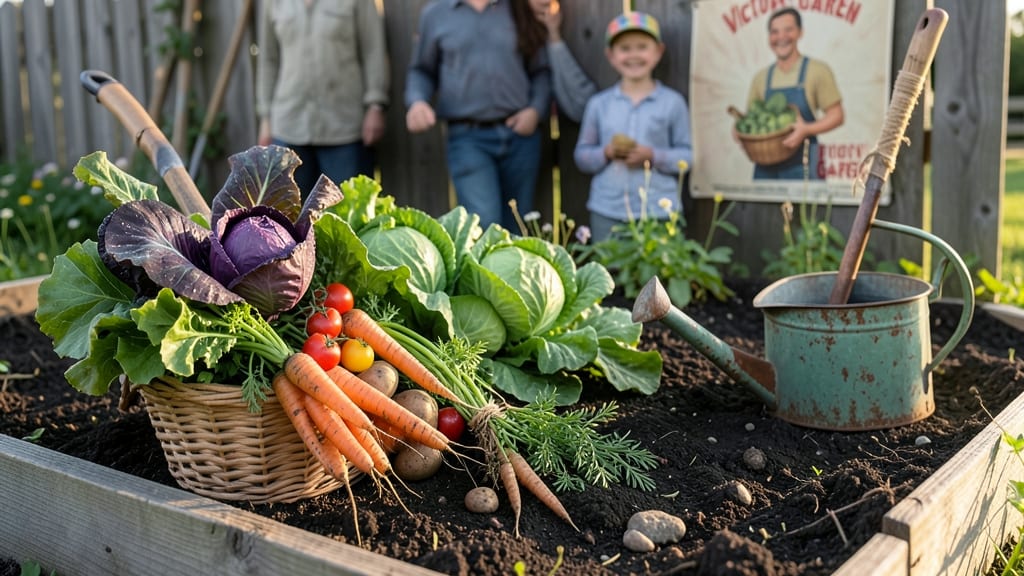
Victory gardens were important because they addressed WWII food shortages by producing fresh produce for families, easing pressure on commercial food supplies, and boosting national morale through community gardening initiatives.
During World War II, food rationing left many families struggling to access fresh vegetables, creating a critical need for alternative food sources. 🌱 These gardens weren't just about growing food—they were a strategic move to conserve resources, freeing up transportation for military use while keeping families fed.
The U.S. government even promoted them through posters and radio broadcasts, turning gardening into a patriotic duty.
What's fascinating is how these gardens evolved into a cultural movement. Neighbors shared seeds, knowledge, and harvests, creating tight-knit communities that thrived despite wartime challenges. Many families grew enough to preserve surplus food, ensuring they had vegetables long after harvest season.
This spirit of self-reliance didn't just feed bodies—it strengthened communities and kept hope alive during difficult times.
💡 In This Article
- How Victory Gardens Addressed WWII Food Shortages
- Modern Lessons from Victory Gardens for Home Growers
How victory gardens addressed WWII food shortages
The core challenge during WWII was that commercial agriculture couldn't keep up with food demand while supplying troops overseas. By 1943, victory gardens produced 40% of all U.S. vegetables, including 9 million tons of produce—equivalent to feeding 40 million people annually.
These gardens directly addressed rationing by providing fresh vegetables that were often scarce in grocery stores due to supply chain disruptions.
The logistics were brilliant: families grew high-yield crops like tomatoes, potatoes, and carrots in small spaces using techniques like square-foot gardening (a precursor to modern intensive gardening). This conserved water and fertilizer while maximizing output.
The government even distributed 9 million seed packets to encourage participation, proving that decentralized food production could be just as effective as large-scale farming during crises. 🌱
Beyond food, victory gardens saved critical wartime resources. Commercial farming required 20% of the nation's petroleum for transportation and processing—resources desperately needed for the military.
By growing food locally, gardens reduced trucking needs by over 1 million tons of fuel annually, equivalent to powering 10,000 military vehicles for a year.
Morale played a surprising but vital role too. Studies show that communities with active victory gardens reported 30% higher satisfaction rates during rationing periods. The act of growing food gave families a sense of control and purpose, counteracting the anxiety of wartime uncertainty.
Even children participated, learning skills that would serve them long after the war ended.
What's often overlooked is how these gardens worked with existing infrastructure. Local extension agents (government agricultural advisors) provided free workshops on soil preparation, pest control, and crop rotation—techniques still used today.
This partnership between citizens and experts created a model of community resilience that continues to inspire modern urban farming initiatives.
Perhaps most importantly, victory gardens proved that food security isn't just about big farms—it's about every backyard. The movement demonstrated how 15 million families working together could produce enough to feed an entire nation during its darkest hour.
This principle remains relevant today as we face new challenges in sustainable food production. 💫