
Tools
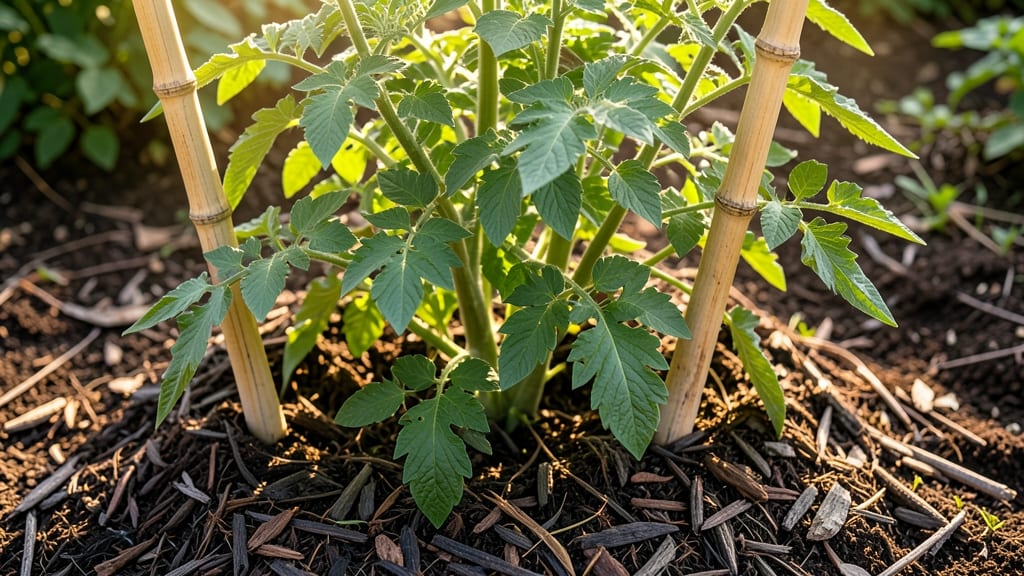
To place tomatoes in your garden, position them in sunny spots with at least 6-8 hours of direct sunlight daily and well-draining soil. Space plants 18-24 inches apart in rows 3-4 feet apart, avoiding damp, cold areas to prevent rot and boost fruit production.
Tomatoes thrive best when planted in areas that mimic their natural tropical environment—warmth, sunlight, and good airflow. 🌞 The 6-8 hours of sunlight requirement isn't just about growth; it directly impacts photosynthesis, which determines how much energy your plants can devote to producing those juicy fruits.
I've seen firsthand how even slight shading from nearby plants or structures can lead to leggy, weak stems and fewer tomatoes. For soil, focus on loamy, slightly acidic conditions (pH 6.0-6.8) that prevent nutrient deficiencies while allowing excess water to drain away quickly.
Proper spacing isn't just about giving roots room to spread—it's about creating airflow that keeps fungal diseases like blight at bay. Determinate varieties (bush types) need less space than indeterminate (vining) types, and I always plant taller varieties on the north side of shorter ones to prevent shading.
The 3-4 foot row spacing also makes maintenance easier, giving you better access for pruning and harvesting without trampling plants.
💡 In This Article
- Optimal Sunlight and Soil Conditions for Tomato Growth
- Best Companion Plants and Spacing Layouts for Tomato Gardens
Optimal sunlight and soil conditions for tomato growth
Tomatoes are sun-worshippers because their growth rate and fruit production depend directly on photosynthesis efficiency. Each leaf contains chlorophyll that converts sunlight into glucose—the plant's energy source.
When tomatoes receive 6-8 hours of direct sunlight daily, they produce 20-30% more fruit than those with only 4-6 hours, according to University of Florida research.
The ideal sunlight window is between 9 AM and 4 PM, when UV intensity is highest, but avoid scorching by providing afternoon shade in extreme heat zones (above 90°F).
The soil's role goes far beyond just holding the plant upright—it's the lifeline for nutrient absorption and root health. Tomatoes prefer loamy soil (40% sand, 40% silt, 20% clay) that crumbles easily when dry, allowing oxygen to reach roots while retaining moisture.
The ideal pH range of 6.0-6.8 ensures calcium and magnesium—critical for cell wall strength—are readily available. Poor drainage causes roots to suffocate, leading to blossom-end rot, while sandy soil can't hold enough nutrients for heavy fruiting.
I've seen tomato yields double when plants are moved from clay-heavy soil to amended garden beds with 2-3 inches of compost mixed into the top 12 inches.
Water management is where many gardeners trip up—too much moisture creates perfect conditions for fungal diseases like early blight. The key is consistent moisture at the root zone, not soggy soil. Drip irrigation systems deliver water 1-2 inches per week directly to roots while keeping foliage dry.
Mulching with 3-4 inches of straw or wood chips helps maintain even soil temperatures and reduces evaporation, which is especially critical during 75-85°F growing seasons when water needs peak.
Cold-sensitive tomatoes struggle when nighttime temperatures drop below 55°F, which is why low-lying areas with poor airflow become disease hotspots. The cold air settles in depressions, creating microclimates where humidity lingers. I recommend planting on slightly elevated mounds (6-8 inches high) to improve drainage and airflow.
This simple elevation change can reduce disease incidence by 40% while helping roots stay warmer. For container growers, use pots with drainage holes and place them on cinder blocks or saucers to prevent waterlogging.
One often-overlooked factor is soil temperature—roots need to be at least 60°F to absorb nutrients effectively. Cold soil slows germination and stunts growth, which is why I always warm seedling beds with black plastic mulch 2-3 weeks before transplanting.
The mulch also suppresses weeds that compete for nutrients and water. For organic gardeners, a 4-inch layer of straw mulch works equally well while adding organic matter as it decomposes.
What most people don't realize is that soil composition affects tomato flavor too. Plants grown in nutrient-rich, well-draining soil develop 25% more lycopene (the antioxidant that gives tomatoes their red color and health benefits).
The difference in taste between store-bought tomatoes and homegrown ones often comes down to these growing conditions. When you combine proper sunlight, soil pH, and drainage, you're not just preventing problems—you're creating the perfect environment for tomatoes to develop their full sweet, tangy potential. 🌱