
Planting
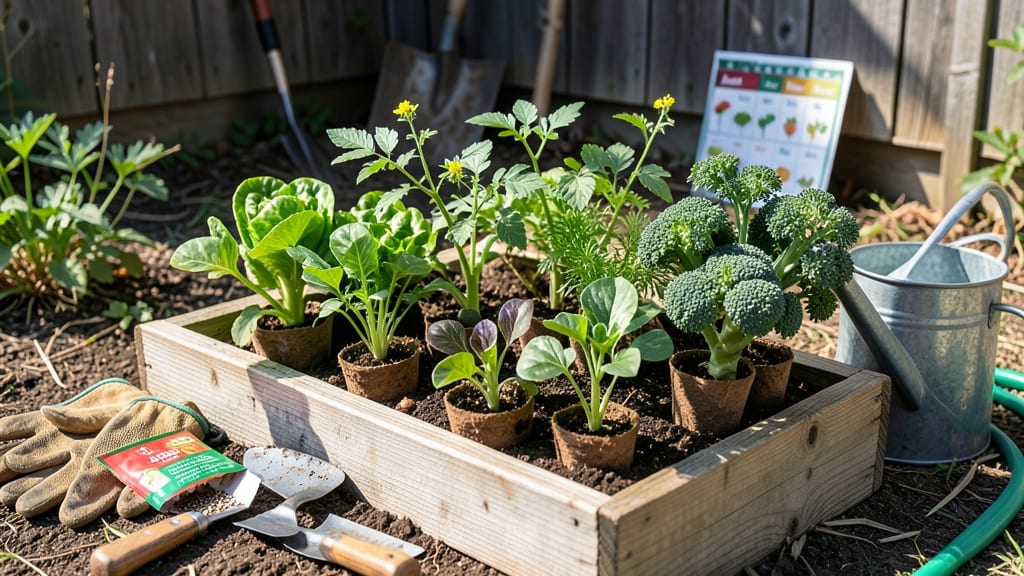
To plant a vegetable garden in California at the right time means aligning your schedule with your microclimate—whether you're in foggy coastal zones or the scorching Central Valley.
California’s diverse climates—from coastal fog to desert heat—mean your vegetable garden’s success hinges on planting at the perfect time. Get the wrong timing, and your crops could bolt, wilt, or never even sprout. But with the right schedule, you can enjoy year-round harvests tailored to your microclimate.
Cool-season crops like broccoli and peas thrive in the mild winters of California (General) zones 9-10, while warm-season favorites such as tomatoes and peppers demand the heat of spring and summer.
The key? Knowing when to start seeds indoors, when to transplant seedlings, and how to extend seasons with row covers or cold frames.
Below, I break down the exact months for planting 🥬 by region—coastal, Central Valley, and desert—plus pro tips to adjust for your specific microclimate. No more guesswork, just bountiful harvests all year long.
California planting zones: when to start seeds and transplants by region
California’s planting zones vary dramatically from the cool coastal fog of San Francisco to the scorching desert of Palm Springs. Understanding your specific microclimate is key to avoiding common mistakes like planting heat-sensitive crops too early or missing the optimal transplant window.
Whether you're in the Central Valley’s fertile soil or a urban Los Angeles garden, timing makes all the difference.
Most of California falls within USDA Zones 8-10, but microclimates create significant variations. For example, coastal areas like Santa Barbara experience milder winters with rare frost, while inland valleys like Sacramento can see light frosts in winter.
Desert regions like Palm Springs rarely drop below freezing, allowing year-round planting for heat-tolerant crops.
Here’s how to align your planting schedule with California’s three dominant regions—coastal, Central Valley, and desert—plus adjustments for urban vs. rural growing conditions.
| Region | Key Climate Traits | Last Frost Date | First Frost Date | Ideal Seed Start (Indoors) | Transplant Window |
|---|---|---|---|---|---|
| Coastal (SF, LA) | Mild winters, cool summers, high humidity | Rare (Dec-Feb) | Rare (Dec-Feb) | Feb-Mar (cool crops), Apr-May (warm crops) | Mar-Apr (cool crops), May-Jun (warm crops) |
| Central Valley (Sacramento) | Hot summers, cold winters, low humidity | Late Jan-Early Feb | Late Nov-Dec | Feb-Mar (cool crops), Apr-May (warm crops) | Apr-May (cool crops), Jun-Jul (warm crops) |
| Desert (Palm Springs) | Extreme heat, minimal frost, dry air | Never | Never | Year-round (heat-tolerant crops) | Feb-Nov (avoid peak summer) |
In coastal regions, you can plant cool-season crops like broccoli and peas as early as February, while warm-season crops like tomatoes thrive when transplanted in May.
The Central Valley’s colder winters delay cool-season planting until March, but the hot summers allow for double cropping—planting early spring and late summer harvests.
For desert gardens, focus on heat-resistant varieties like okra and sweet potatoes. Start seeds in spring or fall to avoid the peak summer heat (June-August), which can stress even drought-tolerant plants.
Urban gardeners in cities like Los Angeles should also account for heat islands, where pavement raises temperatures by 5-10°F compared to rural areas.
Adjust your schedule based on microclimate factors. Urban gardens in San Francisco’s fog belt may need to plant 2-3 weeks later than inland areas to avoid bolting in lettuce or blossom-end rot in tomatoes.
Meanwhile, high-elevation gardens (e.g., near Lake Tahoe) can plant cool-season crops 4-6 weeks earlier than valley floors.
Use row covers or cold frames in coastal areas to extend the growing season into late fall, while shade cloth is essential in desert regions to protect seedlings from intense afternoon sun.
Always check your local Almanac frost dates and monitor soil temperatures—most seeds need 60-70°F soil to germinate effectively.
Pro tip: Direct-sow heat-loving crops like beans and cucumbers in May-June across most regions, but transplant seedlings of tomatoes and peppers after April 15 in coastal zones or May 15 in inland areas. This timing ensures they establish roots before summer heat arrives.
Remember, urban gardens often face additional challenges like limited space and soil compaction. Amend your soil with compost and use container gardening for heat-sensitive crops. With the right adjustments, you can enjoy year-round harvests tailored to your unique corner of California.
Best vegetables to plant by season in California (with exact months)
California’s microclimates create endless growing possibilities, but timing is everything. Cool-season crops like broccoli and peas thrive in fall and winter, while warm-season staples such as tomatoes and peppers need spring and summer warmth.
Even year-round options like kale and carrots benefit from strategic planting to maximize yields. Let’s break down the best month-by-month schedule for your garden.
For coastal regions (e.g., San Francisco), start cool-season crops in September and warm-season crops in March. Inland areas (e.g., Sacramento) can plant warm-season crops as early as February, while desert zones (e.g., Palm Springs) may extend warm-season growing into November.
Use succession planting—like sowing lettuce every 2 weeks—to keep harvests flowing.
| Vegetable | Best Planting Months | Days to Harvest | Sun Needs | Notes |
|---|---|---|---|---|
| Broccoli | Sep–Oct (fall), Feb–Mar (spring) | 50–70 days | Full sun | Use row covers for frost protection |
| Peas | Nov–Jan (coastal), Feb–Mar (inland) | 60–70 days | Partial shade | Plant near trellis for support |
| Tomatoes | Mar–Apr (coastal), Feb (inland) | 60–85 days | Full sun | Stake plants for support |
| Peppers | Mar–May (coastal), Feb–Mar (inland) | 70–90 days | Full sun | Start indoors if frost risk |
| Kale | Aug–Sep (fall), Feb–Mar (spring) | 30–60 days | Full sun to partial shade | Cut-and-come-again harvest |
| Carrots | Sep–Nov (fall), Feb–Mar (spring) | 60–80 days | Full sun | Loosen soil to prevent forking |
| Basil | Apr–Jun (coastal), Mar (inland) | 30–45 days | Full sun | Harvest leaves regularly |
Extend your harvest season with row covers or cold frames. For example, spinach can grow in winter under protection, while cucumbers thrive in summer with consistent watering. Succession planting—like sowing radishes every 2 weeks—ensures continuous fresh produce.
Adjust for your local frost dates; coastal areas rarely see frost, while inland valleys may need frost blankets for sensitive crops.
Start warm-season crops like eggplants and okra in late spring (May–June) to avoid heat stress. For cool-season crops, cabbage and brussels sprouts planted in August will mature by winter.
Use mulch to retain soil moisture and compost to enrich beds. With this schedule, you’ll enjoy fresh vegetables year-round—no matter your California zone!
Pro tip: Keep a gardening journal to track what thrives in your microclimate. Note local weather shifts—like unexpected Santa Ana winds—that can dry out soil faster. Adjust watering and mulching accordingly to keep your garden thriving through every season. 🌱