
Planting
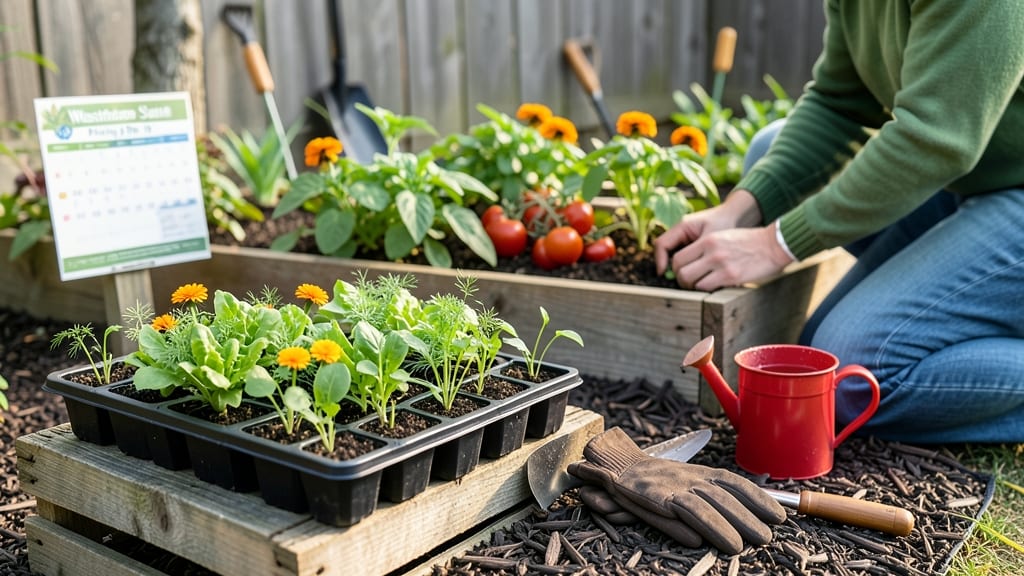
Planting a garden in Washington State starts with knowing when to plant—because a two-week timing mistake can mean frost-killed seedlings or missed harvests.
Washington State’s diverse climate—from rainy coastal zones to dry inland valleys—means planting times vary dramatically. Get your garden timing wrong, and you’ll either face frost damage or miss peak harvests.
Whether you’re in the Puget Sound region or Eastern Washington, the key is understanding your local frost-free dates and adjusting for microclimates. Too early, and a late frost will wipe out your 🌱 seedlings; too late, and your warm-season crops won’t mature before fall.
Below, I break down the exact planting windows for cool- and warm-season crops by USDA zone, plus strategies to extend your season with row covers and succession planting.
Washington State frost-free dates by USDA Zone: when to plant cool vs warm-season crops
Washington State spans USDA Zones 4 through 8, creating dramatic differences in frost-free dates. In Zone 4 (Northeast WA), the last frost typically arrives around May 15, while Zone 8 (Puget Sound) may see its final frost as early as March 15.
These variations mean your planting schedule should shift based on your exact location—especially when choosing between cool-season crops like spinach and warm-season crops like tomatoes.
Cool-season crops thrive in early spring before temperatures rise, while warm-season crops need soil temperatures above 60°F to germinate. Misjudging these windows can lead to stunted growth or frost damage.
For example, planting peppers too early in Zone 5 risks poor germination, while lettuce sown too late in Zone 7 may bolt prematurely.
Microclimates add another layer of complexity. The Puget Sound region (Zone 8) often enjoys 2-4 weeks earlier planting than Eastern WA (Zones 4-6) due to moderating ocean influence. Even within a zone, south-facing slopes warm faster than north-facing areas, allowing for earlier plantings.
For cool-season crops, aim to plant 6-8 weeks before your last frost date. In Zone 4, this means starting spinach or peas by March 15, while Zone 8 gardeners can begin as early as January 1.
These crops tolerate light frosts, but heavy freezes (below 20°F) can damage even hardy varieties like kale.
Warm-season crops like tomatoes and peppers require consistent warmth. In Zone 5, wait until soil temperatures reach 60°F (typically late May) to transplant seedlings.
In Zone 8, you can start as early as March 1, but coastal fog may delay germination—use black plastic mulch to warm the soil faster.
Microclimates play a crucial role. A south-facing slope in Zone 6 might be warm enough for cucumbers by April 15, while a north-facing garden in the same zone may need to wait until May 1.
Similarly, urban heat islands in Spokane (Zone 5) can create pockets where eggplants thrive 2 weeks earlier than rural areas.
Extend your cool-season harvests by planting succession crops every 2-3 weeks. In Zone 7, sow radishes in January, February, and March for continuous harvests. For warm-season crops, use row covers to protect young plants from
Best month-by-month planting schedule for Washington gardens: avoid common mistakes
Washington’s diverse microclimates mean your March planting in Spokane won’t match Seattle’s schedule. Inland areas like Zone 4-5 (Eastern WA) have earlier frost risks, while coastal Zone 7-8 (Puget Sound) enjoys longer growing seasons.
Timing is everything—plant cabbage too early in Zone 6, and it’ll bolt before harvest. Let’s break down the month-by-month essentials to avoid these pitfalls.
Start with cool-season crops like kale and peas in early March across most zones, but wait until late April for warm-season transplants (tomatoes, peppers). The key? Soil temperature matters more than calendar dates—wait until 50°F+ for warm-season plants.
In Zone 4, protect seedlings with row covers until after the May 15 average last frost date.
⚠️ Critical Mistakes to Avoid in Washington Gardens
- Premature cabbage planting in Zone 6-7 causes bolting (goes to seed early). Wait until late March for direct sowing.
- Planting basil too late in Zone 4 risks frost damage before harvest. Start indoors by March 1 for transplanting by May 1.
- Skipping soil prep in clay-heavy zones (like Spokane) leads to poor drainage. Amend with compost 6 weeks before planting.
Pro tip: Use frost-free date maps from WSU Extension to adjust for your microclimate.
April is prime for direct sowing in Zone 7-8: carrots, lettuce, and radishes thrive when planted 2-3 weeks before the last frost. In Zone 4-5, focus on hardy greens (spinach, arugula) and peas, which tolerate light frosts.
Transplant broccoli and cauliflower by April 15—any later, and they’ll bolt before maturity.
May marks the warm-season rush: tomatoes, peppers, and eggplants need 60+ days of warmth. In Zone 8 (Seattle), sow directly outdoors by May 1.
In Zone 5, wait until May 15 and use black plastic mulch to warm soil faster. Succession plant beans and cucumbers every 2 weeks until July 1 for continuous harvests.
June through August is all about maintenance and succession. Replace early crops with heat-tolerant varieties like okra or Malabar spinach in Zone 7-8. In Zone 4-5, focus on late-season crops like kale and Brussels sprouts, which sweeten after frost.
Watch for pests—June bugs and squash vine borers peak in July.
Don’t stop in September! Cool-season crops like spinach and radishes grow well in fall if planted by August 15. In Zone 8, you can even plant garlic in October for next year’s harvest.
Use row covers to extend harvests into November for leafy greens. The goal? Maximize your garden’s productivity by filling every planting window.
Plan ahead for next year by noting which plants thrived and which struggled due to timing. Adjust your schedule based on actual frost dates (not averages) and microclimate observations.
With this month-by-month guide, you’ll avoid common Washington gardening mistakes and enjoy bountiful harvests all season long. Happy planting! 🌱