
Planting
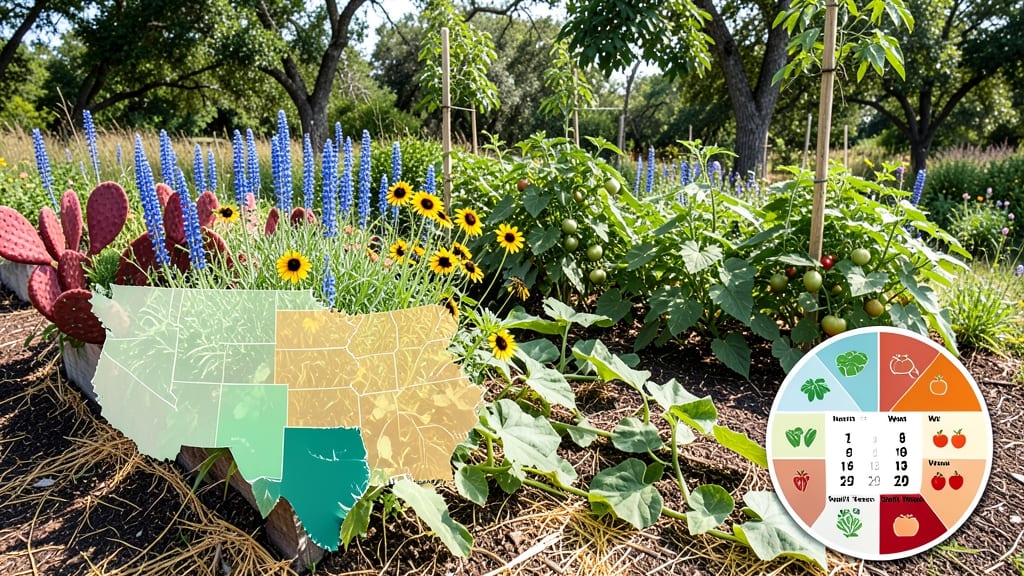
Planting a garden in Texas requires timing it perfectly between scorching summers and unpredictable freezes—miss the window, and your seeds might never get a fair shot.
Texas gardeners face a unique challenge: scorching summers, unpredictable freezes, and a vast range of growing zones—all of which determine whether your garden thrives or withers. Timing your plantings just right can mean the difference between a bumper crop and wasted seeds.
Cool-season crops like lettuce and broccoli need to hit the soil 4-6 weeks before the last frost, while heat-lovers such as okra and sweet potatoes thrive when temperatures climb. But with USDA zones 8a-10b spanning from North to South Texas, one size doesn’t fit all.
In this guide, I’ll break down the best months to plant by zone, share microclimate hacks for urban heat islands and coastal humidity, and reveal the heat-tolerant varieties that actually survive Texas summers—so you can finally stop guessing and start growing.
Texas planting calendar by USDA hardiness zones (7-10)
Texas spans USDA Zones 7-10, creating wildly different planting windows from the Panhandle's chilly winters to South Texas' balmy year-round growing. In Zone 7 (North Texas), frost can linger until mid-March, while Zone 10 (Rio Grande Valley) enjoys frost-free winters.
Understanding these zones helps you avoid frost damage or summer wilting—critical for Texas success.
Cool-season crops like broccoli and spinach thrive in fall and winter, while tomatoes and peppers demand summer heat. The key? Plant cool crops 4-6 weeks before last frost and heat-lovers after Memorial Day. Below, I break down zone-specific frost dates and ideal planting windows for Texas regions.
| Region | USDA Zone | Last Frost Date | First Frost Date | Cool-Season Planting | Heat-Lover Planting |
|---|---|---|---|---|---|
| North Texas (Dallas, Fort Worth) | Zone 7b-8a | Mid-March | Mid-November | Sept 15 - March 15 | After May 15 |
| Central Texas (Austin, San Antonio) | Zone 8a-8b | Late February | Late November | Oct 1 - April 1 | After April 15 |
| Hill Country (Fredericksburg) | Zone 8a | Early March | Mid-November | Sept 1 - March 30 | After May 1 |
| South Texas (Houston, Corpus Christi) | Zone 9a-9b | Early February | Early December | Sept 1 - April 30 | Year-round (with shade) |
| Rio Grande Valley (McAllen) | Zone 10a | None (rare light frost) | None | Year-round (avoid summer heat) | Year-round |
In North Texas (Zone 7-8), I start cool-season seeds indoors in August for September transplants. By October 15, the soil stays warm enough for spinach and kale to thrive. Meanwhile, South Texas gardeners can plant broccoli in December—their mild winters let them grow year-round.
For summer crops, wait until after last frost—typically May 15 in North Texas and April 1 in Central Texas. Okra and sweet potatoes love the heat, while tomatoes need consistent moisture to avoid cracking.
In Zone 10, I plant peppers in February and harvest until November!
Pro tip: Use row covers to extend cool-season growing in North Texas or shade cloth to protect summer greens in South Texas. Soil temperature matters too—wait until soil hits 60°F for cool crops and 70°F for heat-lovers.
Remember, Texas' unpredictability means flexibility. If a late freeze hits, cover tender plants with old blankets. And in summer's scorching heat, mulch heavily to keep roots cool. With this zone-specific guide, you'll time plantings perfectly—no more wasted seeds or sad wilted plants!
Start with fast-growing radishes in September to test your soil, then move to broccoli and carrots by October. By spring, you'll be harvesting fresh greens while prepping for summer's heat-tolerant stars. Happy planting!
🌱
How to adjust planting times for Texas microclimates
Texas isn't one-size-fits-all when it comes to gardening. While USDA zones 8a-10b give us a head start, urban heat islands in Houston can feel like Zone 10, while high-desert areas near El Paso might behave like Zone 7.
Even coastal regions like Galveston have higher humidity that changes planting windows dramatically. Learning to read your local microclimate lets you extend growing seasons and avoid costly mistakes.
For example, my East Austin garden in Zone 8b gets 10°F hotter than my friend's rural property just 20 miles away. That difference means tomatoes thrive 3 weeks earlier in my yard but lettuce bolts faster in the heat.
The key? Adjusting planting times by 1-4 weeks based on your specific conditions—and using tools like row covers and mulch to fine-tune the environment.
- 1 Urban Heat Islands: Plant cool-season crops (like spinach) 4-6 weeks earlier than zone averages. Use shade cloth (30-50%) to protect seedlings from 110°F+ soil temps.
- 2 Coastal Humidity: Delay tomato and pepper plantings by 2 weeks to avoid fungal diseases. Choose disease-resistant varieties (e.g., 'Celebrity' tomato) and space plants 18" apart for airflow.
- 3 High-Desert Areas: Start warm-season crops (like okra) 2 weeks earlier when soil reaches 65°F. Use black plastic mulch to warm soil 5-10°F faster than bare ground.
- 4 Row Covers: Extend spring/fall seasons by 3-5 weeks using floating row covers. Remove during daytime heat to prevent overheating (max 85°F under cover).
- 5 Mulch Thickness: Apply 3-4 inches of straw or wood chips to retain soil moisture and regulate temps. In urban areas, mulch can reduce soil temps by 10-15°F during summer.
I’ve found that soil temperature is the best indicator for adjusting planting times. Use a soil thermometer to confirm when soil reaches 60°F for cool crops or 70°F for warm crops.
In my Dallas garden, this often means planting broccoli in October instead of November—giving me a head start before holiday demand. For heat-sensitive greens, I swear by shade cloth during peak afternoon sun.
Don’t overlook wind patterns either. Coastal gardens near Galveston experience salty winds that stress plants, while Hill Country areas deal with dry, chilly nights. I adjust my watering schedule and windbreaks accordingly—sometimes adding burlap screens to protect young seedlings.
Even a 6-foot-tall fence can create a microclimate that lets you plant 2 weeks earlier in spring.
Pro tip: Test your microclimate for a month before planting. Track daily highs/lows, humidity levels, and soil moisture to create your own local planting calendar.
My Houston garden data showed that July soil temps hit 95°F—too hot for most vegetables, but perfect for okra and sweet potatoes. Armed with this knowledge, I now plant heat-lovers in July while saving cool-season crops for September.
Remember, Texas gardening is about flexibility. What works in West Texas (like prickly pear cacti) fails in East Texas humidity. But with row covers, mulch, and shade cloth, you can push boundaries and grow almost year-round.
Start small, observe your space, and adjust as you go—your plants (and wallet) will thank you. 🌱