
Picking
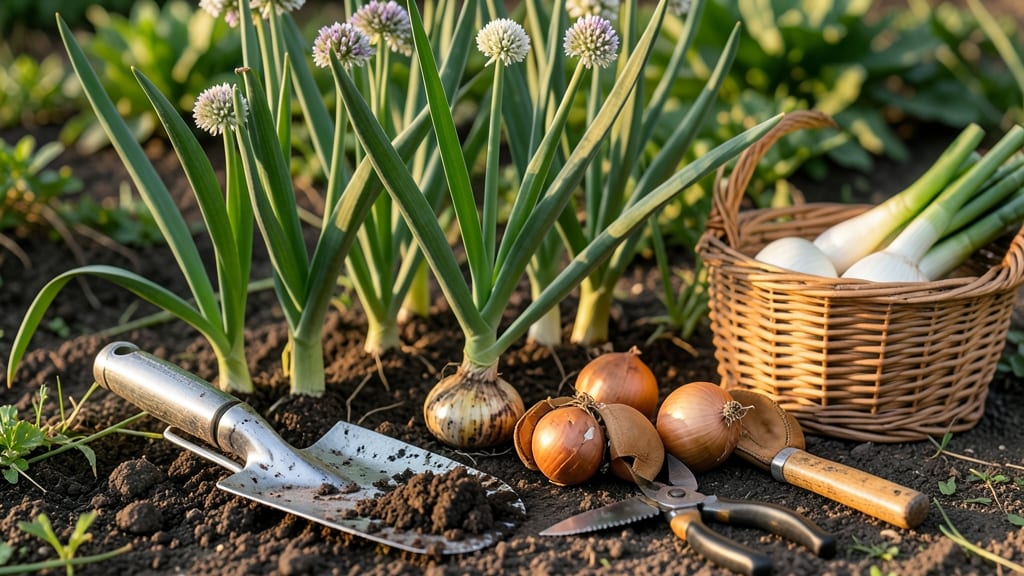
To pick onions from your garden at just the right moment means capturing their peak sweetness and texture—before they split or turn bitter.
Picture this: you’ve nurtured your 🧅 plants all season, and now the tops are yellowing and flopping over, but you’re not sure if they’re ready. One wrong move, and you’ll end up with tough, pungent bulbs instead of the flavorful harvest you’ve been waiting for.
Timing is everything when it comes to onions. Harvest too early, and you’ll have small, underdeveloped bulbs. Wait too long, and they’ll split or rot in the ground. The key is knowing the three clear signs that your onions are finally ready—and how to act fast once you spot them.
In this guide, I’ll walk you through the best visual cues, regional timing tips, and even what to do if you miss the window. By the end, you’ll know exactly when to pull those onions so they’re perfect for storage or immediate use.


3 Clear visual signs your onions are ready for harvest
Harvesting onions at the right time ensures you get sweet, flavorful bulbs instead of tough, pungent ones. The key is watching for three clear visual cues that signal maturity.
Ignoring these signs can lead to onions that split, rot, or develop a bitter taste—so pay close attention to your plants' signals!
Onions mature at different rates depending on variety and growing conditions, but these universal signs apply to all types. Whether you're growing storage onions or green onions, knowing when to harvest prevents waste and maximizes your garden's yield.
Let's break down the three must-see indicators that your onions are ready to pick.
Mature onions develop yellow or brown tops that naturally flop over—this means the bulb has stopped growing upward and is ready for harvest.
Dig up a test onion when the bulb reaches 1-2 inches in diameter. If it’s smaller, wait a few days—larger bulbs store better but may lose sweetness if overripe.
The stem (neck) should shrink and dry to about half its original size. This indicates the bulb has fully matured and is pulling nutrients from the tops to store in the bulb.
If your onions show all three signs, it’s time to harvest! But what if you’re unsure? For example, some gardeners mistake green onions (scallions) for mature onions—they have no bulb and should be harvested when 6-8 inches tall, not when the tops yellow.
Always check the bulb size first to avoid mistakes.
Over-mature onions are a common issue—once the tops turn completely brown and the neck dries out completely, the bulbs may split or rot in storage. To prevent this, harvest when the tops are mostly yellow but still slightly green at the base. This timing balances maturity with storage potential.
Another pro tip: Test a few onions by gently pulling one from the soil. If the bulb is firm and the skin is papery (not slick or green), it’s ready.
If it slips out easily with a small bulb, wait another week. This hands-on check ensures you don’t harvest too early or late.
Regional climate also plays a role—cooler areas may need to wait longer for the tops to yellow, while hotter climates can cause onions to mature faster. For example, in Zone 5 or colder, aim to harvest before the first frost (around October 20 in many regions).
In warmer zones, watch for signs of heat stress (wilting tops) and harvest earlier.
Once you’ve confirmed maturity, use a sharp garden fork or spade to loosen the soil around the bulb, then gently lift it. Avoid cutting the neck—this helps the bulb cure properly.
After harvesting, let the onions dry in the sun for 3-5 days to toughen the skin, which prevents spoilage during storage.
Remember, the goal is to harvest onions when they’re fully mature but not overripe. By focusing on these three visual cues—leaf color, bulb size, and stem dryness—you’ll enjoy sweet, flavorful onions straight from your garden all season long. Happy harvesting!
Best harvesting methods for green vs. storage onions
Harvesting onions at the right time depends entirely on whether you're growing them for green onions (scallions) or storage bulbs. Each type has distinct maturity cues and harvesting techniques that ensure peak flavor and texture.
For green onions, you can start harvesting as early as 60 days after planting, while storage onions need 100-120 days to reach full maturity.
Green onions thrive when you pick them early and often, while storage onions require patience. The key difference lies in the bulb development—green onions prioritize leaf growth, whereas storage onions focus on bulb expansion. Understanding these distinctions will help you avoid bitter, over-mature onions or underdeveloped greens.
When to Pick Onions: Green vs. Storage
Green Onions (Scallions)
- ✅ Harvest when: 6-10 inches tall
- ✅ Bulb size: Tiny or nonexistent
- ✅ Leaf color: Bright green
- ✅ Frequency: Every 2-3 weeks
Pros: Mild flavor, continuous harvest
Storage Onions
- ✅ Harvest when: Tops yellow and fall over
- ✅ Bulb size: 1-2 inches in diameter
- ✅ Skin: Papery and dry
- ✅ Neck: Dries and shrinks
Pros: Long-term storage, bold flavor
Green Onions (Cons)
- ❌ No storage: Perish quickly
- ❌ Limited bulb: Not ideal for cooking
Storage Onions (Cons)
- ❌ Late harvest: Risk of splitting
- ❌ Over-mature: Bitter taste
For green onions, simply snip the outer leaves with a sharp pair of scissors or pruners, leaving the roots intact. This encourages regrowth, allowing you to harvest the same plant multiple times throughout the season.
I’ve found that harvesting in the morning yields the crispest greens, as evening dew can make them soggy.
When harvesting storage onions, use a fork or spade to gently loosen the soil around the bulb. Lift carefully to avoid damaging the skin, which is crucial for storage.
After digging, let the onions cure in the sun for 3-5 days to toughen the skins. This step prevents rot during storage and enhances their shelf life.
If you’re unsure whether your onions are ready, perform the "squeeze test": Gently squeeze a bulb—if it feels firm and the neck begins to dry, it’s harvest-ready.
Over-mature onions will feel soft or split open, indicating they’ve passed their prime. For long-term storage, choose dry, sunny days to harvest and cure your onions.
Pro tip: If you live in a humid climate, consider harvesting storage onions slightly earlier to avoid fungal issues. Store them in a well-ventilated area with low humidity to maintain freshness for up to 6 months.
For green onions, store them in a container of water in the fridge to keep them crisp for up to 2 weeks.