
Picking
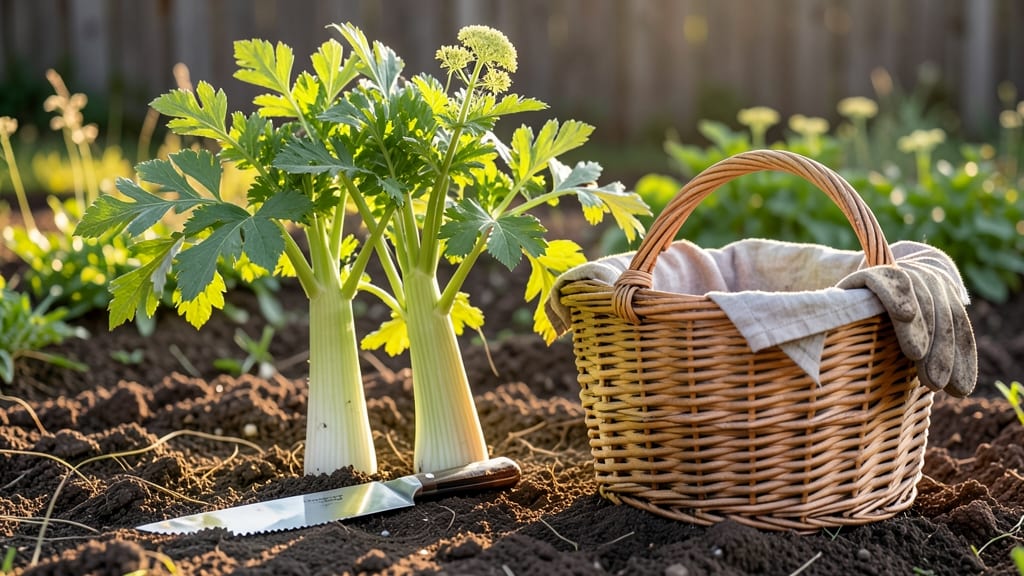
Harvesting garden celery at the right time ensures those crisp, flavorful stalks you’ve been dreaming of 🥬—but wait too long, and you’ll end up with tough, bitter stems.
Picture this: you’ve nurtured your celery for months, and now the moment of truth is here. The difference between a perfect harvest and one that falls short comes down to knowing exactly when to cut and how to handle the plant afterward.
In this guide, we’ll cover the ideal timing for harvesting celery—whether you’re growing self-blanching or regular varieties—and the step-by-step techniques to ensure your stalks stay fresh and crunchy for weeks.
You’ll also discover how to store your harvest properly, so you can enjoy that homegrown flavor long after the garden season ends.


Optimal harvest times for garden celery by variety and season
Harvesting garden celery at the right moment transforms it from bland to crisp, flavorful perfection. The timing varies dramatically between self-blanching and non-blanching varieties, as well as your local climate.
In my Zone 6a garden, I've learned that even a week too early or late can mean the difference between restaurant-quality celery and something resembling store-bought sadness.
For most gardeners, the ideal harvest window falls between 120-160 days after planting, but this shifts with seasonal temperatures. Cool spring and fall seasons accelerate maturity, while hot summer heat can stretch out the growing period. Understanding these patterns lets you plan for continuous harvests throughout the growing season.
Here's the key difference: Self-blanching varieties like 'Utah' or 'Tall Utah' develop their own natural blanching through tight stalk growth, while non-blanching types such as 'Golden Self-Blanching' require manual blanching for that prized pale interior.
Your harvest timing must account for both the variety's genetic tendencies and your local growing conditions.
| Variety Type | Days to Maturity | Best Season | Harvest Cues | Temperature Range |
|---|---|---|---|---|
| Self-Blanching | 120-140 days | Spring/Fall | 12"+ stalks, tight heads, deep green leaves | 50-75°F (10-24°C) |
| Non-Blanching | 130-160 days | Summer | 15"+ stalks, firm texture, outer leaves mature | 60-85°F (15-29°C) |
| Golden Self-Blanching | 125-145 days | Spring/Fall | 10"+ stalks, pale centers, sweet flavor | 55-70°F (13-21°C) |
| Green Utah | 130-150 days | Summer | 18"+ stalks, tight heads, crisp texture | 65-80°F (18-27°C) |
In my experience, spring-planted celery reaches harvest readiness by late June to early July in most temperate climates. The key visual cue is when the outer stalks reach 12-18 inches while maintaining firmness.
If you wait until the entire head is fully mature, the center stalks may become fibrous and tough.
For fall harvests, I plant succession crops every 2-3 weeks starting in July. This staggered approach ensures fresh celery from October through November, right up until the first frost. The cooler fall temperatures actually improve flavor development, resulting in sweeter, more tender stalks compared to summer harvests.
Temperature plays a crucial role in determining harvest timing. Celery thrives in cool conditions (50-75°F), and when summer heat exceeds 85°F (29°C), growth slows dramatically.
In my Zone 6a garden, I've noticed that when daytime highs consistently exceed 80°F (27°C), celery takes 2-3 weeks longer to mature compared to spring or fall.
One common mistake I see gardeners make is harvesting based solely on plant age rather than visual maturity cues. A 140-day-old plant that's been struggling with heat stress may still produce thin, bitter stalks.
Always check for these three signs: deep green leaves, firm stalks, and a tight head formation. If the stalks bend easily or the leaves show yellowing, it's past its prime.
For continuous harvests, I recommend cutting outer stalks first when they reach maturity, leaving the inner stalks to develop. This technique works particularly well with self-blanching varieties like 'Tall Utah', which can produce multiple harvests over several weeks.
The plant will continue growing from the base, giving you fresh celery for 4-6 weeks after the initial harvest.
In regions with hot summers, consider using shade cloth (30-50%) to protect celery during peak heat. This simple technique can reduce maturity time by 10-15 days and improve stalk quality.
I've also found that mulching with straw helps maintain even soil temperatures and moisture levels, which are critical for consistent growth.
Step-by-step guide to harvesting celery without damaging future growth
Harvesting garden celery at the right time ensures maximum flavor and crispness—but cutting too soon or using the wrong technique can stunt future growth. The key lies in precise stalk selection, proper cutting angles, and gentle root handling to keep your celery plant productive.
I’ve perfected these steps over years of growing, and today I’ll share exactly how to do it right.
First, always harvest on a cool morning when moisture levels are high and stalks are firm. This reduces stress on the plant and prevents bitter flavors. Use sharp, clean tools—dull blades crush stems and invite rot.
For regrowth, never remove more than one-third of the stalks at once, or your plant will struggle to recover.
How to Harvest Celery Properly
- Step 1: Select Mature Stalks
Choose stalks that are 12-18 inches tall, deep green, and thick at the base. Avoid stalks with yellowing leaves or soft spots.
- Step 2: Use the Right Tools
Grab a sharp chef’s knife or pruning shears. Disinfect blades with rubbing alcohol to prevent disease spread.
- Step 3: Cut at a 45° Angle
Make a clean cut 1-2 inches above the base at a 45-degree angle. This increases surface area for faster regrowth and reduces water pooling.
- Step 4: Preserve the Root System
Leave the root ball intact and avoid disturbing surrounding soil. Gently pull back mulch to expose the base before cutting.
- Step 5: Water Immediately After
Give the plant 1 inch of water post-harvest to replenish moisture lost during cutting. This kickstarts regrowth within 2-3 weeks.
- Step 6: Store Properly
Trim stalks to 6-inch lengths, wrap in a damp paper towel, and store in a plastic bag in the fridge for up to 3 weeks.
One common mistake I see is over-harvesting the center stalks, which are the most tender. Instead, focus on the outer stalks first—this allows inner stalks to mature without competition.
Also, avoid cutting too close to the base, as this can expose the plant to pests and diseases like celery leaf spot.
After harvesting, monitor your celery plant closely. If new growth appears yellow or stunted, it may be due to nutrient deficiency or overcrowding. Feed with a balanced fertilizer (5-10-10) and thin seedlings if needed. With proper care, a single plant can yield 3-4 harvests per season!
Pro tip: If your celery tastes bitter, it’s often a sign of stress from improper harvesting or drought conditions. Always keep soil consistently moist (1-2 inches per week) and harvest in the morning when flavors are sweetest.
Your celery will thank you with that perfect crunchy, fresh taste every time. 🥬