
Picking
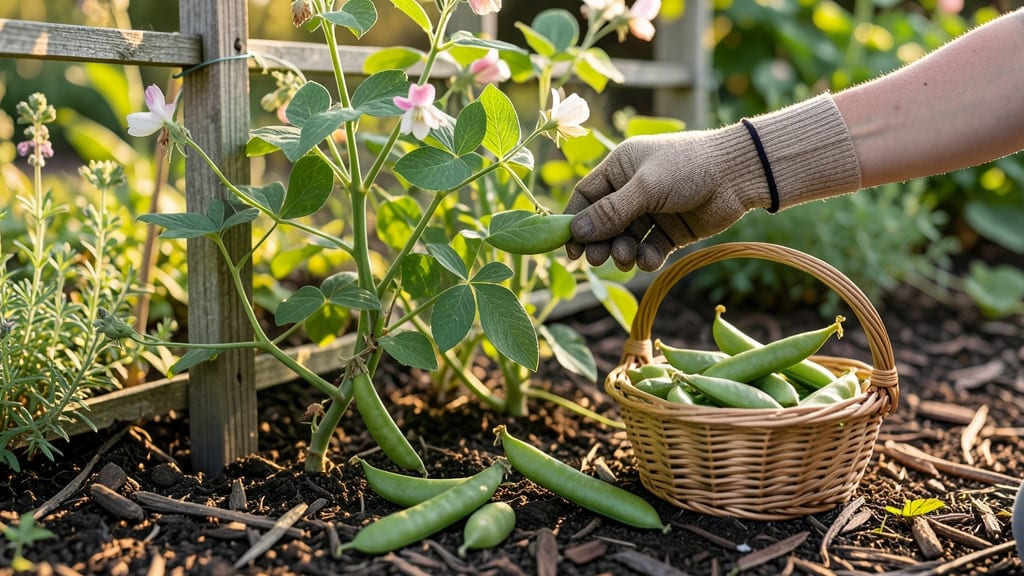
Harvest garden peas when pods reach 2-3 inches long and feel tender 🌱 — timing this right means the difference between sweet, crisp bites and tough, mealy disappointment.
Picking too early leaves you with tiny, underdeveloped pods, while waiting too long turns them into woody shells. The key is catching them at that perfect window when seeds are visible but still plump, ensuring maximum flavor and texture.
For most gardeners in Zone 6a, this happens 60-70 days after planting, typically in late spring. But regional climate plays a role — cooler areas may need to wait a few extra days, while warmer zones might harvest slightly earlier.
Below, I’ll break down the three visual cues to spot perfectly ripe peas, how to harvest without damaging your plants, and what happens if you miss the window (spoiler: it’s not pretty).


3 Visual cues to identify perfectly ripe garden peas
Harvesting garden peas at the ideal moment transforms your crop from bland to burstingly sweet. The difference between peak ripeness and overmaturity often comes down to three simple visual cues: pod size, color, and texture.
I’ve learned through years of gardening that ignoring these signs means ending up with mealy, tough peas instead of tender, flavorful pods. Let’s break down exactly what to look for to ensure you’re picking peas at their sweetest.
First, pay attention to the pod length—this is your most reliable indicator. Perfectly ripe garden peas typically grow to 2-3 inches long, feeling slightly swollen but not overly plump. When pods exceed 3.5 inches, the peas inside start shrinking as the plant redirects energy to seed production.
I always check pods against a ruler or my thumb (about 1.5-2 inches wide) to gauge readiness. This simple measurement saves me from harvesting too early or too late.
| Cue | Ready Peas | Underripe Peas | Overripe Peas |
|---|---|---|---|
| Pod Size | 2-3 inches long | Under 2 inches | Over 3.5 inches |
| Pod Color | Bright green | Pale green/yellow | Dull green/brown |
| Pod Texture | Tender, snaps easily | Firm, rubbery | Woody, tough |
| Seed Visibility | Filling pod | Barely visible | Shrinking |
The color of the pod is another critical clue—bright, vibrant green signals peak ripeness. When peas are underripe, pods often appear pale or even slightly yellowish, indicating they haven’t fully developed their sugars.
Overripe peas, on the other hand, may develop a duller green or even brownish tint, especially near the seams. I’ve noticed that varieties like 'Sugar Snap' or 'Snow Peas' maintain their bright color longer, while shelling peas like 'Lincoln' can darken more quickly.
Always harvest in the morning when pods are at their freshest and most colorful.
Don’t overlook the texture test, which is my favorite trick for confirming ripeness. A perfectly ripe pea pod should feel tender yet firm—almost like a well-inflated balloon. When I gently squeeze a pod between my fingers, it should give slightly but not feel mushy.
If it feels hard and woody, it’s past its prime. Conversely, pods that feel soft or spongy are underripe. This tactile check is especially useful when working with heirloom varieties, which can vary more in texture than hybrid types.
One common mistake I see gardeners make is waiting until the peas inside are fully enlarged before harvesting. By then, the pods have often become stringy and tough. The key is to pick when the seeds are visible but not yet dominant in the pod.
Think of it like a goldilocks zone—you want peas that are plump enough to taste sweet but haven’t yet taken over the pod’s space. This balance ensures maximum flavor without sacrificing texture.
For varieties like 'Oregon Sugar Pod,' I find the sweet spot occurs when the peas fill about 70% of the pod’s length.
Regional climate plays a surprising role in pea ripeness. In cooler northern climates, peas often mature more slowly, so I harvest based more on pod texture than size. Meanwhile, in warmer southern zones, pods can ripen faster, requiring more frequent checks.
Last season, my Zone 7 garden produced peas that were ready for harvest 10-14 days earlier than my friend’s garden in Zone 5. Always adjust your timing based on local weather patterns and your specific variety’s growth rate.
Pro tip: Use a small handheld magnifying glass to inspect seed development in tricky lighting. This tool has saved me from missing subtle ripeness cues, especially with dark-colored pea varieties** where seeds are harder to see against green pods. Another trick is to harvest a few pods from different plants—this gives you
How to harvest garden peas without damaging plants
Harvesting garden peas correctly keeps your plants productive and your harvest sweet. The key is timing—pick too early, and you lose flavor; wait too long, and the pods turn tough. I’ve learned that gentle handling and proper tools make all the difference in preserving plant health while maximizing your yield.
Let’s break down the best methods to harvest without stressing your pea plants.
Start by checking the pods daily once they begin forming. Mature peas should be 2-3 inches long with plump seeds inside that are clearly visible through the pod’s skin. If you see the pods starting to yellow or the seeds becoming too large, it’s past the prime window.
Using the right tools and techniques ensures you can keep harvesting for weeks without damaging the vines.
After harvesting, inspect your plants for any signs of stress or pests. Yellowing leaves or stunted growth may indicate over-harvesting or nutrient deficiencies. If you notice these issues, reduce the frequency slightly and consider adding a light balanced fertilizer (like 5-10-10) to support recovery.
Pea plants are resilient, but they need consistent care to keep producing.
One of my biggest mistakes was harvesting too aggressively early in the season. I thought more frequent picking would encourage more growth, but it actually slowed down production.
Now, I stick to 2-3 harvests per week and focus on quality over quantity. This approach keeps the plants healthy and extends the harvest period by several weeks.
Don’t forget to rotate your harvest areas if you’re growing multiple rows. This prevents soil depletion and reduces the spread of diseases like powdery mildew. With the right techniques, you can enjoy a steady supply of sweet, tender peas straight from your garden all season long. Happy harvesting! 🌱✂️