
Tools
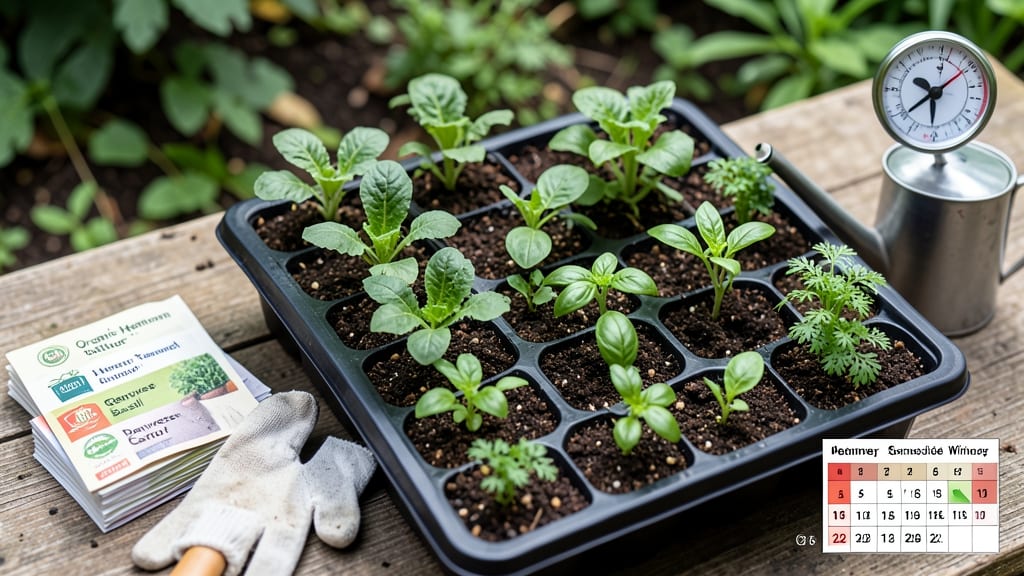
The best time to start a garden depends on your climate zone and plant type: warm-season crops like tomatoes and peppers grow best after your last spring frost, while cool-season vegetables such as spinach and kale can begin indoors 6-8 weeks before the final frost date or outdoors in early spring or fall. Always check your local frost dates for accuracy.
The timing of your garden's success hinges on understanding your local climate patterns and plant needs. For instance, in USDA Zone 5, where I garden, the last frost typically arrives around mid-May, so I start warm-season crops like basil and cucumbers in late May.
Meanwhile, cool-season crops like broccoli can go in the ground as early as March, while others like lettuce might need a second planting in late summer for a fall harvest. 🌱 Microclimates—like a sunny south-facing wall—can also shift your planting window by 2-4 weeks, so pay attention to where your garden sits in relation to wind, sun exposure, and nearby structures.
For urban gardeners with limited space, container gardening offers flexibility: you can start herbs indoors year-round, while warm-season vegetables like peppers thrive in pots placed on patios after frost.
The key is matching your plants' temperature preferences with your local growing season, which you can find through local agricultural extension services or online frost date calculators. This precision ensures your garden thrives from the first seed to the final harvest.
💡 In This Article
- Climate Zones and Frost Dates Guide
- Planting Timelines for Common Vegetables and Flowers
Climate zones and frost dates guide
Your garden's success starts with understanding the science behind frost dates and climate zones. The USDA Plant Hardiness Zone Map divides North America into 13 zones based on average annual minimum temperatures, but frost dates—the critical factor for planting—vary even within the same zone.
For example, in Zone 7, the last spring frost might occur in early April in coastal areas but not until mid-May in inland valleys. These variations happen because cold air sinks and collects in low-lying areas, creating microclimates that can shift your planting window by 2-4 weeks.
Frost forms when temperatures drop to 32°F or below, but most plants suffer damage at 28°F—a key threshold to track.
The National Oceanic and Atmospheric Administration (NOAA) provides historical frost data, but local gardeners often refine these estimates by observing nearby weather stations or using frost-free date calculators. In the Southern Hemisphere, seasons reverse: spring planting occurs in September-October, while Northern Hemisphere gardeners start in March-April.
High-altitude gardens (like those at 5,000+ feet) experience cooler temperatures, shortening growing seasons by 30-50 days compared to sea level.
Microclimates add another layer of complexity. A south-facing wall can warm soil by 5-10°F compared to open ground, allowing you to plant heat-loving crops like tomatoes 2 weeks earlier. Conversely, low-lying areas or shaded spots may require waiting until after Memorial Day to avoid late frosts.
Urban gardeners often face "heat islands"—concrete and asphalt raising temperatures by 5-10°F—which can extend the growing season by 2-3 weeks in fall. These nuances explain why a neighbor’s garden might thrive while yours struggles, even with identical planting dates.
For precise timing, combine frost data with plant-specific heat requirements. Cool-season crops like peas tolerate light frosts (28-32°F), while warm-season plants like basil wilt at 50°F.
The 100-day rule is a gardener’s shortcut: if your last frost is May 15 and a tomato variety matures in 80 days, you have a 20-day buffer for unexpected cold snaps. This margin accounts for Mother Nature’s unpredictability—something every seasoned gardener learns the hard way.
Regional examples highlight these patterns. In Zone 4 (northern U.S.), gardeners often start cool-season crops indoors in February to transplant outdoors by late May, while Zone 10 (southern California) allows year-round planting with minimal frost risk.
Even within a zone, elevation matters: Denver’s Zone 5 gardens face later springs than nearby Zone 6 plains. By mastering these variables, you transform guesswork into a data-driven gardening strategy—one that turns frost dates from abstract numbers into actionable planting windows.
Pro tip: Use frost cloths (which raise soil temps by 3-8°F) to extend early-season planting by 2-4 weeks, or opt for cold-hardy varieties like 'Early Girl' tomatoes (tolerates 50°F soils) to push boundaries.
The goal isn’t just avoiding frost—it’s syncing your garden’s rhythm with your climate’s unique tempo. 🌿