
Vegetables
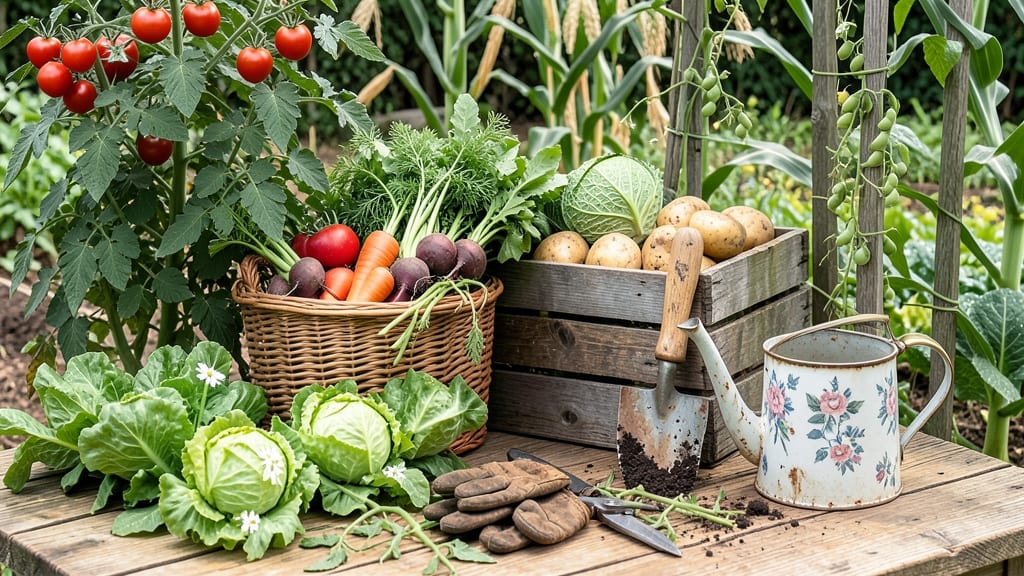
The purpose of victory gardens was to produce fresh vegetables for families during WWII, helping conserve commercial food supplies for the military and reducing reliance on rationed grocery stores. These home gardens grew essential crops like carrots, beans, and lettuce to support the war effort.
The U.S. government launched victory gardens in 1943 as a patriotic response to wartime food shortages. 🌱 By growing just 20% of the nation's produce in backyard plots, these gardens freed up commercial crops for troops overseas and eased rationing at home.
The program even included school gardens to teach children about self-sufficiency—over 18 million gardens thrived across America by 1944, proving how community efforts could directly impact national security.
What made victory gardens so effective was their focus on high-yield, space-efficient crops like radishes (ready in 30 days) and green beans. Many families planted in vacant lots or community plots, creating a network of food production that became a symbol of resilience.
The movement didn't end with WWII—it laid the foundation for modern urban farming movements we see today.
💡 In This Article
- How Victory Gardens Directly Supported WWII Food Rationing
- Planning a Modern Victory Garden for Self-Sufficiency
How victory gardens directly supported WWII food rationing
Victory gardens weren't just about growing vegetables—they were a calculated response to the 40% reduction in commercial food production caused by WWII. With millions of men serving overseas and farm labor diverted to military needs, the U.S. government launched the "Food Will Win the War" campaign in 1943.
This initiative encouraged families to cultivate their own produce, freeing up grocery store supplies for soldiers. 🌿 By 1944, these gardens produced an estimated 40% of the nation's fresh vegetables, including 9 million tons of produce annually.
The system worked through a combination of rationing policies and patriotic incentives. Families received ration coupons for limited grocery purchases, but victory gardens provided unrestricted access to fresh foods. The government distributed free seeds through programs like "Victory Seed," while magazines like Better Homes and Gardens published weekly planting guides.
Crops like potatoes (which yielded 3-5 pounds per plant) and tomatoes (producing 20-30 fruits per vine) were prioritized for their high caloric output and ease of storage.
What made this effort uniquely effective was its community-driven structure. Neighborhoods organized "garden clubs" to share tools and knowledge, while schools established plots to teach children about nutrition and self-sufficiency.
The program even influenced industrial production—companies like Heinz and Better Homes and Gardens published gardening manuals with 10 million copies distributed nationwide. This grassroots approach turned private yards into public resources for national security.
The impact extended beyond food production. Victory gardens reduced transportation demands by cutting the need to ship produce across states, conserving fuel for military use. They also stabilized local economies by keeping grocery stores stocked with non-perishable items while families grew their own fresh supplies.
The average garden produced enough food to feed a family of four for 7 months annually, demonstrating how personal actions could have macro-level consequences.
One fascinating detail was how the government standardized gardening practices to maximize efficiency. The U.S. Department of Agriculture recommended planting in 4-foot-wide rows for easy access and suggested using composted manure to enrich soil—a technique still used today.
They even advised planting fast-growing radishes first to break up compacted soil before adding slower-maturing crops like cabbage. This scientific approach ensured even novice gardeners could achieve bountiful harvests.
The legacy of victory gardens reveals a perfect storm of necessity, organization, and civic duty. By combining government coordination with individual effort, the program proved that food security could be achieved through collective action.
Today, we see echoes of this in community gardens and urban farming initiatives, which address modern challenges like food deserts and climate change. The WWII victory garden remains one of history's most effective examples of how personal responsibility can solve large-scale problems. 💫