
Tools
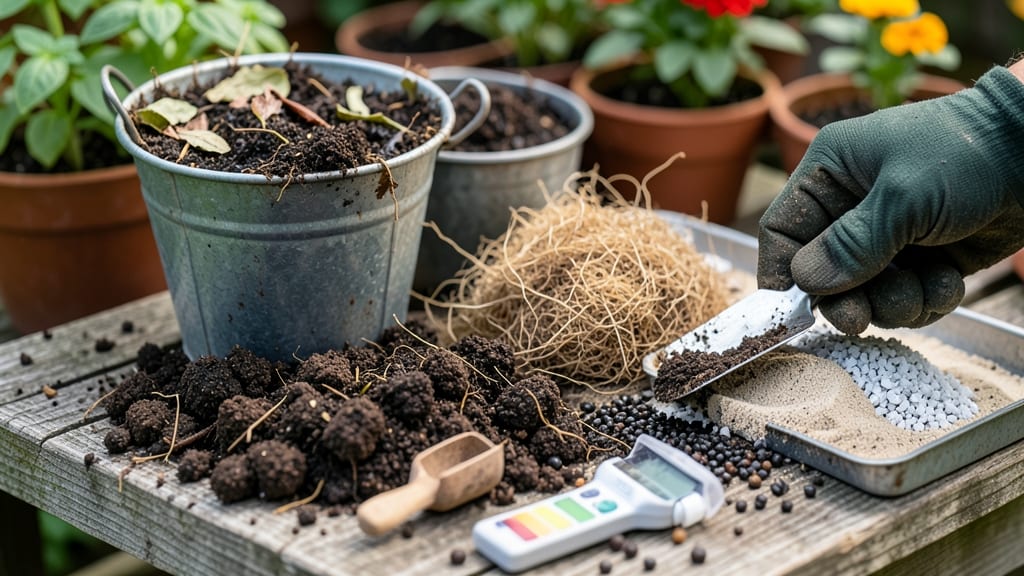
If you're wondering what to use for garden soil, you'll want a combination of loam (for balanced texture and nutrients), compost (to boost organic matter and fertility), and peat moss (to enhance moisture retention). These ratios should be adjusted based on your specific plants and local climate conditions.
When building your garden soil, think of loam as the foundation—it provides the ideal balance of sand, silt, and clay for root growth and drainage. 🌱 Compost acts like a nutrient powerhouse, breaking down to feed plants over time while improving soil structure.
Meanwhile, peat moss helps retain moisture, which is especially valuable in hot or dry climates. The key is customizing these proportions: heavy clay soil might need more loam and sand, while sandy soil benefits from extra compost and peat to hold nutrients and water better.
For most vegetable gardens, I recommend starting with 60% loam, 30% compost, and 10% peat moss, then tweaking based on your plants' needs.
For example, acid-loving plants like blueberries thrive with more peat moss, while flowering plants often do better with slightly more compost to support their nutrient demands.
💡 In This Article
- How Loam, Compost, and Peat Moss Improve Soil Structure
- Choosing the Right Soil Mix for Different Plants and Climates
How loam, compost, and peat moss improve soil structure
Loam is nature's perfect soil foundation because it's a balanced blend of 40% sand, 40% silt, and 20% clay. This tripartite structure creates ideal pore spaces for both air and water movement, allowing roots to breathe while accessing moisture.
The sand particles provide drainage, while the silt and clay retain nutrients and water—think of it like a sponge with just the right amount of give. This texture also prevents compaction, which is crucial for root expansion, especially for deep-rooted plants like tomatoes or fruit trees.
Compost transforms garden soil by introducing active microbial life that breaks down organic matter into plant-available nutrients. A well-aged compost contains 5-10% organic matter and introduces beneficial fungi and bacteria that create a thriving soil ecosystem.
The decomposition process generates heat (130-160°F in active piles), which sterilizes pathogens and creates humus—a dark, crumbly substance that improves soil structure and water retention. Unlike synthetic fertilizers, compost feeds plants slowly over time, mimicking natural nutrient cycles.
Peat moss plays a unique role by holding 16-20 times its weight in water while maintaining excellent aeration. Its fibrous structure creates tiny air pockets that prevent waterlogging, making it ideal for sandy soils that drain too quickly.
However, what makes peat moss special is its acidity (pH 3.5-4.5), which is perfect for acid-loving plants like blueberries or azaleas. The downside? Peat is non-renewable, so sustainable alternatives like coconut coir are gaining popularity for eco-conscious gardeners.
Together, these components create a dynamic soil environment where roots can thrive. Loam provides the physical structure, compost supplies the biological activity, and peat moss regulates moisture—like a three-legged stool where each element supports the others.
For example, in a vegetable garden, the loam gives roots room to grow, compost provides continuous nutrition, and peat moss ensures consistent moisture during dry spells. 🌱
The magic happens at the microscopic level where these components interact. The clay particles in loam attract and hold nutrients through electrostatic charges, while compost's microbial activity converts organic matter into available nutrients. Peat moss then acts as a moisture buffer, releasing water gradually to roots.
This synergy explains why plants grown in well-amended soil often outperform those in unmodified native soil, even with similar fertilizer applications.
Consider this comparison: A 1-gallon container of pure loam might hold 10% air space and 25% water capacity, while adding 20% compost increases microbial activity by 300% and water retention by 15%.
When you incorporate 10% peat moss, you extend the time between waterings by nearly 50% in hot climates. These measurable improvements demonstrate why soil blending is more than just mixing materials—it's creating a living ecosystem for your plants.