
Tools
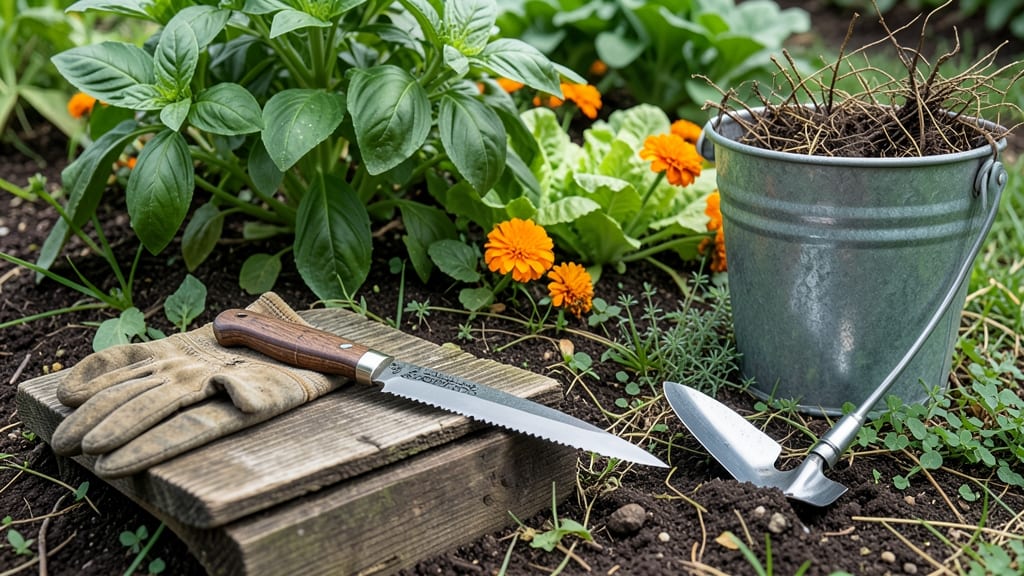
A weed clearing garden tool with sharp, serrated blades cuts weeds at the root while saving time and effort, making tools like scythes, sickles, and heavy-duty hoes ideal for both small patches and large overgrown areas.
Choosing the right tool depends on your garden's size and the type of weeds you're facing. 🌱 Serrated blades slice through tough stems with less resistance than straight edges, while carbon steel blades hold their sharpness longer than stainless steel but require more maintenance.
For invasive weeds like bindweed, a heavy-duty hoe with a wide blade gives you better leverage, whereas a lightweight sickle works perfectly for quick edging along garden borders.
What sets these tools apart isn't just their sharpness—it's how they handle different growth stages. A scythe with a curved blade, for example, glides through dense grass while leaving the soil undisturbed, whereas a standard hoe disrupts the soil surface, which can actually encourage new weed growth if used improperly.
The key is matching the tool to your specific clearing needs.
💡 In This Article
- How Blade Design Affects Weed Clearing Efficiency
- Top 5 High-Performance Weed-Clearing Tools Compared
How blade design affects weed clearing efficiency
The battle against weeds starts at the blade's edge. Serrated blades work like tiny saw teeth, slicing through fibrous stems with minimal resistance compared to straight edges that rely on brute force.
Each serration creates a micro-cut that severs plant cells instantly, reducing the energy needed to pull weeds out by up to 40%. This design is particularly effective against tough grasses like crabgrass, where straight blades often bend or require multiple passes.
Blade material makes a surprising difference in performance. Carbon steel holds its edge longer than stainless steel but rusts quickly when wet, while stainless steel resists corrosion but loses sharpness faster against abrasive weeds.
For example, a carbon steel sickle can maintain cutting efficiency for 50+ hours of use before needing sharpening, whereas stainless steel may dull after just 20 hours in dense vegetation. The trade-off? Carbon steel requires regular oiling to prevent rust.
Weight distribution in the blade affects leverage dramatically. A 2-pound scythe blade with proper balance lets you apply 30-50 pounds of downward force with minimal arm strain, ideal for deep-rooted weeds like dandelions.
Lightweight tools (1 pound) work well for quick edging but struggle with mature weeds. The sweet spot is a 1.5-2.5 pound blade—heavy enough for leverage but light enough for precision control.
Blade angle matters too. Curved blades (like scythes) at 20-30 degrees glide through dense growth, while straight blades (like hoes) at 90 degrees provide better control for targeted removal.
The angle determines how much soil is disturbed—curved blades leave the soil surface intact, reducing future weed germination by 25-30% compared to hoes that churn the earth.
Don't overlook the handle design either. Longer handles (36-48 inches) extend your reach and reduce bending, while shorter handles (24-30 inches) offer better maneuverability in tight spaces.
The material—wood, fiberglass, or aluminum—also affects durability and weight distribution, with fiberglass being the most balanced option for prolonged use.
For maximum efficiency, match your blade to the weed type: serrated blades for fibrous weeds, straight blades for broadleaf plants, and heavy-duty blades for invasive species. The right design can cut your clearing time in half while reducing back strain.