
Tools
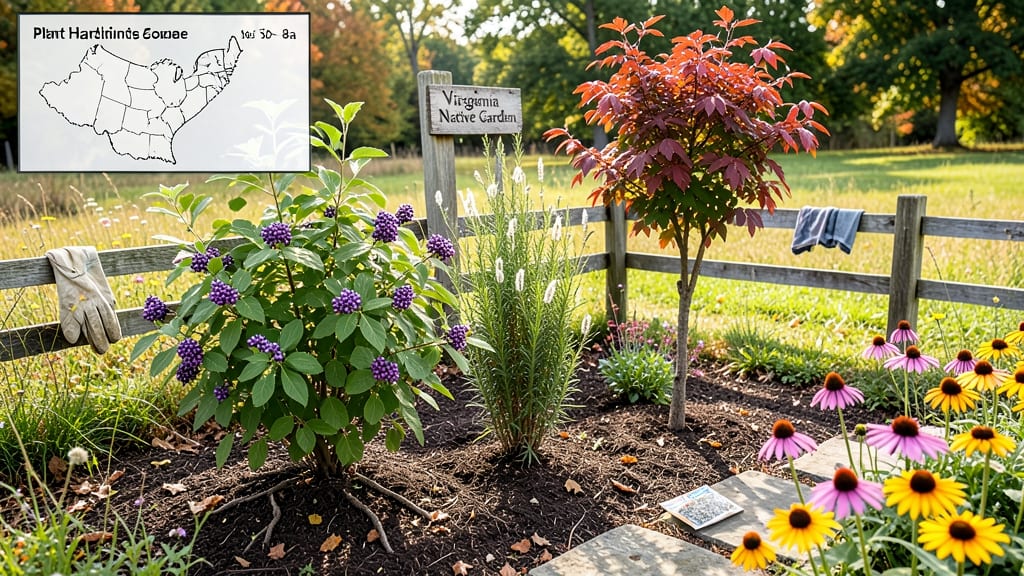
Virginia garden zones span USDA Hardiness Zones 5 through 8, with most regions falling between 6a and 7b. Your exact zone determines which cold-hardy perennials, annuals, and trees will thrive, from boxwoods in Zone 5 to citrus in Zone 8a.
Understanding Virginia's gardening climate is key because temperature shifts dramatically across the state—from the cooler Appalachian Mountains in Zone 5 to the milder coastal plains in Zone 8. 🌿 For example, Zone 6b gardeners can grow hydrangeas and azaleas that might struggle in Zone 5's colder winters, while Zone 7b gardeners can experiment with tender tropicals like bougainvillea.
The USDA's interactive map lets you pinpoint your exact microclimate, which often differs from your city's official zone due to local weather patterns or elevation changes.
What sets Virginia apart is its diversity—you can grow both cold-hardy plants like serviceberry bushes and heat-loving crops like sweet potatoes within a few hours' drive.
I always recommend checking your last frost date (typically late April in Zone 7a) and planning accordingly, as it directly impacts when to plant cool-season crops versus warm-season varieties.
💡 In This Article
- How Virginia’s USDA Zones Affect Plant Selection
- Best Plants for Virginia’s Top 3 Garden Zones (5b-7b)
How Virginia’s USDA zones affect plant selection
Virginia’s gardening climate is shaped by three major factors: elevation, proximity to the coast, and local microclimates.
The Appalachian Mountains in the west create Zone 5 conditions with average winter lows of -15°F to -5°F, while the Tidewater region near the coast sits in Zone 8a with winter lows rarely dropping below 10°F.
This 25°F difference explains why a boxwood hedge thrives in Zone 5 but may struggle in Zone 7b’s hotter summers. The USDA’s interactive map accounts for these variations by analyzing 30-year temperature averages, so your exact zone might differ from your city’s official designation by half a zone.
Frost dates are the real game-changer for Virginia gardeners. In Zone 5b, the last spring frost typically arrives by May 10th, giving you only 140-160 frost-free days to grow warm-season crops like tomatoes.
Meanwhile, Zone 7b gardeners enjoy a 210-day growing season, allowing for double harvests of peppers or even tropical plants like elephant ears.
The key is matching your planting schedule to these dates—cool-season crops like broccoli go in 6-8 weeks before your last frost, while heat-lovers like okra need soil temperatures above 60°F before transplanting. 🌱
Microclimates add another layer of complexity. A south-facing slope in Zone 6a might be warm enough for roses that fail in a nearby valley, while a low-lying area could experience 3-5°F colder nights.
Urban heat islands in cities like Richmond (Zone 7a) can push summer temperatures 5-10°F higher than rural areas, affecting which perennials like lavender or salvia will survive.
To account for this, I always recommend testing your garden’s specific conditions by monitoring temperatures with a minimum-maximum thermometer for at least two seasons.
Here’s how to identify your precise zone: Start with the USDA’s interactive map, then adjust based on your elevation (every 1,000 feet up adds about 3.5°F of cold) and local topography.
For example, Charlottesville (Zone 7a) sits at 650 feet, while nearby Blue Ridge Parkway locations at 3,000 feet drop into Zone 6b. This elevation shift explains why serviceberry trees flourish at higher elevations but may leaf out too early in lower zones.
What most gardeners overlook is how wind exposure affects hardiness. Coastal areas in Zone 8a experience milder winters but also higher wind chill from ocean breezes, which can damage tender plants like camellias despite the warmer temperatures.
Inland zones like Lynchburg (Zone 7b) have more stable temperatures but may face drier conditions that stress moisture-loving plants. To compensate, I recommend grouping plants with similar water needs and using windbreaks like arborvitae hedges in exposed areas. 💫
For those curious about pushing zone limits, consider these strategies: Use mulch (3-4 inches) to insulate roots in Zone 5, plant heat-tolerant varieties in Zone 7b (like 'Heatmaster' tomatoes), or create microclimates with greenhouses or cold frames.
The USDA’s zone map is a starting point—your actual garden’s success depends on these local adjustments and understanding how each plant’s native climate compares to yours.