
Tools
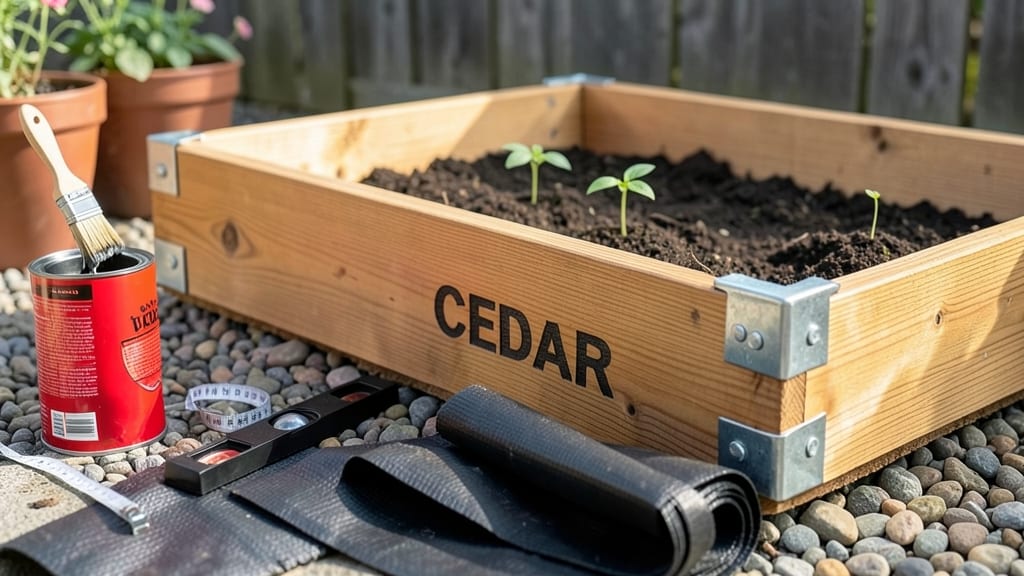
Treated wood in raised garden beds significantly boosts durability by fighting rot, pests, and moisture damage, but you should select ACQ or MCQ pressure-treated lumber (not the older CCA type) for both safety and long-term strength. Designing beds with elevated sides and proper drainage layers will further protect against warping and premature breakdown.
Pressure-treated wood gets its protective qualities from chemical preservatives like alkaline copper quaternary (ACQ) or micronized copper azole (MCQ), which create a barrier against fungal decay and termites.
Unlike older CCA-treated wood (now banned due to arsenic concerns), these modern treatments are safe for vegetable gardens while lasting 10-15 years with proper care.
The key to longevity isn't just the wood type, though—it's how you build the bed. 🌱 For instance, adding a 4-inch gravel base prevents moisture buildup at the bottom, while sloping the sides ensures water runs off instead of pooling against the wood.
Even with treated lumber, regular maintenance makes a difference. I recommend sealing the wood annually with a non-toxic wood preservative (like linseed oil) and inspecting for cracks or loose boards after heavy rains.
Cedar and redwood are naturally rot-resistant alternatives, but they cost more upfront—so treated pine becomes the budget-friendly choice when you factor in the long-term savings from fewer replacements.
💡 In This Article
- How Pressure-Treated Wood Resists Decay in Garden Beds
- Building Long-Lasting Raised Beds with Treated Wood
How pressure-treated wood resists decay in garden beds
Pressure-treated wood fights decay through chemical preservatives that penetrate deep into the wood fibers. The most effective treatments today—like alkaline copper quaternary (ACQ) and micronized copper azole (MCQ)—create a protective shield against fungi and insects.
These chemicals bond with the wood's cellulose structure, forming a barrier that prevents moisture absorption, which is the primary cause of rot. For example, ACQ-treated wood can last 10-15 years in garden beds, while untreated pine might degrade in just 2-3 years due to constant soil contact. 🌲
The science behind this involves how these treatments disrupt the life cycles of decay organisms. Copper ions in ACQ and MCQ interfere with fungal enzymes that break down wood cellulose, while quaternary compounds create a hostile environment for termites and other pests.
Unlike older chromated copper arsenate (CCA)—now banned due to arsenic leaching—modern treatments are safe for vegetable gardens while offering comparable protection. Even sunlight helps, as UV rays can slightly degrade untreated wood faster, but treated wood maintains its integrity longer under these conditions.
Not all wood types respond equally to treatment. Southern yellow pine, commonly used for pressure-treated lumber, absorbs preservatives well due to its open grain structure, making it ideal for garden beds. Cedar and redwood, while naturally rot-resistant, lack the chemical protection of treated wood and may still require sealing.
The key difference is that treated pine gets an extra layer of defense against the 90% moisture exposure typical in raised beds, where soil and water constantly challenge the wood's structure.
Moisture management is where treated wood truly shines. While untreated wood swells and warps when wet, pressure-treated lumber maintains its shape because the chemicals reduce water absorption by up to 50%.
This stability means your garden bed's dimensions stay consistent, preventing the uneven surfaces that can smother plant roots or create drainage issues. The trade-off? Treated wood costs more upfront, but the $200-$300 investment for a 4x8-foot bed pays off by avoiding replacements every few years.
For those concerned about chemical leaching, modern treatments like MCQ are designed to bind tightly to wood fibers, minimizing runoff into soil. Independent tests show negligible copper levels in nearby plants, making them safe for edible gardens.
The real risk comes from improper installation—like burying treated wood directly in soil without a gravel base—which can accelerate chemical release. Always follow manufacturer guidelines for maximum safety and longevity. ✨
Consider this real-world example: A 4x4-foot raised bed built with ACQ-treated pine and proper drainage lasted 12 years in a humid climate, while an identical bed made from untreated cedar needed replacement after 5 years.
The treated wood maintained its structural integrity despite constant exposure to moisture and temperature fluctuations, proving how chemical treatment transforms wood's performance in garden settings.