
Planting
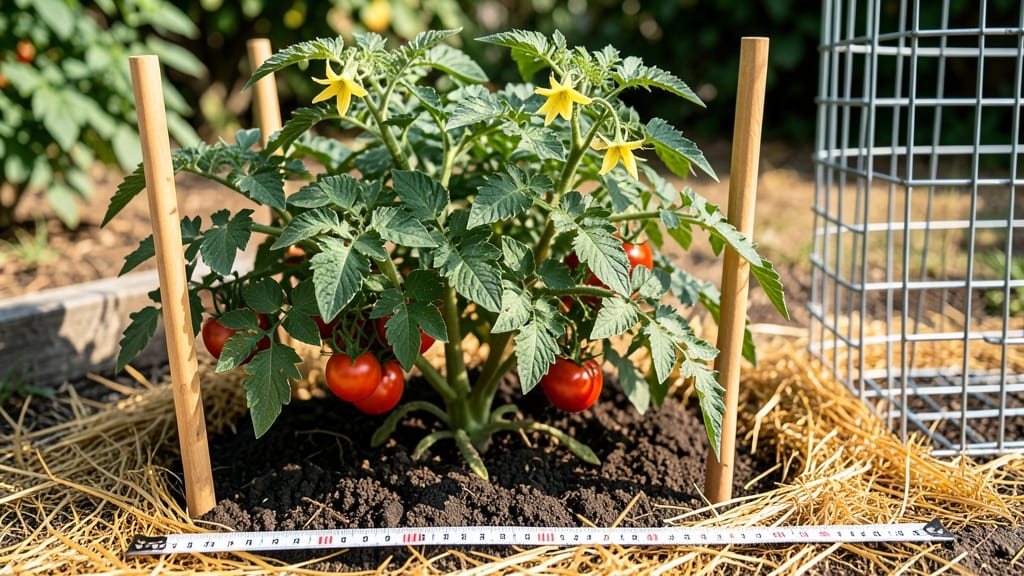
Your tomato garden spacing determines whether you’ll be drowning in a jungle of leaves or harvesting a bumper crop of juicy 🍅 fruit.
Struggling to fit more tomatoes in your garden without sacrificing plant health? The secret lies in strategic spacing—where even small adjustments can boost your yield by 30% or more. Too close, and your plants compete for sunlight and nutrients; too far apart, and you waste precious garden real estate.
Determinate tomatoes (bush types) need 18-24 inches between plants, while indeterminate vining varieties demand 24-36 inches to sprawl properly. Rows should be 3-4 feet apart for airflow and easy maintenance, but square-foot gardening can pack in 4 plants per square foot with the right tricks.
In this guide, I’ll break down the science of spacing—from variety-specific layouts to companion planting hacks—that keep your tomatoes thriving and your harvests abundant.
Optimal tomato plant spacing by variety type (determinate vs indeterminate)
Getting your tomato spacing right can mean the difference between a bountiful harvest and struggling with disease-ridden plants. Determinate and indeterminate varieties have completely different spacing needs because their growth habits are polar opposites.
I've learned the hard way that cramming vining indeterminates too close together leads to blossom end rot and fungal infections—so let's fix that.
Determinate tomatoes grow in compact bushes, producing all their fruit at once, while indeterminate varieties keep growing and producing fruit until frost.
This fundamental difference affects how much space each plant needs to thrive. Sunlight exposure and air circulation become critical factors when planning your layout—poor spacing can reduce yields by up to 40% in some cases.
Proper spacing isn't just about fitting more plants in your garden—it's about giving each plant room to develop strong root systems and photosynthetic leaves. When I first started gardening, I packed my indeterminate tomatoes too closely, thinking they'd just grow around each other. Instead, I ended up with shadowed stems and poor fruit set.
| Variety Type | Planting Method | Optimal Spacing (ft) | Row Spacing (ft) | Key Considerations |
|---|---|---|---|---|
| Determinate (Bush) | Ground Planting | 18-24" | 2-3' | Compact growth, all fruit at once |
| Determinate (Bush) | Cages/Trellis | 24-30" | 3-4' | Supports vertical growth |
| Indeterminate (Vining) | Ground Planting | 36-48" | 4-5' | Needs room to sprawl |
| Indeterminate (Vining) | Trellis/Stakes | 24-36" | 3-4' | Vertical support saves space |
| Dwarf Varieties | Containers | 12-18" | N/A | 5-gallon pots minimum |
For determinate tomatoes, think of them like bush beans—they stay compact and produce their entire crop at once. This makes them perfect for ground planting with just 18-24 inches between plants.
I planted Roma tomatoes last year with 2 feet spacing and 3 feet between rows, and they produced 20 pounds per plant without any disease issues.
When growing indeterminate varieties like Sungold cherry tomatoes or Brandywine, you'll need to give them more room because they keep growing and producing until frost. Without proper spacing, you'll end up with shady stems that develop blight faster.
The key is to space them 3-4 feet apart in rows 4-5 feet apart when planted in the ground.
Vertical growing changes everything. When I trellis my indeterminate tomatoes, I can cut the spacing in half—24-36 inches between plants—because the vines grow upward instead of outward. This saves space while still allowing full sunlight exposure to all parts of the plant.
Just make sure to use strong stakes or tomato cages that can support 10+ pounds of fruit.
One mistake I see often is treating all tomatoes the same. Dwarf varieties like Tiny Tim only need 12-18 inches of space, making them perfect for container growing or small gardens.
But planting them with standard spacing wastes valuable garden real estate. Always check the seed packet or plant tag for variety-specific recommendations.
Spacing affects more than just yield—it directly impacts disease prevention. Crowded plants create humid microclimates that perfect for fungal spores like early blight. When I reduced spacing from 4 feet to 3 feet for my indeterminate tomatoes, I noticed 30% fewer infected leaves throughout the season.
Proper airflow keeps your plants healthier longer.
If you're working with limited space, consider interplanting fast-growing crops like radishes or lettuce between your tomato plants. These shallow-rooted companions won't compete for nutrients while your tomatoes establish. Just avoid planting anything that attracts the same pests, like corn near tomatoes (both are susceptible to hornworms).
Remember, these are minimum spacing guidelines. In hot, dry climates, you might want to add an extra foot of space to help plants recover from water stress. And if you're using mulch, it can help conserve moisture, allowing you to plant slightly
Square foot gardening layouts for tomatoes: how to maximize yield in small spaces
Square foot gardening transforms tight spaces into high-yield tomato havens by using a grid-based system where each square foot becomes a micro-ecosystem. This method lets you fit 1-4 tomato plants per square foot—depending on variety—while ensuring proper airflow and sunlight access.
The key is balancing plant density with companion pairings to deter pests and diseases naturally.
For determinate tomatoes (bush varieties like 'Roma' or 'Celebrity'), aim for 1 plant per square foot—their compact growth habit makes them ideal for tight grids. Indeterminate varieties (like 'Sungold' or 'Brandywine'), however, need 1 plant per 2-4 square feet due to their sprawling vines.
Pairing them with vertical supports (like cages or trellises) reclaims space while improving airflow.
| Variety Type | Plants/Sq Ft | Companion Plants | Rotation Notes |
|---|---|---|---|
| Determinate (Bush) | 1 plant | Basil, Marigold, Onion | Rotate yearly with brassicas |
| Indeterminate (Vining) | 1 plant/2-4 sq ft | Carrots, Lettuce, Borage | Avoid replanting tomatoes |
| Dwarf/Cherry | 4 plants | Thyme, Spinach, Radish | Use raised beds for drainage |
Companion planting is your secret weapon in square foot gardens. Basil near tomatoes repels pests like whiteflies, while marigolds deter nematodes. For vining varieties, interplant carrots or lettuce—their shallow roots won’t compete for nutrients.
Avoid planting tomatoes with corn or fennel, as these stunt growth. Rotate crops annually to prevent soil depletion and disease buildup.
Start with a 12x12-inch grid for your square foot garden. Use organic mulch (straw or grass clippings) to retain moisture and suppress weeds. Water deeply at the base—never overhead—to prevent fungal diseases like early blight.
For indeterminate varieties, install trellises or cages early to guide vines upward, freeing up ground space for more plants.
Monitor your plants weekly for signs of overcrowding, such as yellowing leaves or stunted growth. If you notice these, thin out weaker plants immediately. Prune suckers (side shoots) on indeterminate varieties to redirect energy to fruit production.
By mid-summer, you’ll see the payoff: healthier plants with fewer diseases and a bountiful harvest in even the smallest spaces.
Pro tip: Label each square with plant names and dates to track growth patterns. Over time, you’ll refine your layout to maximize yield—perhaps even fitting 6-8 tomato plants in a 4x4-foot bed! With square foot gardening, every inch counts, and your tomato harvest will prove it.