
Planting
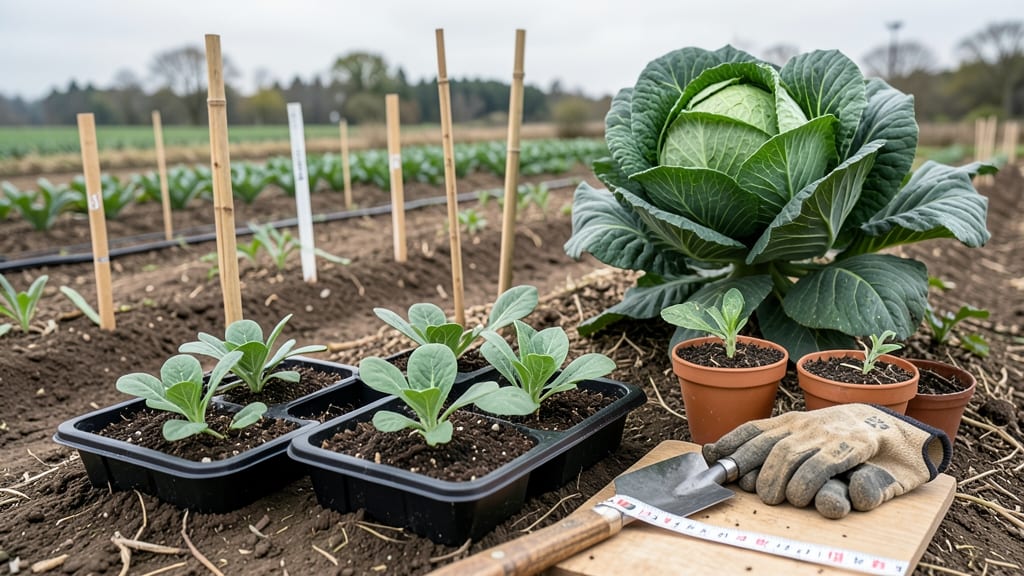
Proper cabbage garden spacing is the foundation for growing heads that are big, firm, and disease-free—not just a way to squeeze in more plants.
Picture this: you’ve spent weeks nurturing your 🥬 seedlings, only to harvest small, puckered heads because they were fighting for every inch of space. That’s not just a missed yield—it’s a recipe for disappointment.
The right spacing lets each plant breathe, so it devotes energy to building the head you planted for, not just surviving.
Most gardeners overlook how variety size and row layout affect growth. A compact bok choy needs half the room of a 2-foot-tall savoy cabbage, and planting them too close invites pests and fungal diseases.
But get the distances right, and you’ll see heads that rival what you’d pay $4 a pound for at the market—without the markup.
Below, I’ll walk you through the exact plant-to-plant and row-to-row measurements for every common cabbage type, plus three spacing hacks that cut down on crowding while boosting your harvest. Ready to turn your garden into a cabbage powerhouse?
Optimal cabbage garden spacing by variety type
Getting the cabbage spacing right transforms your garden from a crowded mess to a high-yielding powerhouse. I’ve learned the hard way—packing plants too close stunts growth, while giving them too much room wastes space. The key lies in matching each cabbage variety to its ideal plant-to-plant and row-to-row distances.
For example, head cabbage varieties like Savoy need more elbow room than bok choy, which stays compact. Let’s break down the science-backed spacing for each type to maximize those big, dense heads you dream of harvesting.
Why does spacing matter so much? Cabbage plants compete fiercely for nutrients, sunlight, and moisture. When crowded, they develop small, loose heads prone to disease and pests.
Proper spacing ensures each plant gets 6+ hours of sunlight and room to expand its leaf canopy—critical for forming those tight, market-ready heads. Even dwarf varieties need their space to avoid stunted growth. Think of it like giving each plant its own personal sunbathing spot in the garden.
Here’s where things get practical: row spacing (the distance between rows) is just as critical as plant spacing within rows. Wider rows improve airflow, reducing fungal diseases like downy mildew. Narrow rows might save space but make weeding and harvesting a nightmare.
I’ve found that 24-inch row spacing works for most varieties, but baby leaf mixes can handle tighter rows of 12 inches since they’re harvested young. Let’s dive into the exact measurements for each type.
| Variety | Plant Spacing (inches) | Row Spacing (inches) | Mature Size (diameter) | Notes |
|---|---|---|---|---|
| Head Cabbage (Green/Red/Purple) | 18-24" | 24-36" | 12-18" | Needs most space; avoid overcrowding for tight heads. |
| Savoy Cabbage | 20-24" | 30-36" | 14-20" | Crinkled leaves need extra airflow to prevent rot. |
| Bok Choy (Baby) | 6-8" | 12-18" | 6-10" | Harvest young; can plant densely for quick turnover. |
| Napa Cabbage | 12-18" | 24" | 10-14" | Longer heads need less lateral space than round heads. |
| Dwarf Cabbage | 12-16" | 18-24" | 8-12" | Perfect for containers; compact but still needs airflow. |
| Kale (Curly) | 12-18" | 24" | 12-18" | Tolerates slightly tighter spacing than head cabbage. |
Let’s start with head cabbage varieties like Green, Red, or Purple cabbage—the classic crowd-pleasers. These need 18-24 inches between plants and 24-36 inches between rows. I’ve seen gardeners squeeze them into 12-inch spacing, but their heads end up small and loose, like a deflated balloon.
The extra space lets the plant build a tight, dense head instead of sprawling leaves. Pro tip: If you’re short on space, opt for dwarf varieties, which mature in 60-70 days and can handle 12-inch spacing.
For Savoy cabbage, with its distinctive crinkled leaves, I recommend 20-24 inches between plants and 30-36 inches between rows. Those wrinkled leaves trap moisture, making them prone to fungal diseases like clubroot if airflow is poor.
I once grew Savoy too close together, and by harvest time, half the plants had rotting cores. Wider rows solve this by improving circulation. If you’re growing Savoy for winter storage, prioritize even more space to avoid stress.
Bok choy and other baby
How spacing affects cabbage growth and common mistakes
Proper cabbage garden spacing isn't just about fitting more plants—it directly impacts head size, disease resistance, and overall yield. When cabbages are overcrowded, they compete aggressively for nutrients, sunlight, and water, resulting in smaller, loose heads that are more prone to rot and pests.
I’ve seen firsthand how a 12-inch spacing difference can turn a garden from disappointing to downright impressive!
One of the most common mistakes is assuming "more plants = more harvest." In reality, tight spacing creates a humid microclimate where fungal diseases like black rot and downy mildew thrive. These conditions also make it nearly impossible for cabbages to develop their signature firm, compact heads.
Even worse, crowded plants develop weak stems that snap under their own weight or when you try to harvest them.
If you’ve already planted cabbages too closely, don’t panic! You can still salvage your garden by thinning seedlings early or transplanting mature plants to loosen the spacing.
For seedlings, gently pull or clip the weakest plants at soil level, leaving the strongest ones with at least 12 inches of space. For larger plants, dig carefully to avoid damaging roots, then replant in a new location with proper spacing.
Another trick I swear by is interplanting with shallow-rooted companions like lettuce or radishes. These plants use the space above the soil without competing for the same nutrients as cabbage.
Just avoid deep-rooted companions like potatoes or tomatoes, which will steal moisture and nutrients from your cabbages. The key is vertical layering—maximizing space without sacrificing growth conditions.
Even with perfect spacing, soil health plays a crucial role. Amend your garden bed with compost or aged manure before planting to ensure your cabbages have the nutrients they need to reach their full potential.
I’ve found that well-fed soil helps cabbages better withstand minor spacing challenges, though nothing beats the right distance for long-term success.
Remember, proper spacing is your first line of defense against common cabbage problems. When your plants have room to breathe, they’ll reward you with beautiful, market-ready heads that make all the effort worthwhile. Start with the right distances, and you’ll be harvesting cabbages that put store-bought varieties to shame! 🥬