
Tools
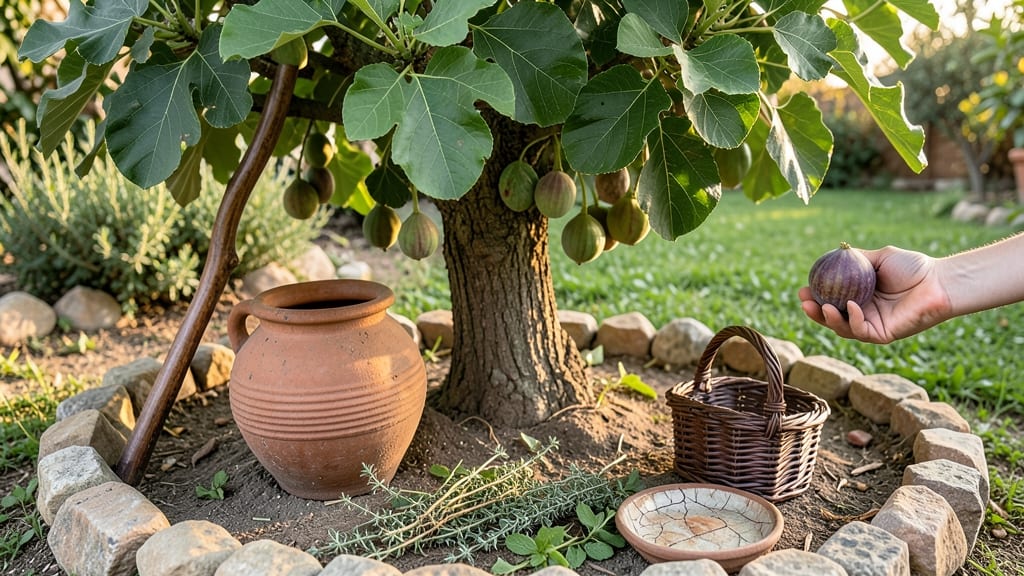
The garden in the Bible represents Eden, God’s paradise filled with lush vegetation, including the Tree of Life and Tree of Knowledge, symbolizing divine creation, purity, and humanity’s original relationship with nature before the Fall.
The garden in the Bible isn't just a storybook setting—it's a powerful symbol of divine harmony and humanity's original connection to nature. 🌿 Scholars often highlight how Eden's specific plants, like the Tree of Life offering immortality and the Tree of Knowledge representing forbidden wisdom, reflect deeper theological themes about obedience, consequence, and redemption.
What's fascinating is how these elements parallel later biblical gardens, showing how God's presence and provision remained central throughout history.
Beyond its spiritual meaning, Eden's botanical details—figs, pomegranates, and flowing rivers—provide clues about its possible location in ancient Mesopotamia or Armenia. Archaeologists study these plants today, comparing biblical descriptions with fossilized seeds and climate evidence to reconstruct what this legendary garden might have actually looked like.
The debate continues, but one thing remains clear: Eden wasn't just a place—it was the foundation of humanity's relationship with creation itself.
💡 In This Article
- Symbolism of Eden’s Plants in Biblical Theology
- Historical and Botanical Debates About Eden’s Location
Symbolism of Eden’s plants in biblical theology
The Tree of Life in Eden wasn’t just a decorative element—it symbolized divine sustenance and eternal communion with God. Biblical scholars note its fruit granted immortality, representing humanity’s original design to live forever in God’s presence.
This contrasts sharply with the Tree of Knowledge, whose forbidden fruit introduced sin and mortality. The duality reflects God’s perfect creation versus humanity’s fallen state after disobedience.
Eden’s rivers—described as flowing from a single source—mirrored ancient Mesopotamian ziggurats where water symbolized divine life-giving power. The garden’s lush vegetation (figs, pomegranates, wheat) wasn’t random: these plants thrived in fertile crescent climates and carried agricultural significance.
Figs, for instance, appeared in fertility rituals, while pomegranates symbolized abundance in Near Eastern cultures. 🌱 The garden’s design thus became a blueprint for later biblical gardens like Solomon’s temple courtyard, where similar plants appeared in sacred contexts.
The Tree of Knowledge’s placement at Eden’s center wasn’t accidental—it forced a choice between trust in God’s provision (Life) and human autonomy (Knowledge). This binary remains central to Christian theology, where grace (Life) and free will (Knowledge) create tension.
The garden’s botanical details weren’t decorative but theological, teaching that creation itself carries divine meaning.
Modern theologians draw parallels between Eden’s plants and New Testament imagery. Jesus’ reference to "fruit of the Spirit" (Galatians 5:22) echoes Eden’s original design, while Revelation’s Tree of Life (Revelation 22:2) restores the garden’s promise in the New Creation.
These connections show how Eden’s flora became a theological framework spanning the entire Bible.
Consider this: Eden’s plants weren’t just background elements—they were active participants in the divine narrative. The fig tree’s leaves that covered Adam and Eve (Genesis 3:7) became a symbol of shame, while the thornless garden environment contrasted with the cursed world after the Fall.
This botanical symbolism reveals how deeply creation was intertwined with humanity’s spiritual journey.
What’s particularly striking is how these plants appear in later biblical gardens. The Hanging Gardens of Babylon, though legendary, included similar vegetation, suggesting a cultural memory of Eden’s paradise.
This continuity shows how God’s provision remained central even in human-made sacred spaces. The garden’s flora thus becomes a bridge between divine creation and human worship throughout Scripture.