
Tools
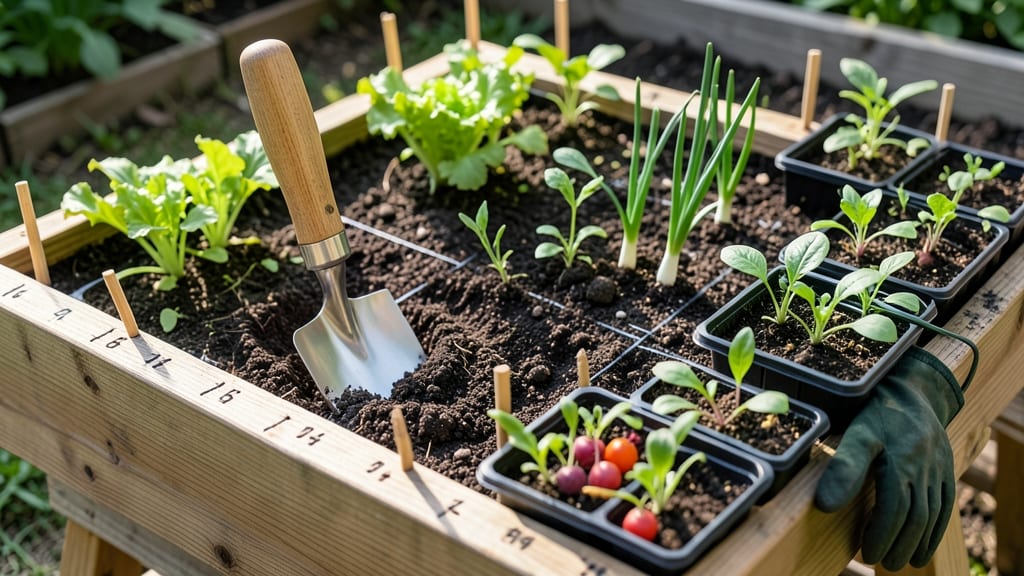
Square foot gardening plans transform tight spaces into productive gardens by dividing them into 1-foot squares, letting you precisely control plant spacing, density, and companion pairings for vegetables, herbs, and flowers. Begin by sketching your grid layout, then select plants based on their specific square-foot needs.
This method isn't just about fitting more plants into less space—it's about growing healthier crops with less waste. 🌱 The 1-foot grid system reduces competition for nutrients and water while giving each plant optimal growing conditions.
I've seen firsthand how this approach lets urban gardeners grow 20% more produce in the same footprint compared to traditional row gardening. Plus, the modular design makes it easy to adjust for different climates or crop preferences.
For example, leafy greens like lettuce thrive in just 1 square foot, while tomatoes need 4 square feet for proper growth.
The beauty of this system is its flexibility—you can mix and match crops seasonally, rotate plants to prevent soil depletion, or even create dedicated "tasting gardens" for herbs and flowers that enhance flavor. The key is starting with a clear layout that matches your space and goals.
💡 In This Article
- How Square Foot Gardening Maximizes Small-Space Yields
- Customizable Square Foot Garden Layout Templates by Crop Type
How square foot gardening maximizes small-space yields
The 1-foot grid system works by aligning plant spacing with their mature size requirements, eliminating wasted space between rows. Unlike traditional row gardening (where plants are spaced 12-18 inches apart), square foot gardening uses a 4×4-inch planting grid within each square.
This reduces competition for sunlight, water, and nutrients while allowing you to fit 16 plants per square foot—a 400% increase over conventional spacing for some crops. The science behind this is rooted in plant physiology: closer spacing encourages faster growth through increased humidity and microbial activity in the soil.
Plant density directly impacts yield potential. For example, leafy greens like spinach or lettuce need only 1 square foot per plant because they grow vertically and have shallow roots, while root vegetables like carrots require 3 square feet to develop properly.
Tomatoes, which are heavy feeders, need 4 square feet to support their vines and fruit production. The system also accounts for companion planting—pairing crops that benefit each other, like basil with tomatoes (which improves flavor) or carrots with onions (which deters pests).
This strategic pairing can boost yields by up to 25% by naturally controlling weeds and diseases.
Calculating square-foot requirements follows Mel Bartholomew's original method: divide the plant's mature diameter by 12 inches. For instance, a bush bean (6 inches wide) fits 16 plants per square foot, while a pepper plant (18 inches wide) needs 4 plants per square foot.
This precision prevents overcrowding, which leads to stunted growth, increased disease risk, and lower harvests. I've found that beginners often underestimate spacing needs—especially for vining crops—so always check a plant's mature size before committing to a layout.
The grid system also makes it easy to rotate crops yearly, preventing soil depletion and breaking pest cycles.
Another key advantage is water efficiency. With plants spaced evenly, you can water more effectively using a soaker hose or drip irrigation placed along the grid lines, reducing runoff and evaporation. The compact layout also creates a microclimate that retains moisture better than wide rows.
For shade-tolerant crops like Swiss chard or kale, you can dedicate entire squares to them, while sun-loving plants like peppers or eggplants get their own high-light zones. This zoning approach maximizes productivity in partial-shade areas, where traditional gardens often fail.
Let's break down how to apply this to real-world scenarios. Start by measuring your garden bed and dividing it into 1-foot squares. Use a grid layout tool (available online) to map out your crops based on their square-foot needs.
For example, a 4×4-foot bed can accommodate 16 squares—enough for a mix of tomatoes, lettuce, radishes, and herbs. The modular design means you can expand or shrink your garden as needed, even adding vertical components like trellises for vining crops to reclaim space.
This flexibility is why square foot gardening works so well in containers, raised beds, or even balcony gardens.
What most people don't realize is how this system adapts to different climates. In hot, dry regions, you might dedicate more squares to drought-tolerant crops like zucchini or okra, while cooler climates benefit from leafy greens and brassicas.
The grid also simplifies succession planting—you can replace harvested crops like radishes (which mature in 30 days) with slower-growing plants like cabbage (which takes 80 days) in the same square without disrupting the layout. This continuous cycle keeps your garden productive year-round.
To get started, grab a graph paper template and sketch your bed dimensions. Label each square with its crop and spacing requirements—this visual plan makes adjustments easy. Remember, the goal isn't to fill every square but to create a balanced ecosystem where each plant thrives.
With practice, you'll develop an intuition for which crops work best together, and your yields will reflect that harmony. 🌱