
Tools
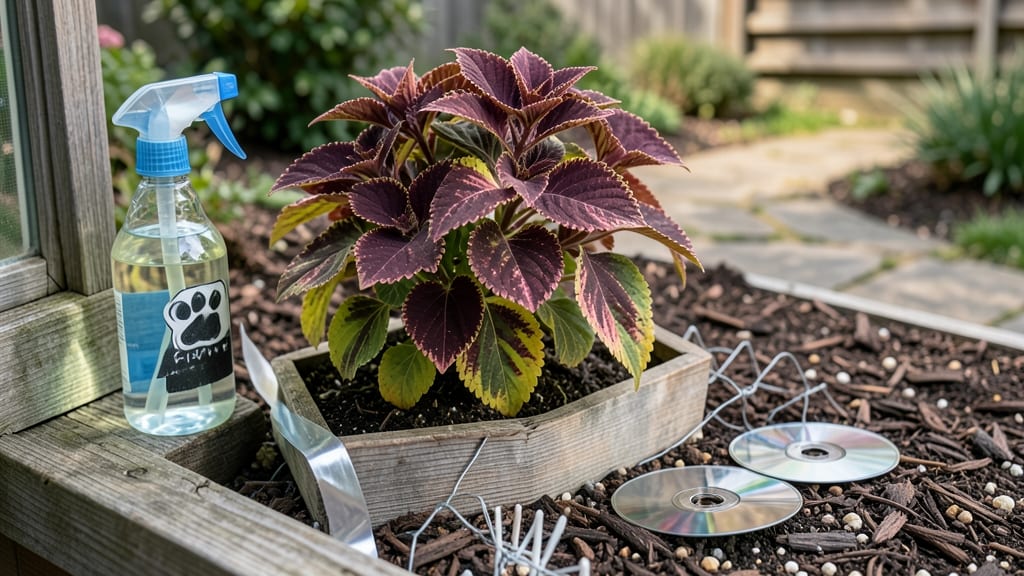
To repel cats from your garden, combine natural repellents like citrus or vinegar sprays with physical barriers such as motion-activated sprinklers and prickly plants like thorny bushes or chicken wire to make the area unwelcoming.
Cats have sensitive noses and dislike strong smells like citrus, vinegar, and coffee grounds, which disrupt their scent-marking behavior. 🐱 Physical barriers work because cats avoid uncomfortable textures—spiky mulch or rough surfaces make digging and scratching unpleasant.
I’ve found that combining both methods creates a more effective deterrent system, especially in high-traffic garden areas.
For best results, reapply sprays every few days and check physical barriers regularly for wear. Some cats may adapt over time, so rotating deterrent methods keeps them guessing. Always prioritize humane solutions—cats are naturally curious, but they’ll avoid spaces that feel threatening or uncomfortable.
💡 In This Article
- Why Cats Avoid Certain Scents and Textures
- DIY Cat Repellent Sprays and Natural Barriers
Why cats avoid certain scents and textures
Cats possess an extraordinary sense of smell—up to 14 times more sensitive than humans—making them highly reactive to specific scents. 🌿 Their aversion to citrus (like lemon or orange peels) stems from the high limonene content, which disrupts their natural scent-marking behavior.
Cats rely heavily on scent to communicate territory, and limonene's sharp aroma masks their own pheromones, creating confusion. Similarly, vinegar's acetic acid triggers their gag reflex when concentrated, making it an effective deterrent.
The texture of surfaces plays a crucial role too. Cats dislike rough or prickly materials because they interfere with their natural behaviors like digging and scratching.
For example, mulch with sharp pine needles or crushed eggshells creates an uncomfortable sensation when stepped on, while smooth surfaces like plastic or metal feel unnatural under their paws. Even the sound of crunchy mulch underfoot can startle them, reinforcing the association with discomfort.
Pheromones also influence their behavior. Cats have specialized facial glands that release pheromones when they rub against objects. If you introduce synthetic pheromones (like those in commercial sprays) or strong-smelling plants (such as lavender or rue), it can confuse their territorial instincts.
This disruption makes them less likely to linger or mark the area. 🐾 The key is combining scent and texture—cats won’t just avoid one factor but will flee if multiple senses are overwhelmed.
Sudden movements or loud noises, like those from motion-activated sprinklers, trigger their fight-or-flight response. Cats are prey animals, so unpredictable stimuli create stress. A sprinkler that shoots water at 1-2 gallons per minute when triggered by motion mimics a predator attack, making them associate the garden with danger.
Over time, this conditioning reinforces their avoidance. Even the visual presence of prickly plants or chicken wire can deter them without direct contact.
Temperature and humidity also play a subtle role. Cats prefer dry, warm environments, so damp or cold areas (like those sprayed with vinegar or water) feel inhospitable. For instance, a vinegar spray left on plants can lower the local humidity slightly, making the space less appealing.
This environmental discomfort, combined with scent and texture, creates a multi-sensory deterrent that’s far more effective than relying on a single method.
What most people overlook is the importance of consistency. Cats are creatures of habit, so if deterrents are applied sporadically, they’ll eventually ignore them. Reapplying sprays every 3-4 days and maintaining physical barriers ensures the garden remains unwelcoming.
The goal isn’t to harm them but to make the space feel like a place they’d rather avoid entirely.