
Neem Oil
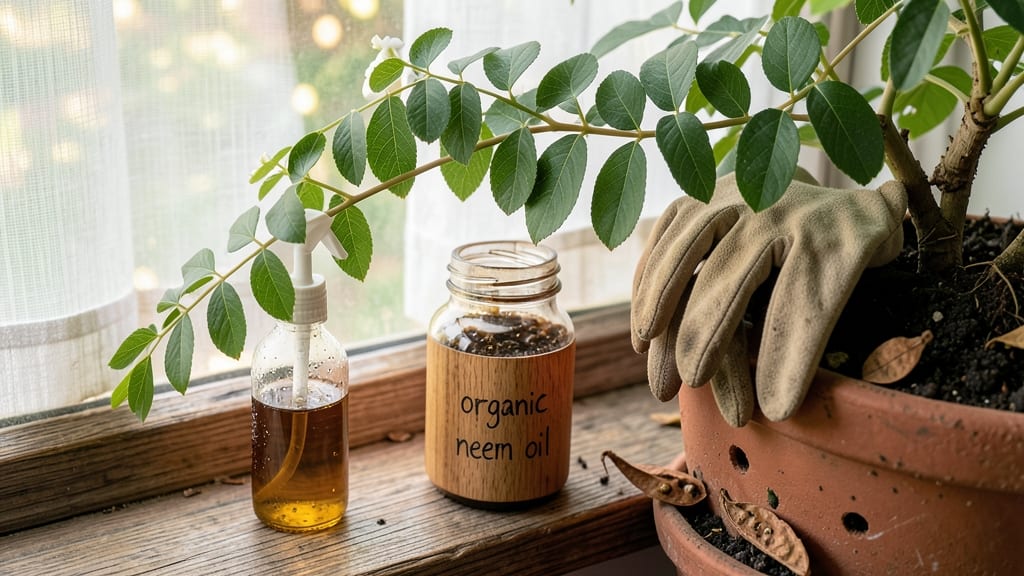
Neem oil in organic gardening serves as a powerful natural pesticide and fungicide, effectively repelling pests like aphids and mites while enhancing soil fertility when applied as a foliar spray or soil treatment. The active compound azadirachtin interferes with insects' growth and reproduction cycles without relying on synthetic chemicals.
This versatile plant extract isn't just about pest control—it also boosts soil microbial activity, helping break down organic matter more efficiently. 🌱 The key is proper dilution (1-2 teaspoons per quart of water) and application timing, especially during early evening when pests are most active.
I've seen dramatic results with fungal issues like powdery mildew, where neem oil's preventive properties work better than many chemical alternatives.
For best results, combine neem oil with a mild surfactant to help it adhere to plant surfaces. Always test on a small leaf area first, as some sensitive plants may react.
The oil's earthy aroma also acts as a natural deterrent for many garden pests, making it a multi-purpose solution for organic gardeners looking to reduce chemical dependency.
💡 In This Article
- How Neem Oil Works as a Natural Pest Repellent
- Best Organic Gardening Uses for Neem Oil
How neem oil works as a natural pest repellent
Neem oil's pest-fighting power comes from its azadirachtin compound, a natural limonoid found in the neem tree's seeds. This chemical acts as an insect growth regulator, disrupting pests' feeding patterns and hormonal balance. When insects consume azadirachtin, it interferes with their molting process, preventing them from maturing properly.
For example, aphids exposed to neem oil often fail to develop fully, leading to population decline within days. 🔥 The compound also contains salannin and nimbin, which act as repellents by masking plant odors that attract pests.
What makes neem oil particularly effective is its broad-spectrum action against soft-bodied insects. Studies show it works on over 200 species, including aphids, whiteflies, mites, and beetles, while being harmless to beneficial insects like bees and ladybugs when used correctly.
The oil's fatty acids create a protective film on plant surfaces that suffocates fungal spores like powdery mildew and black spot. Unlike synthetic pesticides that kill indiscriminately, neem oil's mechanism targets specific biological processes in pests, making it safer for ecosystems.
One fascinating aspect is how neem oil affects pest behavior before contact. The oil's earthy aroma contains volatile compounds that act as a natural deterrent, causing pests to avoid treated plants entirely. This is why many gardeners notice reduced pest activity even before applying the oil.
The compound nimbin specifically triggers repellent responses in insects through their olfactory receptors, creating a preventive barrier that's particularly valuable during early pest outbreaks.
Temperature plays a crucial role in neem oil's effectiveness. The optimal application range is 60-85°F, as cooler temperatures slow down the oil's evaporation rate, allowing more time for the active compounds to penetrate pests. At higher temperatures above 90°F, the oil may break down faster, reducing its efficacy.
This is why early morning or late evening applications work best—cooler conditions maximize the oil's contact time with target pests while minimizing plant stress.
For fungal pathogens, neem oil works through a different mechanism. The oil's fungicidal properties come from its ability to disrupt cell membrane integrity in fungal spores. When applied preventatively, it creates an unfavorable environment for spore germination, effectively stopping fungal diseases before they establish.
Research shows neem oil can reduce powdery mildew infections by up to 85% when applied weekly during high-risk periods. The oil's low toxicity to plants makes it suitable for regular use on vegetables, fruits, and ornamentals.
The key to neem oil's success lies in its multi-mode action: it repels, disrupts growth, and suffocates pests simultaneously. This comprehensive approach explains why it's considered one of the most effective organic pest control solutions available.
Unlike synthetic chemicals that often require repeated applications, neem oil's biological mechanisms provide both immediate and long-term pest management benefits. 💫