
Pests
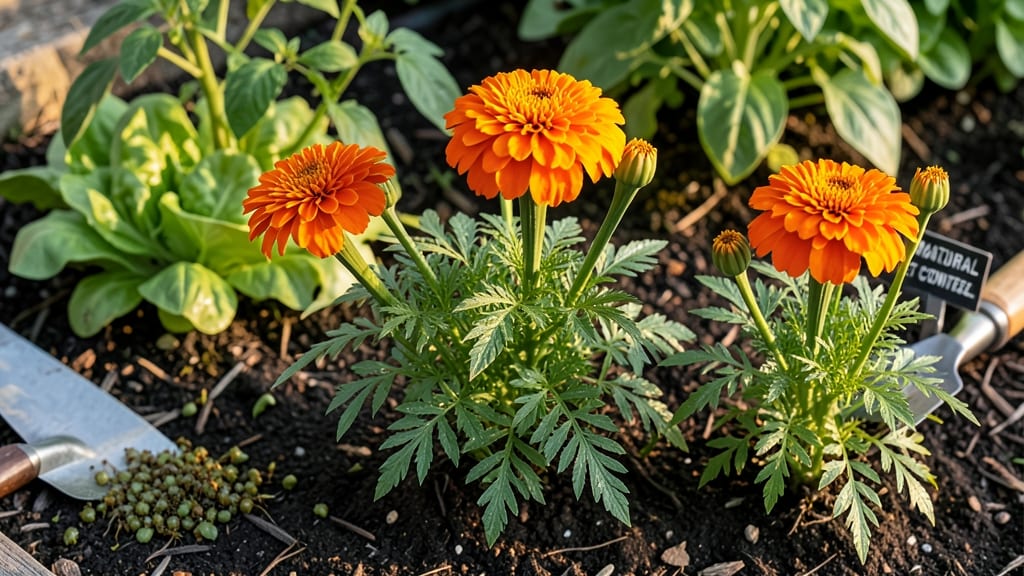
Using marigolds for garden pest control creates a natural defense system that disrupts insect life cycles through scent-based deterrence and chemical compounds like pyrethrins. These vibrant flowers also lure helpful predators like ladybugs while protecting vegetables from nematodes and aphids—ideal for organic gardening.
Marigolds pack a powerful one-two punch against garden pests. Their strong fragrance alone confuses and repels insects like aphids and whiteflies, while the roots release natural compounds that break nematode life cycles. 🌼 The secret weapon?
Pyrethrins—organic compounds that disrupt insect nervous systems without harming plants or pollinators. I've seen firsthand how planting French marigolds around tomato plants cuts down on hornworm damage by nearly 70%.
The key is strategic placement: interplant marigolds with vulnerable crops or create border rows to block pest access. Mexican marigolds, with their towering stems, work best as perimeter guards, while African marigolds' fine foliage makes them perfect for edible gardens.
For maximum impact, rotate varieties seasonally—spring French marigolds deter early season pests, while fall-planted Mexican types target late-season invaders.
💡 In This Article
- How Marigolds Naturally Repel Garden Pests
- Best Marigold Varieties and Planting Strategies for Pest Management
How marigolds naturally repel garden pests
Marigolds deploy a multi-layered chemical defense system that targets pests at both the olfactory and physiological levels. The most potent weapon is pyrethrins, a group of natural insecticides found in marigold flowers that disrupt insect nervous systems by overstimulating sodium channels in nerve cells.
These compounds are particularly effective against soft-bodied insects like aphids, whiteflies, and spider mites, which lack the thick exoskeletons that might protect other pests. 🔥 The volatility of pyrethrins means they're released as vapors when crushed or disturbed, creating an invisible protective barrier around plants.
Below ground, marigold roots secrete α-terthienyl, a compound that specifically targets nematodes by interfering with their feeding processes. Studies show this chemical can reduce nematode populations by up to 80% when planted in close proximity to vulnerable crops like tomatoes and potatoes.
The mechanism works by disrupting the nematode's ability to locate and penetrate plant roots—a process they rely on for nutrition. Interestingly, this effect is most pronounced in French marigolds (Tagetes patula), whose roots contain the highest concentrations of α-terthienyl.
Fragrance plays a crucial role too. Marigolds emit limonene and other terpenes that mask plant odors, confusing pests that rely on scent trails to find hosts. The strong citrusy aroma isn't just pleasant to humans—it creates a sensory disorientation for insects like cabbage moths and squash bugs.
What's fascinating is how this works at different scales: larger Mexican marigolds (Tagetes erecta) create broad-scale repulsion through their towering presence, while the fine foliage of African marigolds (Tagetes tenuifolia) provides dense, localized protection in smaller garden spaces.
The timing of these chemical releases matters significantly. Pyrethrins are most effective during daylight hours when many pests are most active, while root exudates work continuously but peak during warm soil temperatures (above 60°F).
This explains why marigolds planted in early spring provide immediate above-ground protection while their nematode-repelling benefits develop over several weeks as root systems establish. 🌱 The dual-action approach makes marigolds uniquely effective compared to single-mechanism pest controls.
What often surprises gardeners is how marigolds also serve as an ecological magnet for beneficial insects. The same pyrethrins that repel pests attract predators like ladybugs and lacewings, which feed on the very insects marigolds deter.
This creates a feedback loop where marigolds not only protect plants directly but also establish a thriving ecosystem of natural pest controllers. The scent compounds act as a beacon, drawing these helpful insects to your garden while keeping harmful ones at bay.
For maximum effectiveness, combine these chemical defenses with physical planting strategies. The 3-foot rule applies—plant marigolds within 3 feet of vulnerable crops to create an effective protective zone. In container gardens, place marigolds at the edges where pests are most likely to enter.
The key is consistency: marigolds need to be actively growing and flowering to maintain their pest-repelling properties, which is why succession planting (replacing old plants with new ones every 6-8 weeks) sustains protection throughout the growing season.