
Tools
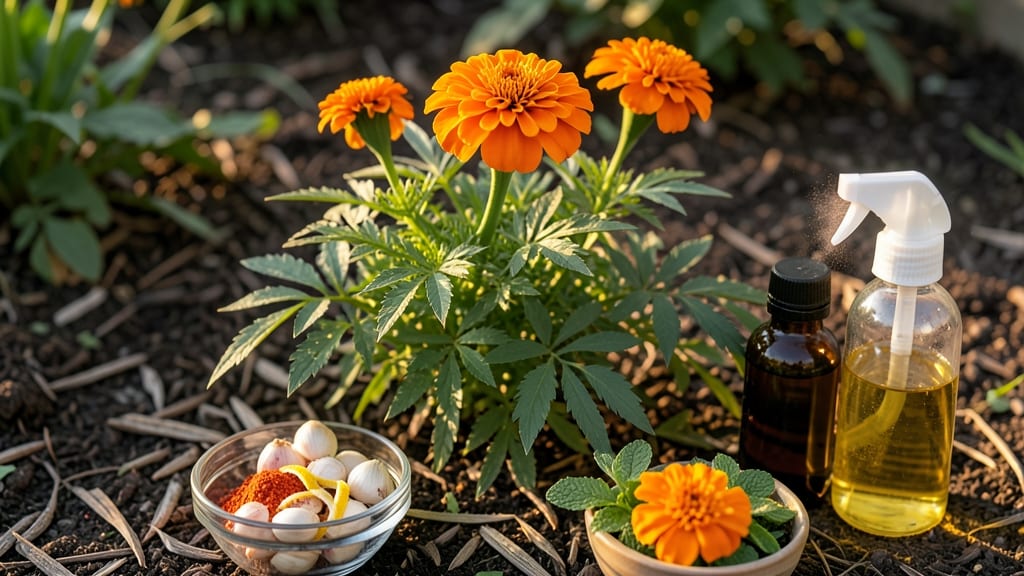
Creating natural garden repellents with kitchen staples like garlic, chili peppers, and vinegar effectively deters pests by disrupting their sensory systems, while preserving soil health and beneficial insects. Always spot-test on a small plant area first to prevent potential damage.
These homemade sprays work by targeting pests' natural aversion to strong scents and tastes—like the capsaicin in chili peppers that irritates insects' mouthparts or the sulfur compounds in garlic that mask plant attractants. 🌱 For example, a garlic spray is particularly effective against aphids and spider mites, while citrus-based mixtures repel ants and fruit flies.
The beauty of these solutions lies in their dual functionality: they protect your plants without introducing harsh chemicals that could harm the ecosystem or your family's health.
When using these repellents, consistency is key. Most sprays need reapplication every 7-14 days or after rain, depending on the ingredient. For instance, vinegar-based solutions evaporate quickly, requiring more frequent touch-ups, while alcohol-based sprays last longer but may need diluting to avoid leaf burn.
I always recommend storing mixtures in a glass spray bottle away from direct sunlight to maintain potency.
💡 In This Article
- How Homemade Repellents Work Against Common Garden Pests
- Best Kitchen Ingredients for DIY Garden Pest Control
How homemade repellents work against common garden pests
The science behind natural repellents lies in how they exploit pests' sensory systems. For example, garlic contains sulfur compounds like allicin, which release a pungent odor that masks the scent trails ants and aphids use to find plants.
When crushed or blended, garlic releases these compounds at concentrations that overwhelm insects' olfactory receptors, causing confusion and repelling them. 🔥 Similarly, chili peppers contain capsaicin, which irritates insects' mouthparts and tracheal systems, making it nearly impossible for pests like caterpillars and beetles to feed.
Citrus peels work through a different mechanism—they contain limonene, a compound that disrupts pests' ability to navigate using scent cues. When blended with water, the oils create a volatile mixture that evaporates quickly, releasing a fresh, zesty aroma that repels ants, fruit flies, and even some types of moths.
The key is the volatility of these compounds; they need to be in the air for pests to detect them, which is why sprays must be reapplied after rain or heavy dew.
For instance, a spray made with 1 cup lemon peels per quart of water can deter pests for up to a week in dry conditions.
Vinegar-based repellents target pests like aphids and spider mites by creating an acidic environment they avoid. The acetic acid in vinegar disrupts the pH balance on plant surfaces, making it inhospitable for soft-bodied insects.
However, this method is less effective against crawling pests like slugs, which are repelled more by the scent of crushed eggshells or coffee grounds.
The trick is matching the repellent to the pest: aphids respond best to garlic or neem oil, while slugs are deterred by abrasive textures like diatomaceous earth or sharp-edged barriers.
One common misconception is that all natural repellents work the same way. In reality, their effectiveness depends on the pest's biology.
For example, aphids are repelled by the sulfur in garlic but are drawn to sticky residues left by honeydew—so combining garlic spray with regular pruning can break their life cycle.
Meanwhile, Japanese beetles are deterred by the strong scent of rosemary or mint, which contain high levels of monoterpenes that disrupt their feeding patterns. Always test sprays on a small leaf first, as some plants (like ferns or delphiniums) may react poorly to acidic or oily solutions.
Temperature and humidity also play a role in repellent efficacy. Sprays work best in warm, dry conditions because heat accelerates the evaporation of volatile compounds, while humidity can dilute their potency.
For example, a chili pepper spray applied on a 75°F day will last longer than the same spray on a 55°F morning. To maximize effectiveness, apply repellents in the early morning or late evening, when pests are most active and temperatures are moderate.
This timing ensures the compounds have time to settle before evaporating.
Beyond repelling pests, these natural solutions preserve the beneficial insects your garden needs, like ladybugs and lacewings. Unlike chemical pesticides, which kill indiscriminately, natural repellents target specific pests without harming pollinators.
For example, a soapy water spray (made with mild castile soap) suffocates aphids on contact but won't harm bees if applied carefully. The key is to avoid overspraying flowers where bees forage.
Always shake your spray bottle well before use, as settled oils or particles can clog the nozzle and reduce coverage.
For long-term protection, rotate repellents every few weeks to prevent pests from adapting. I’ve found that alternating between garlic, citrus, and neem oil sprays keeps aphids and mites at bay season after season.
Store your mixtures in a cool, dark place (like a pantry) to preserve their potency, and label each bottle with the ingredient and date. With the right blend and timing, you can create a pest-free garden that thrives without chemicals. 🌿